Ribes, Genus, divaricatum, Species,
- Genus & species
coast black gooseberry
Overview
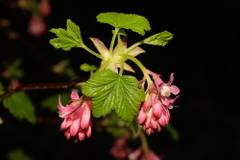
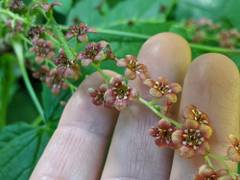
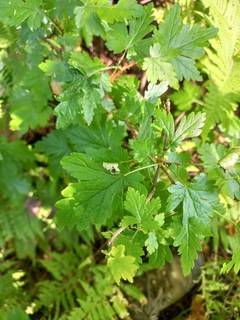
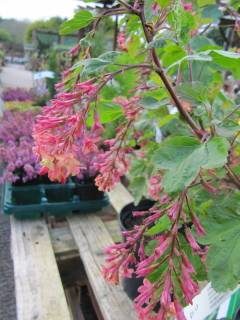
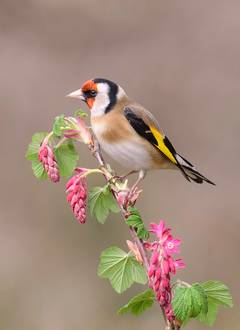
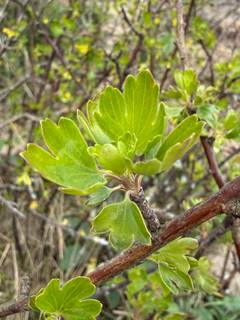
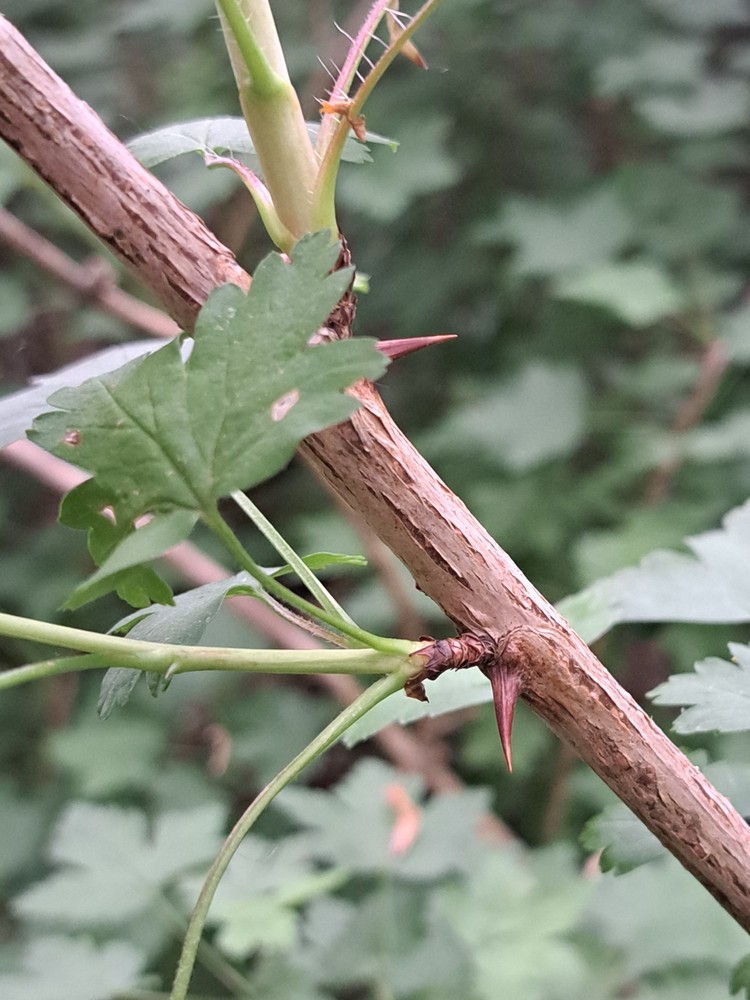
Ribes divaricatum is a deciduous shrub reaching 3-9 feet (90-270 cm) tall and 4-8 feet (1.2-2.4 m) wide at maturity, with arching to spreading branches and stems armed with sharp spines 0.25-0.5 inches (6-13 mm) long at each leaf node. Bark is gray-brown and shreds in strips on older stems. Leaves are alternate, palmately 3-5 lobed, 0.75-2 inches (2-5 cm) across, with toothed margins; foliage is medium green and turns yellow-orange before drop in October. Pendulous flowers in racemes of 1-4 appear in March through May; flowers display reddish-purple sepals reflexed back from white, narrow petals — a fuchsia-like form distinct from other gooseberries. Fruit is a smooth, round berry 0.4-0.6 inches (10-15 mm) across that ripens from green through red to dark purple-black in late June and July; mature fruit is edible raw or cooked and has been used in jam, pie, and wine. Plants spread slowly by basal sprouting; arching stems can root where tips touch soil, expanding the colony. Lifespan is 15-25 years on suitable sites.
Native Range
Native to western North America from southern British Columbia south through Washington, Oregon, and California to Baja California, with disjunct populations in Idaho. Found in moist forest openings, riparian woodlands, and along the margins of meadows below 5,500 feet (1,675 m) elevation. Most common in coastal and lower-montane zones with mild winters and adequate spring moisture.Suggested Uses
Used in native shrub borders, edible landscapes, hummingbird gardens, and woodland edge plantings in zones 6-9 at 5-7 foot (1.5-2.1 m) spacing. Mid-March through early May fuchsia-like flowers attract Anna's and Rufous hummingbirds during early spring migration. Berries are eaten by birds, small mammals, and humans; sugar content rises after the first light frost in October.How to Identify
Appearance
Size & Dimensions
Height3' - 9'
Width/Spread4' - 8'
Bloom Information
Pendulous flowers in racemes of 1-4 appear from mid-March through early May in zones 6-9, with peak bloom in April. Individual flowers last 5-7 days; total bloom period at a single site lasts 5-6 weeks. Hummingbirds (especially Anna's and Rufous) are the primary pollinators, attracted by the fuchsia-like flower form.
Detailed Descriptions
Flower Description
reddish-purple sepals with white petalsFoliage Description
medium greenGrowing Conditions
Sun Requirements
Requires 4-8 hours of direct sunlight daily
• Full Sun: 6+ hours of direct sunlight
• Partial Shade: 3-6 hours of direct sunlight
• Full Shade: Less than 3 hours of direct sunlight
Care & Maintenance
Care Guide
Grows in part shade to full sun on moist, well-drained loam to sandy loam at neutral to slightly acid pH. Water deeply once weekly during the first season; established plants tolerate moderate summer dry but produce smaller berry crops in dry years. White pine blister rust (Cronartium ribicola) can infect this species; planting near five-needled pines is restricted under historic management programs in some western states. Anthracnose can spot leaves in wet springs; severity is cosmetic. Spines are 0.25-0.5 inches (6-13 mm) long and puncture skin during berry harvest. Plants are short-lived (15-25 years) and decline as 8-10-year-old stems become less productive.Pruning
Cut individual canes older than 5-6 years to ground level annually in late winter for ongoing renewal; older canes produce fewer flowers and berries. Every 8-10 years cut all stems to within 6-12 inches (15-30 cm) of the ground in late winter to refresh the colony entirely; full regrowth and a fruit crop return in 2-3 years. Tip-rooted runner stems can be cut at ground level to limit colony spread into adjacent beds.Pruning Schedule
Prune: February–March
winterearly spring