Ribes, Genus, lacustre, Species,
- Genus & species
swamp gooseberry
Alaska south through British Columbia, Washington, Oregon, and California; east across Canada to the Atlantic; moist forest understories, stream banks, and wet forest edges
Overview
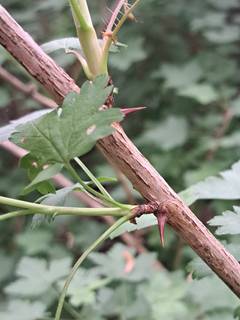
Ribes lacustre is bristly black currant (swamp gooseberry), a spreading deciduous shrub growing 2-5 feet (60-150 cm) tall and 3-5 feet (90-150 cm) wide. Reddish-maroon to pinkish-maroon small saucer-shaped flowers 0.2 inch (5 mm) form in drooping racemes of 5-15 in April-June (5 weeks); dark purple-black glandular-hairy berries follow in July-August. Small deeply 3-5-lobed maple-like leaves 1-2 inches (2.5-5 cm) turn yellow to orange to red in fall. The stems carry both nodal spines (1-3 per node) and dense narrow internodal bristles between the nodes; this dual armature distinguishes R. lacustre from all other native Pacific Northwest Ribes: true currants (R. bracteosum, R. sanguineum) have no spines or bristles, and other gooseberries (R. divaricatum, R. roezlii) have nodal spines only without internodal bristles. Family Grossulariaceae. Lacustre = of lakes, referring to the moist riparian habitat. Native to Alaska south through British Columbia, Washington, Oregon, and California, east across Canada to the Atlantic; the species is circumboreal. Found in moist forest understories, on stream banks, and at wet forest edges. The bristles can cause skin irritation in sensitive individuals during handling. Berries are edible but the glandular hairs are unpleasant; they are generally not harvested for human use. Bear and bird food. Ribes species are alternate hosts for white pine blister rust (Cronartium ribicola); planting near white pines is regulated in some regions. Deer-resistant. Non-toxic. Hardy in zones 3-9. Grown in part to full shade. Growth rate is moderate.
Native Range
Native to Alaska south through British Columbia, Washington, Oregon, and California, east across Canada to the Atlantic; the species is circumboreal. Found in moist forest understories, on stream banks, and at wet forest edges.Suggested Uses
Ribes lacustre is grown in moist native plant gardens, riparian buffer plantings, woodland understories, and wildlife gardens, spaced 3-5 feet (90-150 cm) apart. Stems carry both nodal spines and internodal bristles, the diagnostic dual armature among native PNW Ribes. Wildlife food. Spines and bristles cause skin irritation during handling. Non-toxic. Hardy in zones 3-9.How to Identify
Appearance
Size & Dimensions
Height2' - 5'
Width/Spread3' - 5'
Bloom Information
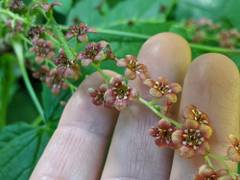
Spring (April-June). Reddish-maroon to pinkish-maroon small saucer-shaped flowers 0.2 inch (5 mm) form in drooping racemes of 5-15 for about 5 weeks. Bee-pollinated. Dark purple-black glandular-hairy berries follow in July-August.
Detailed Descriptions
Flower Description
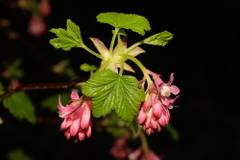
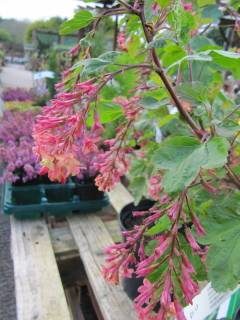
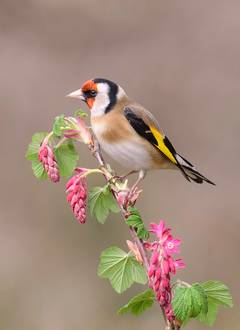
Reddish-maroon to pinkish-maroon, small saucer-shaped flowers 0.2 inch (5 mm) in drooping racemes of 5-15 flowers; April-June; followed by dark purple-black berries covered with glandular hairs in July-August — bear and bird food.Foliage Description
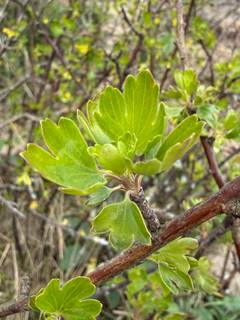
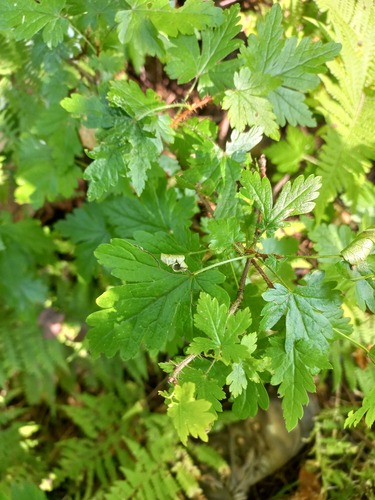
Medium green; small deeply 3-5-lobed maple-like leaves 1-2 inches (2.5-5 cm); turns yellow to orange to red in fall. The stems carry both nodal spines (1-3 per node) and dense narrow internodal bristles between nodes; this dual armature is the diagnostic feature.Growing Conditions
Sun Requirements
Tolerates up to 4 hours of direct sunlight daily
• Full Sun: 6+ hours of direct sunlight
• Partial Shade: 3-6 hours of direct sunlight
• Full Shade: Less than 3 hours of direct sunlight
Care & Maintenance
Care Guide
Grown in part to full shade with 0-4 hours of direct sun. Soil is moist clay, loam, or peat with a pH of 5.0-7.0. Stems carry both spines and bristles that cause skin irritation during handling. Cold-hardy to zone 3. Ribes species are alternate hosts for white pine blister rust; planting near white pines is regulated in some regions. Deer-resistant and non-toxic. Hardy in zones 3-9.Pruning
Pruned in early spring (February-March); the oldest stems are cut to the base every few years to rejuvenate. The spiny and bristly stems cause skin irritation during handling.Pruning Schedule
Prune: February–March
early spring