Ribes, Genus, nevadense, Species,
- Genus & species
mountain pink currant
Overview
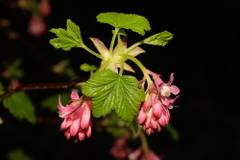
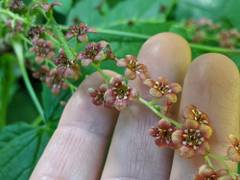
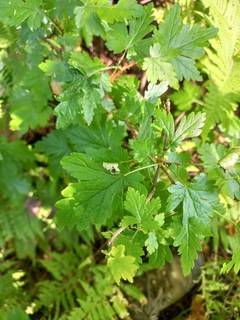
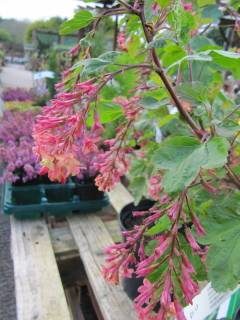
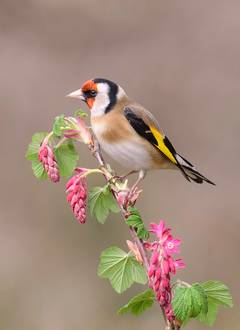
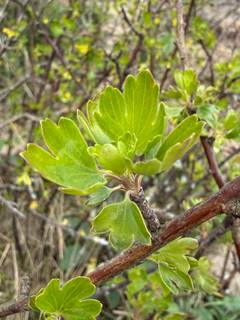
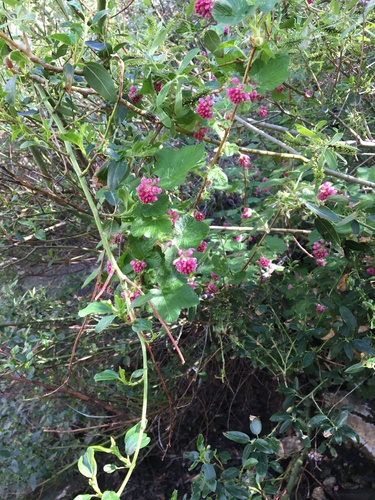
Ribes nevadense is a deciduous shrub reaching 3 to 6.5 feet (1 to 2 m) tall and slightly less in spread, with erect to arching unarmed stems. The palmately lobed leaves carry 3 to 5 shallow, toothed lobes and measure 1 to 2.4 inches (2.5 to 6 cm) across. From late spring into early summer the shrub bears pendant to spreading racemes of 10 to 20 tubular flowers in pink to rose-red, each about 0.3 inch (8 mm) long. Spherical berries follow, ripening blue-black under a waxy glaucous coating to roughly 0.3 inch (8 mm); they are edible but seedy and low in sugar. In the wild it grows along streambanks, seeps, and moist coniferous forest between 4,000 and 9,800 feet (1,200 to 3,000 m). The plant spreads slowly by basal shoots into an open, multi-stemmed clump, and the foliage turns yellow before dropping in autumn. It depends on consistently moist soil and drops leaves early under prolonged drought, which restricts its use in dry, unirrigated gardens. It can also act as an alternate host for white pine blister rust.
Native Range
Native to the mountains of western North America, including the Sierra Nevada and Cascade ranges of California and Oregon, with scattered populations in Nevada and Baja California. It occupies streambanks, seeps, and moist forest openings at montane elevations.Suggested Uses
Used in woodland gardens, streamside plantings, and montane habitat restoration across the western states. The flowers draw hummingbirds and native bees, while birds take the ripe fruit. It fits moist, partly shaded borders where the soil stays damp.How to Identify
Appearance
Size & Dimensions
Height3' - 6'6"
Width/Spread3' - 5'
Bloom Information
Flowering runs from late spring into early summer, generally May through June and later at higher elevations. Each raceme holds 10 to 20 pink to rose-red tubular flowers. Individual displays last about 3 to 4 weeks. Berries ripen from midsummer into early autumn.
Detailed Descriptions
Flower Description
pink to rose-redFoliage Description
greenGrowing Conditions
Sun Requirements
Requires 4-8 hours of direct sunlight daily
• Full Sun: 6+ hours of direct sunlight
• Partial Shade: 3-6 hours of direct sunlight
• Full Shade: Less than 3 hours of direct sunlight
Care & Maintenance
Care Guide
Grow in part shade to full sun in soil kept consistently moist. The shrub accepts loam, sandy, or rocky substrates with a pH between 5.5 and 7.0 and steady drainage. Water through the growing season, since the roots do not tolerate extended drying. It is cold hardy in USDA zones 6 through 8. Because it can host white pine blister rust, siting near five-needle pines carries a disease risk to those pines. A layer of mulch helps hold the soil moisture this species needs.Pruning
Prune in late winter while dormant, cutting the oldest stems to the base to renew basal growth. Removing about one-quarter of the stems each year keeps the clump open. Dead wood can come out at any season. Shearing into formal shapes removes the arching stems that carry the flowers.Pruning Schedule
Prune: February–March
winter