Ribes, Genus, roezlii, Species,
- Genus & species
Sierra gooseberry
Overview
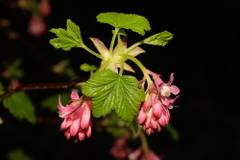
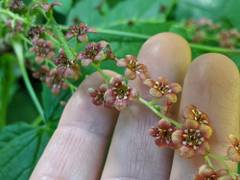
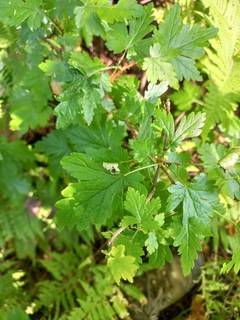
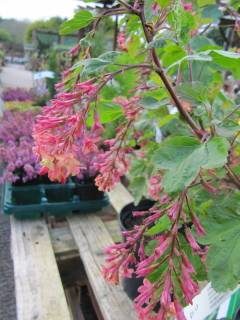
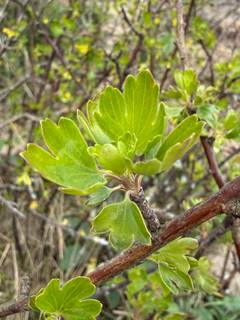
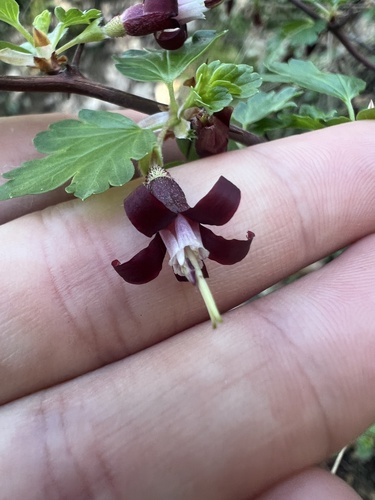
Ribes roezlii is a deciduous, spiny shrub reaching 24-60 inches (60-150 cm) tall and 36-72 inches (90-180 cm) wide, forming a rounded, densely branched mound armed with stout nodal spines and shorter bristles between the nodes. Leaves are small, 0.4-1.2 inches (10-30 mm) wide, rounded with three to five shallow lobes and toothed edges, on short stalks. In spring it bears pendent flowers with reflexed purple-red sepals and shorter white to pink petals, resembling a small fuchsia, borne singly or in pairs along the stems. The fruit is a round red-purple berry 0.4-0.6 inch (10-15 mm) across, densely covered in long, stiff spines; the pulp is edible once the spiny skin is removed. It grows on dry slopes, rocky ridges, and open coniferous forest in the mountains of the western United States. The species needs sharp drainage and tolerates summer drought, going partly dormant in the driest months, and it does poorly in wet, heavy soils. The dense spines make harvesting and handling slow.
Native Range
Ribes roezlii is native to the western United States, mainly the mountains of California and southern Oregon, including the Sierra Nevada and adjacent ranges. It grows on dry slopes, rocky ridges, and openings in coniferous forest at montane elevations.Suggested Uses
Used in native plant gardens, on dry slopes, and in wildlife or habitat plantings within its range. The spiny stems form a barrier hedge, and the berries feed birds and other wildlife. Spaced 4-6 feet (1.2-1.8 m) apart as an informal hedge or screen.How to Identify
Appearance
Size & Dimensions
Height2' - 5'
Width/Spread3' - 6'
Bloom Information
Flowering occurs in spring, generally April through June depending on elevation. Flowers open as new leaves expand and last a few weeks. Berries develop through summer and ripen to red-purple by late season.
Detailed Descriptions
Foliage Description
greenGrowing Conditions
Sun Requirements
Requires 4-8 hours of direct sunlight daily
• Full Sun: 6+ hours of direct sunlight
• Partial Shade: 3-6 hours of direct sunlight
• Full Shade: Less than 3 hours of direct sunlight
Care & Maintenance
Care Guide
Grow in full sun to partial shade in well-drained, gritty or rocky soil. This species tolerates summer drought once established and suits dry slopes and woodland edges. Heavy, wet soils lead to root problems and decline. Little or no fertilizer is needed in lean native soils. It is hardy in USDA zones 6-9 and withstands cold mountain winters. Like other Ribes, it can serve as an alternate host for white pine blister rust, and its cultivation near five-needle pines is regulated in some regions.Pruning
Prune in winter while dormant to remove dead, weak, or crossing stems and to open the center. Thinning the oldest canes every few years keeps fruiting wood productive. The dense spines slow pruning and harvest work.Pruning Schedule
Prune: December–January
winter