Ribes, Genus, bracteosum, Species,
- Genus & species
stink current
Alaska south through British Columbia, Washington, and Oregon to northern California; moist stream banks, forest edges, and wet forest understories
Overview
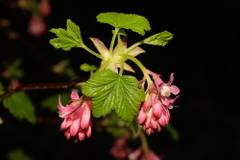
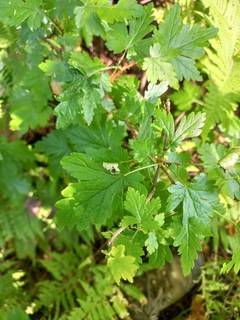
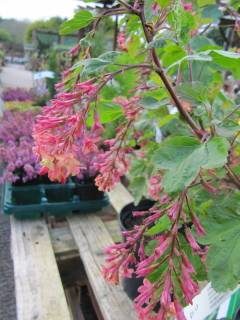
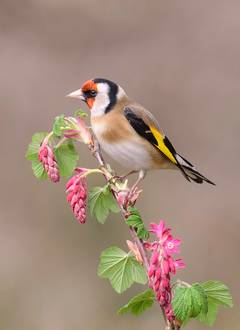
Ribes bracteosum is stink currant (bracted currant), an upright deciduous shrub growing 3-8 feet (90-240 cm) tall and 4-6 feet (1.2-1.8 m) wide. Greenish-white small flowers form in long drooping racemes 4-12 inches (10-30 cm), each flower subtended by a prominent leafy bract (bracteosum = prominently bracted), in May-June (5 weeks); round black berries with a whitish bloom follow in July-August. Deeply 5-7-lobed maple-like leaves 4-10 inches (10-25 cm) are larger than the foliage of other native Pacific Northwest currants; foliage turns yellow in fall. A strong musky-skunky odor is released when foliage or berries are crushed, the source of the common name 'stink currant'; the odor functions as immediate field identification, since no other native PNW currant has this trait. Family Grossulariaceae. As a true currant, the stems are smooth and lack the spines that distinguish gooseberries. Native to Alaska south through British Columbia, Washington, and Oregon to northern California; the species occurs on moist stream banks, at forest edges, and in wet forest understories. Black berries are food for cedar waxwings, robins, thrushes, black bears, and small mammals; technically edible for humans but generally unpalatable due to the musky flavor. Ribes species are alternate hosts for white pine blister rust (Cronartium ribicola); planting near Pinus strobus (eastern white pine) or Pinus monticola (western white pine) is regulated or prohibited in some regions. Deer-resistant. Non-toxic. Hardy in zones 4-9. Grown in part to full shade. Growth rate is moderate.
Native Range
Native to Alaska south through British Columbia, Washington, and Oregon to northern California. Found on moist stream banks, at forest edges, and in wet forest understories.Suggested Uses
Ribes bracteosum is grown in moist native plant gardens, riparian buffer plantings, woodland edges, and wildlife gardens, spaced 4-6 feet (1.2-1.8 m) apart. Foliage and berries release a musky-skunky odor when crushed. Wildlife food. Non-toxic. Hardy in zones 4-9.How to Identify
Appearance
Size & Dimensions
Height3' - 8'
Width/Spread4' - 6'
Bloom Information
Late spring (May-June). Greenish-white small flowers form in long drooping racemes 4-12 inches (10-30 cm), each flower subtended by a prominent leafy bract, for about 5 weeks. Bee-pollinated. Round black berries with whitish bloom follow in July-August.
Detailed Descriptions
Flower Description
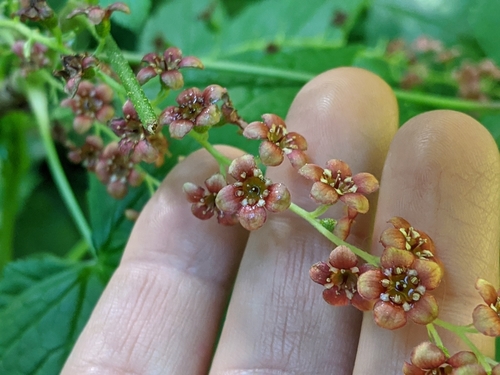
Greenish-white, small, in drooping racemes 4-12 inches (10-30 cm) long; each flower subtended by a prominent large leafy bract — bracteosum = prominently bracted, and this conspicuous bracting in long drooping racemes is diagnostic; May-June; followed by round black berries with a whitish bloom in July-August — food for birds and bears.Foliage Description
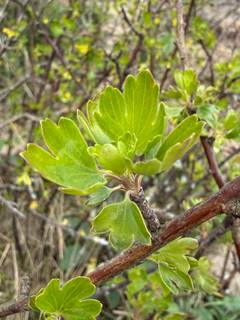
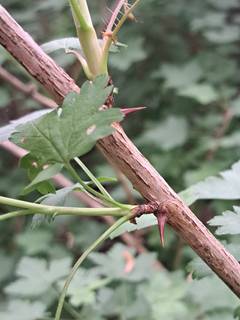
Medium green; deeply 5-7-lobed maple-like leaves 4-10 inches (10-25 cm) — larger than the foliage of other native Pacific Northwest currants; long petioles; emits a strong musky-skunky odor when crushed (the source of the common name 'stink currant'); no spines or prickles (a true currant, not a gooseberry); turns yellow in fall.Growing Conditions
Sun Requirements
Tolerates up to 4 hours of direct sunlight daily
• Full Sun: 6+ hours of direct sunlight
• Partial Shade: 3-6 hours of direct sunlight
• Full Shade: Less than 3 hours of direct sunlight
Care & Maintenance
Care Guide
Grown in part to full shade with 0-4 hours of direct sun. Soil is moist clay, loam, or silt with a pH of 5.0-7.0; cool moist forest understory conditions are required. Ribes species are alternate hosts for white pine blister rust; planting near white pines is regulated in some regions. Deer-resistant and non-toxic. Hardy in zones 4-9.Pruning
Pruned in early spring (February-March); the oldest stems are cut to the base every few years to rejuvenate. Tolerates renovation pruning.Pruning Schedule
Prune: February–March
early spring