Ribes, Genus, uva-crispa, Species,
- Genus & species
European gooseberry
Europe, the Caucasus, and North Africa
Overview
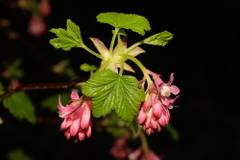
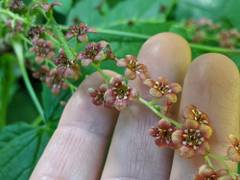
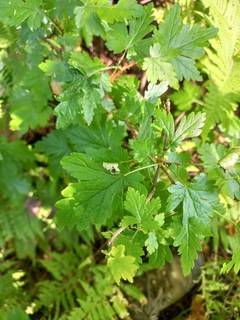
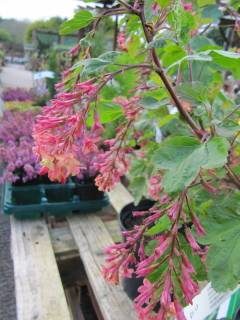
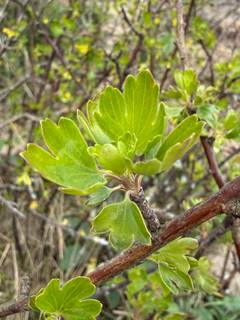
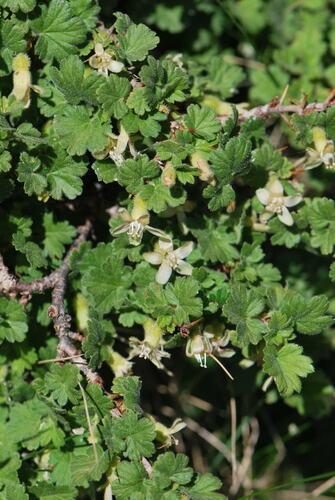
Ribes uva-crispa, the European gooseberry, is a deciduous, spiny shrub in the currant family, forming a dense, rounded bush 3-5 feet (0.9-1.5 m) tall and wide. The arching stems carry sharp spines, single or in groups of three at the leaf nodes, and small, lobed, rounded leaves 0.8-2 inches (2-5 cm) wide that resemble those of maples. In spring it bears small, bell-shaped greenish to pink flowers, single or in pairs along the stems, drooping under the leaves. These ripen by early summer into round to oval berries 0.4-1 inch (1-2.5 cm) long, green, yellow-green, red, or purple depending on variety, often with translucent skin and visible veins. The berries are edible, tart when unripe and sweeter when fully ripe, and are picked for cooking and dessert use. The plant is hardy and tolerates cold winters but is prone to mildew and sawfly damage. Native to Europe, the Caucasus, and North Africa, it has been cultivated for centuries and has given rise to many fruiting cultivars, and it naturalizes from gardens in cool, temperate regions.
Native Range
Native to Europe, the Caucasus, and the mountains of North Africa, growing wild in woodland, hedgerows, and rocky slopes. It has naturalized beyond gardens across cool temperate Europe and North America after long cultivation.Suggested Uses
Grown in kitchen gardens and allotments for its edible fruit, as a low informal hedge, or trained as a cordon or standard against a wall or fence. The early flowers feed bees and the berries are used fresh and in preserves, pies, and sauces.How to Identify
Appearance
Size & Dimensions
Height3' - 5'
Width/Spread3' - 5'
Bloom Information
Flowers in early to mid spring, generally March to May, with small drooping greenish to pink bell-shaped flowers borne singly or in pairs. Bees and other early insects pollinate them. The fruit ripens from late June through July, depending on variety and climate.
Detailed Descriptions
Foliage Description
greenGrowing Conditions
Sun Requirements
Requires 4-10 hours of direct sunlight daily
• Full Sun: 6+ hours of direct sunlight
• Partial Shade: 3-6 hours of direct sunlight
• Full Shade: Less than 3 hours of direct sunlight
Care & Maintenance
Care Guide
Grows in full sun to part shade in moist, fertile, well-drained soil, and crops well even in cooler, partly shaded sites. It needs a cold winter to fruit and tolerates frost when dormant. Good airflow reduces the mildew to which it is prone, so plants are spaced and kept open in the center. Watering during dry spells while fruit is swelling prevents the small berries and leaf drop that drought stress causes. Mulching keeps the shallow roots cool and moist, and an open framework eases picking among the spines.Pruning
Pruning in winter when dormant removes crossing, low, and crowded stems and keeps an open, goblet-shaped bush that air can move through. Shortening the previous year growth by about half encourages fruiting spurs. A light summer prune of leafy new shoots improves air flow and eases harvest.Pruning Schedule
Prune: January–February & July
wintersummer
Container Growing
Suitable for container growing
Minimum container size: 5 gallons