Ribes, Genus, aureum, Species,
- Genus & species
golden currant
Overview
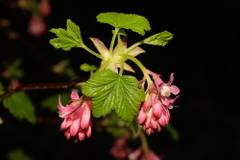
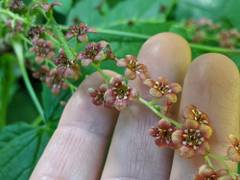
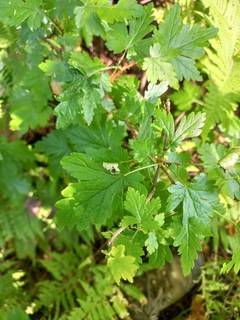
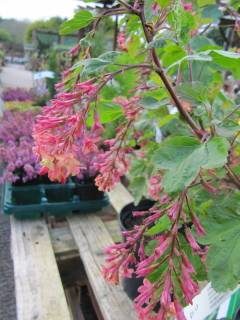
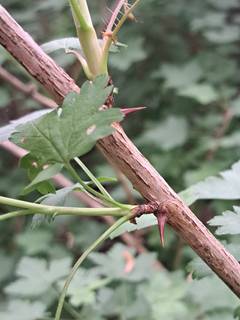
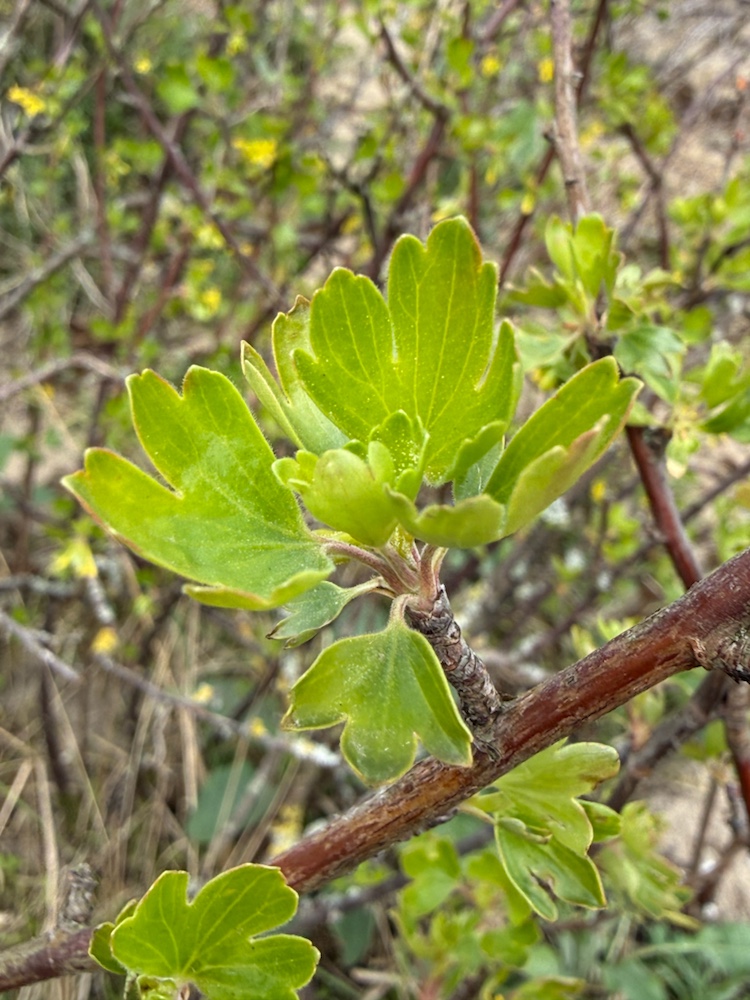
Ribes aureum is a deciduous shrub reaching 3-8 feet (90-240 cm) tall and 4-6 feet (1.2-1.8 m) wide at maturity, with multiple slender stems arising from the base. Stems are smooth, gray-brown, and unarmed (no spines or prickles, separating it from gooseberries in the genus). Leaves are alternate, palmately 3-5 lobed, 0.75-2 inches (2-5 cm) across, with smooth or sparsely toothed margins. Foliage emerges medium green in spring, turns blue-green by midsummer, and develops red, orange, and yellow tones in October before drop. Tubular yellow flowers 0.5-0.75 inches (12-19 mm) long appear in pendulous racemes of 5-15 in April and May; flowers carry a clove or vanilla-like fragrance and are pollinated by hummingbirds and long-tongued solitary bees. Berries ripen from green through orange to dark purple-black, red, or amber 0.25-0.4 inches (6-10 mm) across in July and August; ripe fruit is edible raw or cooked. Plants spread slowly by underground rhizomes; mature clumps reach 4-6 feet (1.2-1.8 m) wide after 5-7 years. Lifespan is 15-25 years on suitable sites.
Native Range
Native to western North America from southern Saskatchewan and Washington south to California, east to the Great Plains, Texas, and northern Mexico. Found along streambanks, in moist meadows, riparian woodlands, and at the edges of pine forests at 1,500-8,000 feet (450-2,400 m) elevation. Most common on alluvial soils with seasonal subsurface moisture in semi-arid regions of the Intermountain West.Suggested Uses
Used in xeriscape, native shrub borders, and edible landscapes in zones 4-8 at 4-6 foot (1.2-1.8 m) spacing. Tubular yellow flowers appear from late April through May and attract hummingbirds. Berries are eaten by birds, mammals, and humans; varieties with larger, sweeter fruit have been selected for jam and jelly use.How to Identify
Appearance
Size & Dimensions
Height3' - 8'
Width/Spread4' - 6'
Bloom Information
Tubular yellow flowers appear in pendulous racemes of 5-15 from late April through late May in zones 4-8, with peak bloom 2-3 weeks after leaf emergence. Bloom lasts 2-3 weeks at any single site; cool weather extends the period to 4 weeks. Hummingbirds and long-tongued solitary bees are the primary pollinators; the corolla tube length excludes most short-tongued bees.
Detailed Descriptions
Foliage Description
medium green to blue-greenGrowing Conditions
Sun Requirements
Requires 4-12 hours of direct sunlight daily
• Full Sun: 6+ hours of direct sunlight
• Partial Shade: 3-6 hours of direct sunlight
• Full Shade: Less than 3 hours of direct sunlight
Care & Maintenance
Care Guide
Grows in full sun to part shade on moist to seasonally dry, well-drained loam to sandy loam at neutral to slightly alkaline pH. Water deeply once weekly during establishment; mature plants tolerate dry summers in zones 5-8 once past the second season but produce smaller berry crops in dry years. White pine blister rust (Cronartium ribicola) can infect this species; planting near five-needled pines is restricted in some western states under historic blister-rust management programs. Spider mites occur in hot, dry, dusty conditions and dehydrate leaves; severity is cosmetic in most years. Plants are tolerant of late spring frost in bloom and rarely lose flower crops to frost damage. Lifespan is 15-25 years.Pruning
Cut all stems to within 6-12 inches (15-30 cm) of the ground every 6-8 years in late winter to maintain stem vigor and fruit production; the colony resprouts from the rhizome and crown. Remove individual canes older than 5-6 years annually for ongoing renewal — older canes produce fewer flowers and fruit. Suckers from the colony edge can be cut at ground level to limit spread.Pruning Schedule
Prune: February–March
winterearly spring