Eryngium, Genus, yuccifolium, Species,
- Genus & species
rattlesnake master
Central and eastern North America (tallgrass prairie)
Overview
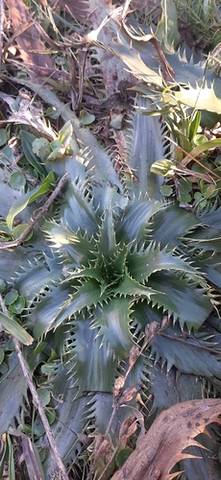
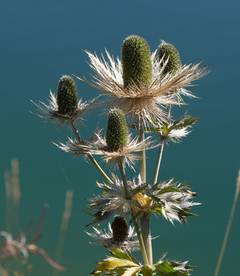
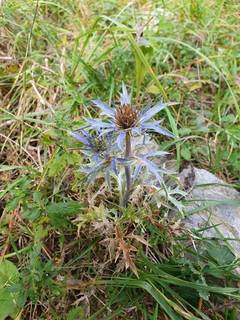
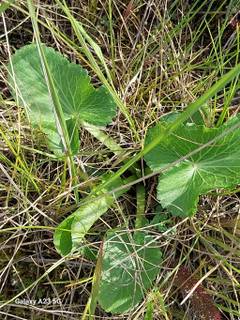
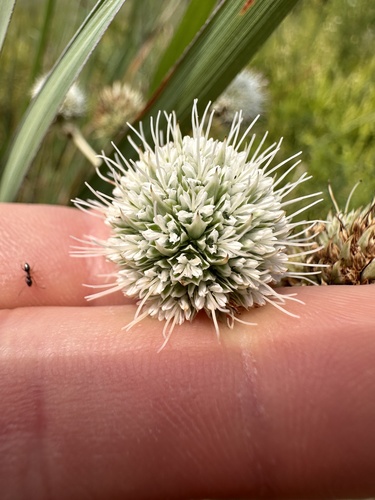
Eryngium yuccifolium is an upright herbaceous perennial native to North American tallgrass prairies, reaching 4-5 feet (120-150 cm) tall in flower and forming a basal rosette 18-24 inches (45-60 cm) wide. Foliage is yucca-like, sword-shaped, blue-green to gray-green, 12-18 inches (30-45 cm) long with finely spined margins. Stems are stiff, unbranched in the lower portion and branching above to bear globular flower heads 0.75-1 inch (2-2.5 cm) wide. Each flower head consists of dense greenish-white florets surrounded by 6-8 stiff spiny bracts. Bloom occurs from June through August in zones 4-7 and may extend into early September in zones 8-9. The deep taproot reaches 5-6 feet (1.5-1.8 m) into the soil and makes mature plants difficult to transplant. Tolerates drought, heat, poor soils, and seasonal flooding once established. Plants self-seed slowly in disturbed bare soils. Generally non-toxic; spiny foliage and bracts can cause minor skin pricks during garden work. Native populations have declined with prairie loss, and the species is listed as endangered or threatened in several northern states.
Native Range
Eryngium yuccifolium is native to central and eastern North America from Minnesota and southern Ontario south to Texas and Florida. Plants occur in tallgrass prairies, prairie remnants, oak savannas, glades, and seasonally moist meadows at 100-2,500 feet (30-760 m) elevation in well-drained loam to sand. Native populations have been reduced by 90%+ since European settlement due to prairie loss.Suggested Uses
Planted in prairie restorations, native plant gardens, and meadow plantings at 18-24 inch (45-60 cm) spacing in zones 4-9. Used in dry mixed borders, gravel gardens, and as a vertical accent in xeric plantings. Container culture is generally not feasible due to deep taproot requirements; pot-grown plants typically decline within 1-2 years.How to Identify
Appearance
Size & Dimensions
Height4' - 5'
Width/Spread1'6" - 2'
Colors
Bloom Information
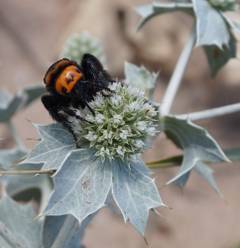
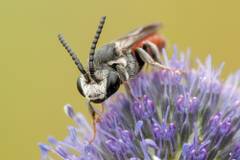
Bloom occurs from late June through August in zones 4-7, with peak in mid-July through early August. Plants in zones 8-9 may begin in early June and extend into early September. Each flower head remains in bloom for 4-6 weeks, fading from greenish-white to tan-brown but persisting on the plant through fall and into winter. Flowers are visited by 40+ recorded pollinator species including small bees, solitary wasps, beetles, and butterflies.
Detailed Descriptions
Foliage Description
Blue-green to gray-greenGrowing Conditions
Sun Requirements
Requires 6-12 hours of direct sunlight daily
• Full Sun: 6+ hours of direct sunlight
• Partial Shade: 3-6 hours of direct sunlight
• Full Shade: Less than 3 hours of direct sunlight
Care & Maintenance
Care Guide
Plant in well-drained sandy or rocky soil in full sun with neutral pH; clay soils require amendment with grit or planting on a mound. Water weekly during the first growing season; established plants tolerate 6-8 weeks of drought due to deep taproot reach. No fertilizer is needed; rich soils produce weak floppy stems. Mature plants are difficult to transplant due to taproot depth; plants are typically replaced rather than divided. No serious pest or disease problems are reported; spiny foliage resists deer browsing. Plants self-seed slowly in disturbed soils.Pruning
Cut stems to ground level in late winter or early spring before new growth emerges. Spent flower heads can be left through winter for structural texture; the seed heads are tan-brown and persistent. Deadheading after flowering reduces self-seeding but does not extend bloom.Pruning Schedule
Prune: February–March
winterearly spring