Eryngium, Genus, agavifolium, Species,
- Genus & species
agave-leaved sea holly
Argentina (Córdoba, San Luis; pampas grasslands, rocky hillsides)
Overview
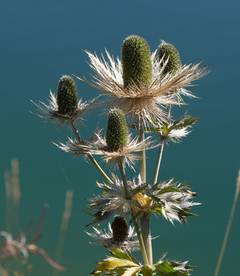
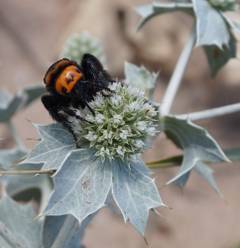
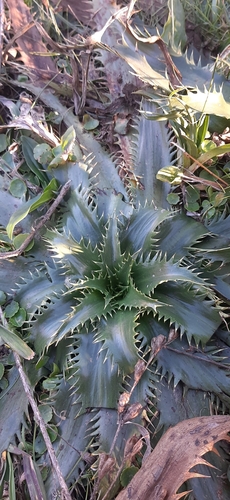
Eryngium agavifolium is an upright clumping evergreen perennial reaching 36–48 inches (90–120 cm) tall in bloom with a basal rosette spread of 18–24 inches (45–60 cm). The South American species takes a form unlike the European sea hollies that dominate the genus in temperate gardens—sword-shaped, evergreen, basal leaves 12–24 inches (30–60 cm) long and 1–2 inches (2.5–5 cm) wide with sharply serrated spiny margins, resembling a small agave rosette (hence the specific epithet 'agavifolium,' meaning 'agave-leaved'). Flower stems rise well above the foliage, carrying cylindrical thimble-shaped greenish-white to pale green flower heads 1–2 inches (2.5–5 cm) long in July–August. The flower heads lack the showy blue bracts of European species such as E. alpinum and E. bourgatii, so the primary ornamental contribution is the bold architectural evergreen rosette rather than the flower color. The year-round evergreen form in a genus otherwise dominated by herbaceous silver-blue branching stems is the key garden value. Growth rate is moderate. Hardy to zone 6.
Native Range
Eryngium agavifolium is native to Argentina, specifically Córdoba and San Luis provinces in the central-western part of the country. The species grows in pampas grasslands, rocky hillsides, and foothill slopes at moderate elevations. The agave-like leaf form is a convergent adaptation to the same hot-dry summers and cold winters that shape true agaves in North America, though the two plants belong to entirely separate families.Suggested Uses
Planted as an architectural specimen or in gravel gardens at 18–24 inch (45–60 cm) spacing. The evergreen agave-like rosette carries year-round structural weight in temperate climates where a true agave would not survive the winter—the plant covers the same visual niche with full zone-6 cold hardiness. Functions in Mediterranean-style plantings, coastal gardens, and dry borders. Paired with ornamental grasses (Stipa tenuissima, Miscanthus sinensis), Sedum cultivars, and other drought-tolerant perennials, the species combines well in low-water plantings where the bold rosette anchors a composition of softer forms. Shaded positions, wet winter soils, narrow pathway edges (the spiny leaf margins are a hazard to passersby), and border positions where the rosette is hidden by neighboring plants are poor fits for the species.How to Identify
Appearance
Size & Dimensions
Height3' - 4'
Width/Spread1'6" - 2'
Bloom Information
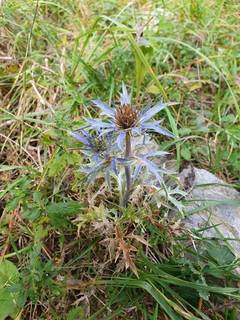
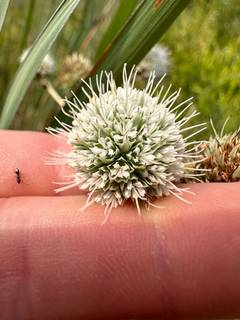
Cylindrical thimble-shaped greenish-white to pale green flower heads 1–2 inches (2.5–5 cm) long open on upright stems 36–48 inches (90–120 cm) tall in July–August. The flower heads lack the blue bracts found in European Eryngium species, so the color is muted green rather than the electric blue of E. alpinum or E. planum. Bloom duration is 4–6 weeks. Dried seed heads persist into winter and carry structural interest through the dormant season.
Detailed Descriptions
Flower Description
Greenish-white to pale green, cylindrical thimble-shaped headsFoliage Description
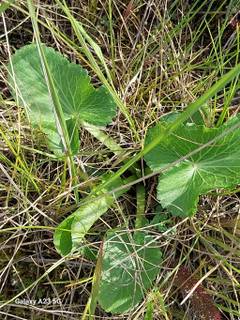
Dark green, sword-shaped, spiny-margined, agave-like evergreen rosetteGrowing Conditions
Sun Requirements
Requires 6-10 hours of direct sunlight daily
• Full Sun: 6+ hours of direct sunlight
• Partial Shade: 3-6 hours of direct sunlight
• Full Shade: Less than 3 hours of direct sunlight
Care & Maintenance
Care Guide
Plant in full sun in well-drained soil. Drought-tolerant once established, reflecting the pampas-grassland ecology of the native range. Hardy to zone 6 (−10°F / −23°C). The evergreen rosette is the primary ornamental feature, so positioning where foliage remains visible year-round matters more than for most herbaceous perennials that disappear in winter. A deep taproot develops within 2 years and the plant resents transplanting once established—container-grown young plants are moved in before the taproot anchors deeply. No serious pest or disease problems. Crown rot in wet winter soils is the primary cause of plant loss.Pruning
Spent flower stems are removed in late fall or left standing for winter seed-head structure. Tattered outer rosette leaves are trimmed away in early spring as new growth begins. Handling during trim operations is done with gloves as a practical precaution—the leaf margins are sharply serrated and can cut bare skin, similar to a pineapple leaf.Pruning Schedule
Prune: March & October
fallearly spring
Container Growing
Suitable for container growing
Minimum container size: 5 gallons