Eryngium, Genus, spp., Multiple species,
- Genus
- Multiple species
eryngos
Europe, Asia, North Africa, and the Americas
Overview
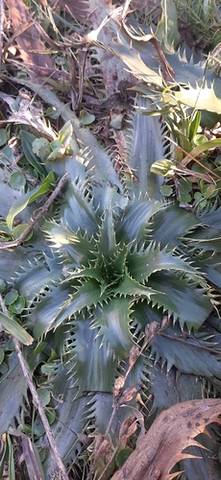
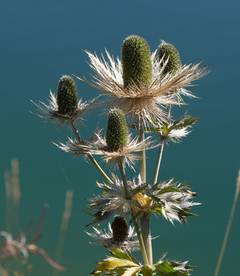
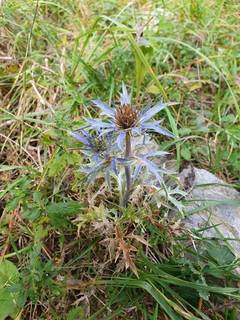
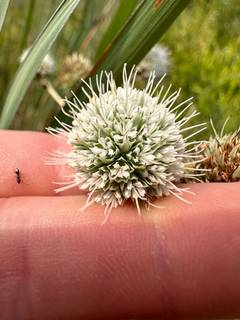
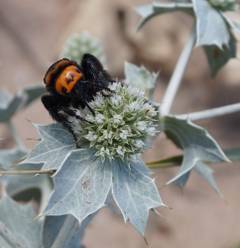
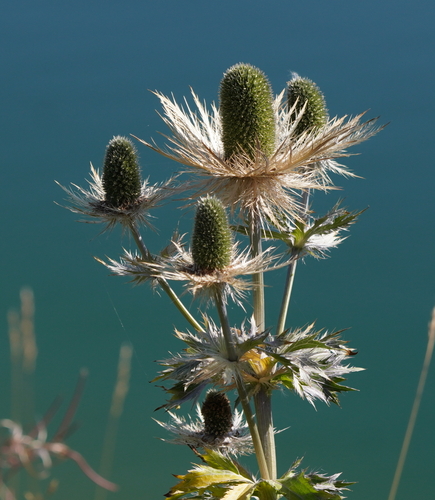
Eryngium is a genus of about 250 species in the carrot family (Apiaceae), a large genus made up of annual, biennial, and perennial herbs known as eryngos or sea hollies. Despite their thistle-like, spiny look, they are not true thistles. Plants form clumps or rosettes of leathery, often spiny-edged leaves and send up branched stems 12-48 inches (30-120 cm) tall. The small flowers are packed into dense, cone- or thimble-shaped heads, each ringed by a collar of stiff, spine-tipped bracts, in steel-blue, silvery-white, green, or violet, and the upper stems often take on the same metallic color. Bloom comes in summer and lasts for weeks, drawing many bees, wasps, and other pollinators, and the heads dry well for arrangements. Most species have a deep taproot and tolerate drought, poor soil, and salt spray, but resent transplanting and wet winter soil. The genus ranges across Europe, Asia, and the Americas; some, such as rattlesnake master (E. yuccifolium), are North American prairie natives, while others, such as sea holly (E. maritimum), grow on coastal sand.
Native Range
The genus is widespread across Europe, Asia, North Africa, and the Americas, growing in dry grassland, rocky slopes, prairie, and coastal sand. South America and the eastern United States hold many species, including the prairie native rattlesnake master (E. yuccifolium).Suggested Uses
Sea hollies are planted in sunny borders, gravel and coastal gardens, prairie and pollinator plantings, and dry, low-water beds, spaced 12-24 inches (30-60 cm) apart. The steel-blue heads are grown for cutting and dry well for everlasting arrangements. Rattlesnake master and other species are used in native and meadow plantings.How to Identify
Appearance
Size & Dimensions
Height1' - 4'
Width/Spread1' - 2'
Bloom Information
Flowering occurs through summer, generally from June to August, with the colored heads holding for many weeks. The steel-blue or silver coloring of the bracts and stems develops as the flowers open and persists as they age. Bloom draws steady pollinator traffic, and the dried heads keep their shape into autumn.
Detailed Descriptions
Flower Description
steel-blue, silvery-white, green, or violetFoliage Description
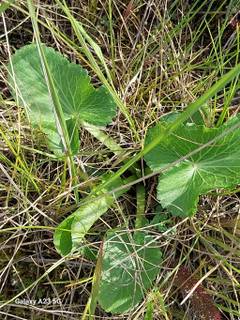
green to gray-greenGrowing Conditions
Sun Requirements
Requires 6-10 hours of direct sunlight daily
• Full Sun: 6+ hours of direct sunlight
• Partial Shade: 3-6 hours of direct sunlight
• Full Shade: Less than 3 hours of direct sunlight
Care & Maintenance
Care Guide
Eryngium species grow in full sun in lean, well-drained, even sandy or gravelly soil across a pH of 6.0-7.5, and tolerate drought, heat, and salt once established. Most have a deep taproot, so they are planted young and left in place, since they resent disturbance and often fail if moved. Wet, heavy soil in winter is the main cause of loss, more than cold itself. Hardiness varies by species, with many hardy across USDA zones 4-9. Rich soil and shade produce floppy growth and fewer colored heads. Few pests trouble them, though crown and root rot follow poor drainage. Perennial species are left undisturbed and increase slowly into larger clumps.Pruning
Spent flower stems are cut back after bloom, or left standing into winter for their dried form and seed. Cutting some stems before the seed ripens limits self-sowing, which can be heavy in the biennial species. Old foliage is cleared from perennial clumps in late winter before new growth starts.Pruning Schedule
Prune: February
winter
Container Growing
Suitable for container growing
Minimum container size: 3 gallons