Quercus, Genus, frainetto, Species,
- Genus & species
Hungarian oak
Southeastern Europe — Italy, the Balkans, Hungary, Romania, Greece, and Turkey; dry to mesic oak forests on well-drained soils
Overview
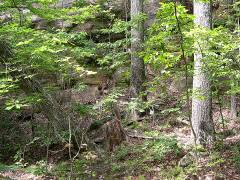
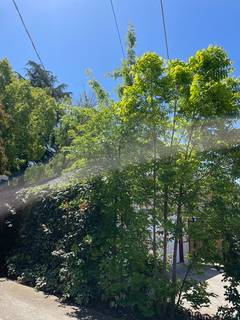
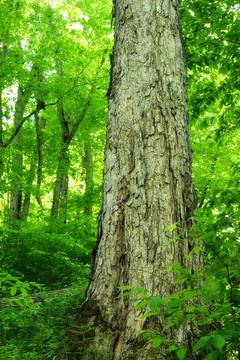
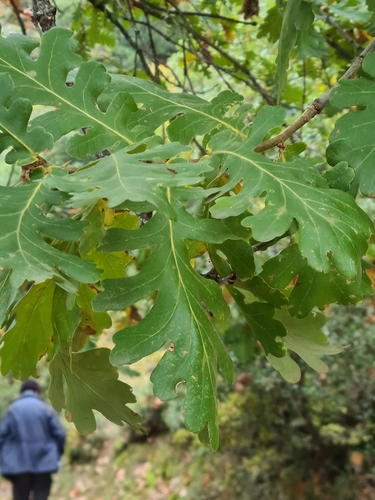
Quercus frainetto is Hungarian oak (Italian oak), a large upright deciduous tree growing 50-70 feet (15-21 m) tall and 35-50 feet (10.5-15 m) wide with a broad dome-shaped crown. Very large glossy dark green deeply and regularly pinnately lobed leaves 4-8 inches (10-20 cm) with 7-9 pairs of rounded lobes — among the largest leaves of any European oak species. Emerging with bronze tints in spring. Turns yellow to russet-brown in fall. Marcescent — brown leaves persist through winter on young trees. Acorns 0.5-0.75 inch (1.3-2 cm) in sessile clusters, maturing in 1 year (white oak group). In Fagaceae. Native to southeastern Europe — Italy, Balkans, Hungary, Romania, Greece, Turkey. A member of the white oak group (section Quercus). Tolerates a wide pH range (5.0-8.0) including alkaline chalk — more lime-tolerant than most North American oaks. This alkaline tolerance makes it suited to calcareous soils where Q. rubra and Q. coccinea cannot grow. The very large mature size (50-70 feet / 15-21 m tall, 35-50 feet / 10.5-15 m wide) is the primary space limitation. Slow-growing. Drought-tolerant once established. No significant pest or disease problems in North American cultivation. Deer-resistant. Leaves and acorns contain tannins that are harmful if eaten in quantity, especially to horses and grazing livestock; the risk to people is generally low. Zones 5-8. Full sun. Growth rate is slow to moderate.
Native Range
Native to southeastern Europe — Italy, the Balkans, Hungary, Romania, Greece, and Turkey. Found in dry to mesic oak forests on well-drained soils.Suggested Uses
Grown as a shade tree and specimen tree in large landscapes with alkaline or neutral soils where North American oaks struggle, spaced 35-50 feet (10.5-15 m). Tolerates chalk and clay. Very large leaves. Slow-growing. Leaves and acorns are harmful to horses, livestock and pets if eaten in quantity. Zones 5-8.How to Identify
Appearance
Size & Dimensions
Height50' - 70'
Width/Spread35' - 50'
Bloom Information
Mid spring (April-May). Yellowish male catkins 2-3 inches (5-7 cm). Wind-pollinated. 1 week. Acorns mature in 1 year (white oak group).
Detailed Descriptions
Flower Description
Yellowish male catkins 2-3 inches (5-7 cm) in April-May; inconspicuous; wind-pollinatedFoliage Description
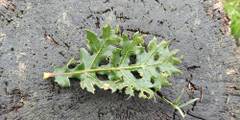
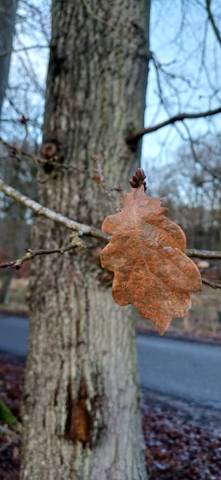
Glossy dark green, alternate, very large, 4-8 inches (10-20 cm) long, deeply and regularly pinnately lobed with 7-9 pairs of rounded lobes — among the largest leaves of any European oak; emerging with bronze tints; turns yellow to russet-brown in fall; marcescent (brown leaves persist through winter on young trees)Growing Conditions
Sun Requirements
Requires 6-12 hours of direct sunlight daily
• Full Sun: 6+ hours of direct sunlight
• Partial Shade: 3-6 hours of direct sunlight
• Full Shade: Less than 3 hours of direct sunlight
Care & Maintenance
Care Guide
Full sun (6+ hours). Any well-drained soil pH 5.0-8.0 — tolerates alkaline chalk and clay (more lime-tolerant than most oaks). Drought-tolerant once established. No significant pests or diseases in North American cultivation. Do not prune April-July (oak wilt risk). Prune in winter (January-February). Very large at maturity. Deer-resistant. Leaves and acorns are harmful to horses, livestock and pets if eaten in quantity. Zones 5-8.Pruning
Prune in winter (January-February). Do not prune April through July (oak wilt risk). Develop a single central leader when young. Remove dead, crossing, or poorly attached branches. The broad dome-shaped crown is natural — minimal pruning needed on established trees.Pruning Schedule
Prune: January–February
winter