Quercus, Genus, acuta, Species,
- Genus & species
Japanese evergreen oak
East Asia (Japan, South Korea, southern China)
Overview
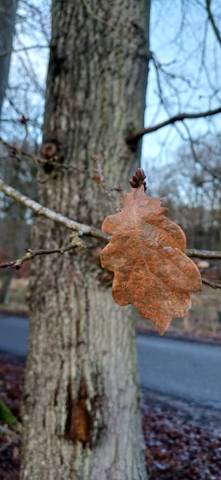
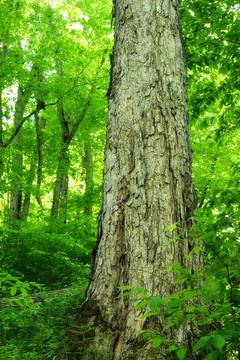
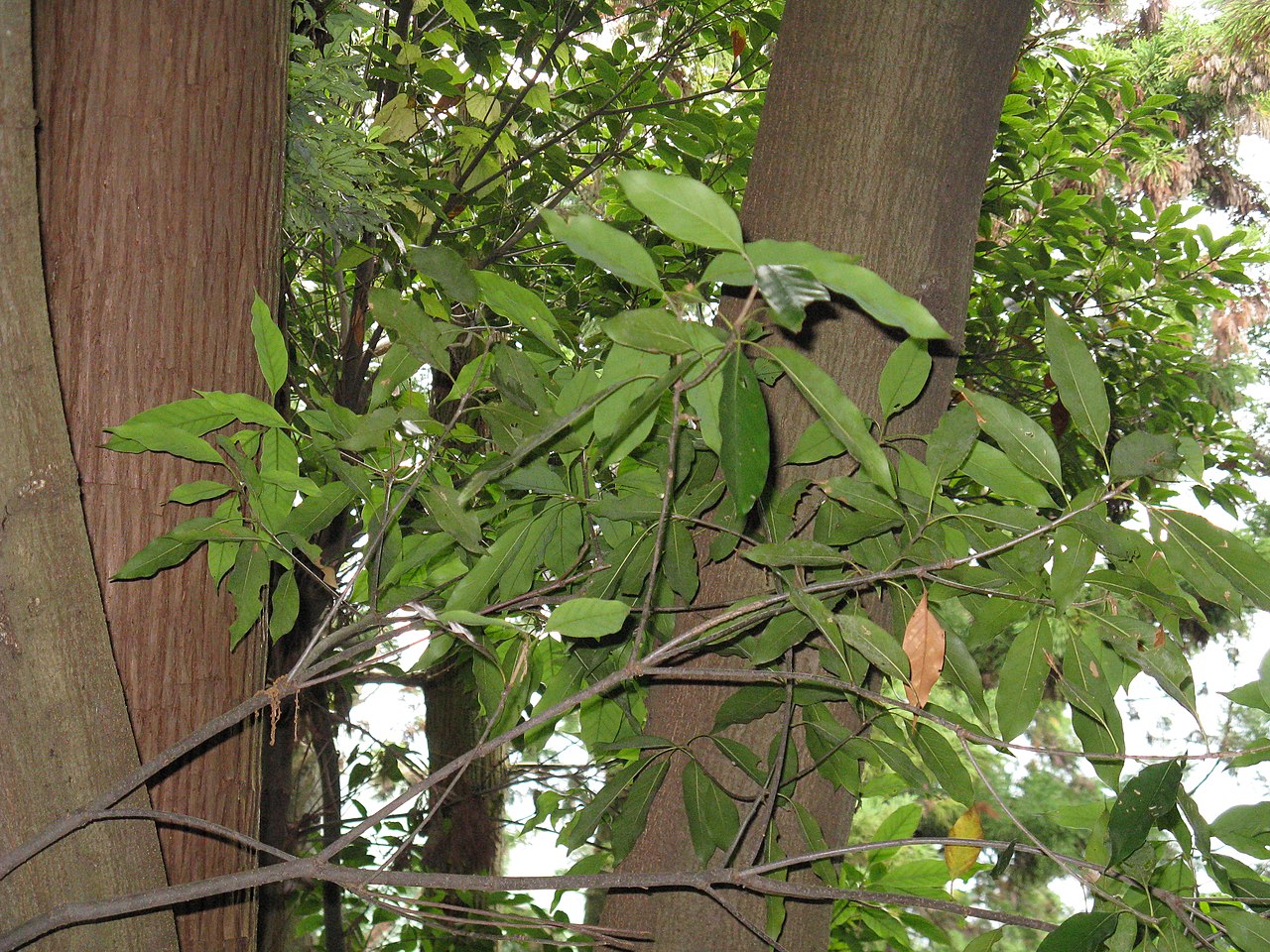
Quercus acuta is an evergreen tree reaching 30–50 feet (9–15 m) tall and 20–35 feet (6–10.7 m) wide, with a dense rounded to broadly oval crown carried on a straight trunk. The species belongs to the Cyclobalanopsis subgenus (ring-cupped oaks), a group of approximately 150 East Asian and Southeast Asian evergreen oak species in which the acorn cup bears concentric raised rings of fused scales rather than the free overlapping scales seen on acorn cups of European, North American, and temperate Asian deciduous oaks. Leaves are simple, alternate, elliptic to oblong, 3–5 inches (8–13 cm) long and 1.5–2 inches (4–5 cm) wide, glossy dark green, leathery, with entire (smooth) margins — the absence of lobes, teeth, or serrations along the leaf edge is atypical for the genus Quercus as encountered by gardeners in Europe and eastern North America, where most cultivated oaks carry lobed or toothed leaves. New spring growth emerges bronze to reddish-bronze in April–May and transitions to mature dark green over 3–4 weeks as leaves expand and harden. Bark is smooth and gray on young stems, becoming shallowly furrowed on mature trunks. Acorns are small ovoid pomes 0.5–0.8 inch (13–20 mm) long, borne in shallow cups with concentric raised rings, maturing over 1 year. Growth rate is slow to moderate at 12–24 inches (30–60 cm) per year after establishment; the tree reaches full mature size in 40 years. The plant is slow to establish — the first 3–5 years after planting produce minimal top growth while the root system develops, after which vegetative growth accelerates. Hardy to USDA zone 7 (to 0°F / –18°C). Leaves and acorns contain tannins that are harmful if eaten in quantity, especially to horses and grazing livestock; the risk to people is generally low.
Native Range
Quercus acuta is native to Japan, South Korea, and southern China, occurring in warm-temperate evergreen broadleaf forests from lowlands to moderate elevations of 2,500 feet (750 m).Suggested Uses
Used as a specimen tree, shade tree, evergreen screen, or lawn tree in landscapes at 20–30 foot (6–9 m) spacing. The evergreen broadleaf foliage keeps the tree in leaf year-round in USDA zones 7 and warmer, which suits positions where a deciduous oak would leave bare winter structure for 5 months of the year — privacy screens, wind breaks, and year-round visual anchors. Bronze new growth in April–May adds a seasonal color element against mature leaves. Slow establishment (3–5 years of minimal top growth) rules out projects that need visible tree presence within the first 2–3 seasons. Long lifespan — mature specimens regularly reach 100–150 years of age under favorable conditions — makes this a multi-generational landscape investment rather than a short-term planting. The plant does not grow well in climates below USDA zone 7, alkaline soils above pH 7.5, or exposed cold-wind positions at the zone 7 hardiness limit.How to Identify
Appearance
Size & Dimensions
Height30' - 50'
Width/Spread20' - 35'
Bloom Information
Inconspicuous green catkins appear on new growth in April–May over a 2 week window. Acorns develop from pollinated flowers through summer and mature in shallow ring-cupped containers in October–November of the same year. Mature trees produce acorn crops every 2–3 years in a mast-and-rest cycle typical of the Quercus genus. The glossy dark green evergreen foliage and bronze new growth in spring are the year-round display features.
Detailed Descriptions
Foliage Description
Glossy dark green on mature leaves, bronze to reddish-bronze on new spring growth; simple, alternate, elliptic to oblong, 3-5 inches long and 1.5-2 inches wide, leathery, with entire (smooth) marginsGrowing Conditions
Sun Requirements
Requires 4-10 hours of direct sunlight daily
• Full Sun: 6+ hours of direct sunlight
• Partial Shade: 3-6 hours of direct sunlight
• Full Shade: Less than 3 hours of direct sunlight
Care & Maintenance
Care Guide
Grow in full sun to partial shade with 4–10 hours of direct light in moist, well-drained, acidic to neutral loam, sand, or silt at pH 5.0–7.0. The species reaches its full growth rate on humus-rich acidic soils; alkaline soils above pH 7.0 can cause iron chlorosis that yellows foliage and slows growth. Water deeply once per week during the first three growing seasons to establish, then rely on natural rainfall during typical weather. Apply 2–3 inches (5–8 cm) of organic mulch over the root zone in spring. At the USDA zone 7 cold margin, specimens benefit from siting out of cold drying winter winds — exposed positions desiccate the evergreen foliage and produce leaf browning through late winter. Establishment phase runs 3–5 years during which top growth is minimal; patience through this period produces a tree that accelerates rapidly in years 5–15. Hardy to USDA zone 7.Pruning
Prune in late winter (January–February) during the first 10–15 years to remove crossing or rubbing branches, establish a central leader, and raise the lower canopy to 7–8 feet (2.1–2.4 m) of clear trunk for walking clearance beneath mature specimens. Mature trees need minimal corrective pruning. The dense rounded crown develops its characteristic form without shaping cuts.Pruning Schedule
Prune: January–February
winter