Picea, Genus, abies, Species, 'Pusch', Cultivar,
- Genus & species
- Cultivar
Pusch Norway spruce
Northern, central, and southeastern Europe
Overview
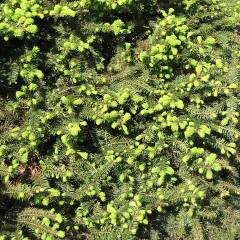
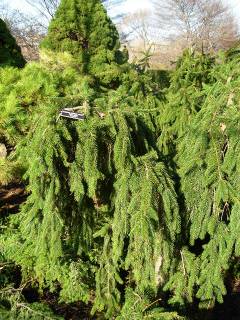
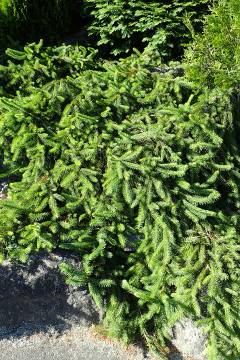
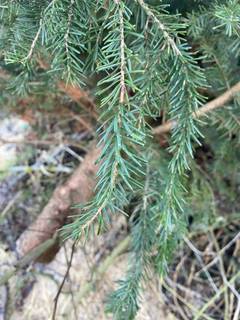
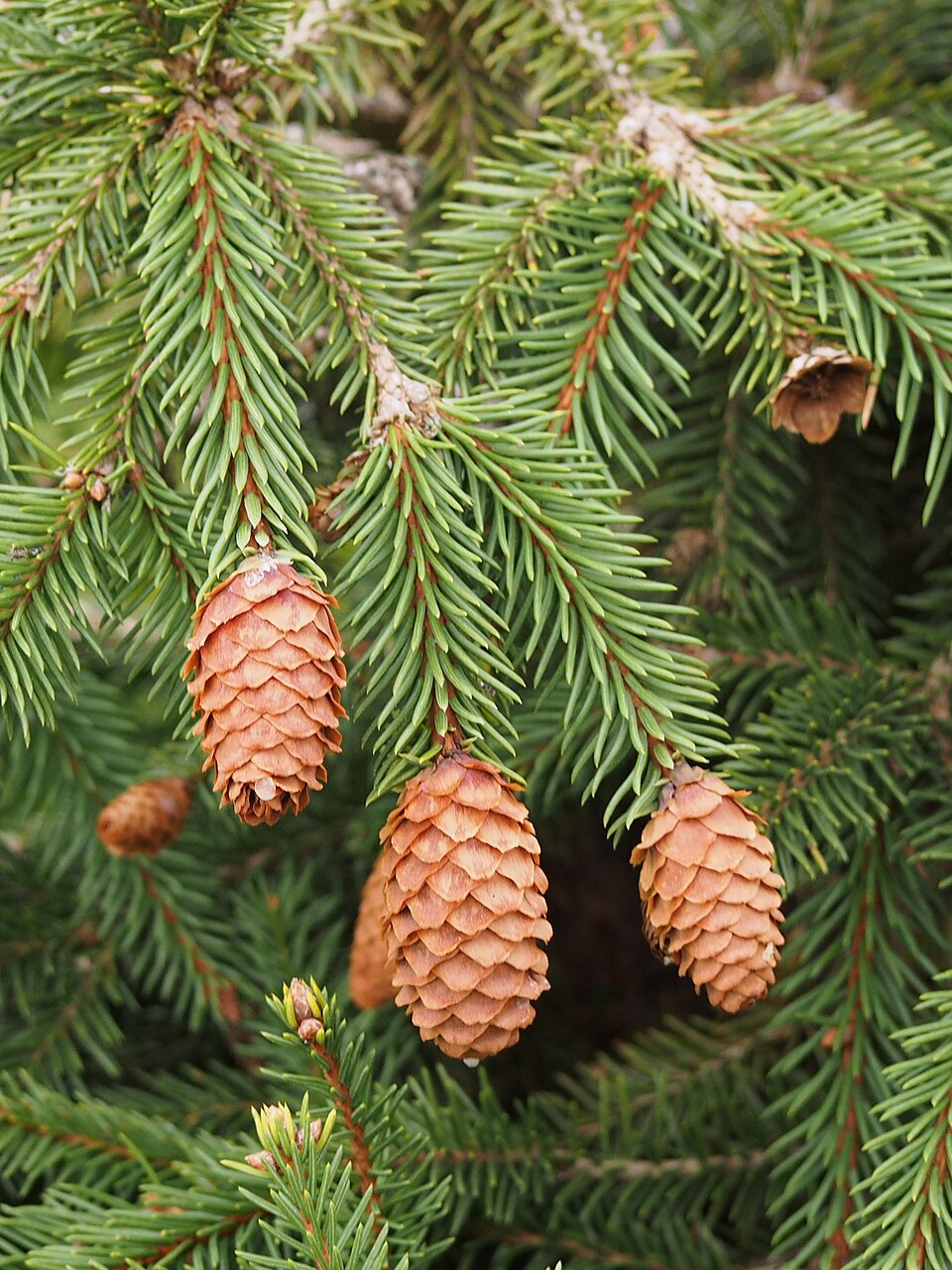
'Pusch' is a dwarf cultivar of Picea abies forming a dense, irregularly rounded mound that produces conspicuous red-purple young cones at an unusually small plant size. Mature plants reach 18-30 inches (45-75 cm) tall and 24-36 inches (60-90 cm) wide at 10 years, eventually 3-4 feet (90-120 cm) tall and 4-5 feet (1.2-1.5 m) wide after 25-30 years. Growth rate is 2-3 inches (5-7.5 cm) per year. Needles four-sided, dark green, 0.4-0.7 inch (10-18 mm) long, persisting 4-6 years. Branches densely arranged. Bark grey-brown on the older central trunk, scaly. Pollen cones reddish in May; female cones develop in clusters at branch tips even on plants 5-7 years old, emerging crimson to magenta-purple in May, fading to brown by late summer, and reaching 1.5-2.5 inches (4-6.5 cm) at maturity. Cone production is heaviest in years following cool, moist springs. Susceptible to spruce spider mite in hot, dry summers and to Cytospora canker on stressed plants.
Native Range
The species Picea abies is native to northern, central, and southeastern Europe, from Scandinavia and Russia south through the Alps and Balkans to the Carpathians. The cultivar 'Pusch' was selected as a witch's broom mutation found in a German nursery in the late 20th century and is propagated by grafting onto P. abies seedling rootstock.Suggested Uses
Used in rock gardens, foundation plantings, and conifer collections, with mature spread of 4-5 feet (1.2-1.5 m). Spaced 4-5 feet (1.2-1.5 m) apart when grouped. Suited to container culture in pots of at least 15 gallons (55 L) for the first 10-15 years.How to Identify
Appearance
Size & Dimensions
Height1'6" - 4'
Width/Spread2' - 5'
Colors
Bloom Information
Spruces produce wind-pollinated cones rather than flowers. Male pollen cones reddish, develop at branch tips in May, releasing pollen for 1-2 weeks. Female cones emerge crimson to magenta-purple at branch tips in May, fade to brown by late summer, and reach 1.5-2.5 inches (4-6.5 cm) at maturity. The colored juvenile cone stage lasts 6-8 weeks from emergence to brown maturity, providing seasonal color from May through July.
Detailed Descriptions
Flower Description
red-purple to crimson immature conesFoliage Description
dark greenGrowing Conditions
Sun Requirements
Requires 4-12 hours of direct sunlight daily
• Full Sun: 6+ hours of direct sunlight
• Partial Shade: 3-6 hours of direct sunlight
• Full Shade: Less than 3 hours of direct sunlight
Care & Maintenance
Care Guide
Establish in well-drained acidic to neutral soil (pH 4.5-7.0) with full sun to part sun exposure of at least 4 hours direct sun daily. Water deeply once per week during the first two growing seasons; established plants tolerate moderate drought once roots are established. Spruce spider mite (Oligonychus ununguis) feeds on needles in hot, dry summers, causing bronzing and needle drop. Cytospora canker (Leucostoma kunzei) infects stressed branches and produces resin flow with branch dieback. Heavy cone production diverts resources from extension growth, which slows cone-bearing plants further. Tolerates exposure and cold winters to -40°F (-40°C); performance declines in zones warmer than 7.Pruning
Spruces do not regenerate from old wood; pruning is limited to removal of dead, broken, or diseased branches at any time of year. Spent brown cones can be removed once they have faded for cosmetic reasons; this does not affect future cone production. Light tip pruning of new growth in late spring maintains compactness, with cuts no deeper than the current season's extension.Pruning Schedule
Prune: May–June
late spring
Container Growing
Suitable for container growing
Minimum container size: 15 gallons