Prunus, Genus, emarginata, Species,
- Genus & species
bitter cherry
Western North America: British Columbia to Baja California, east to Rockies
Overview
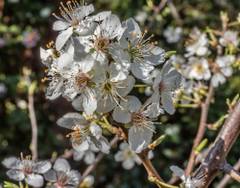
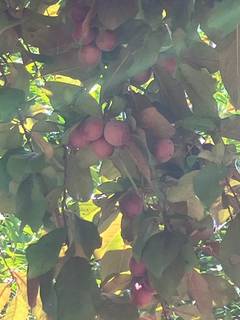
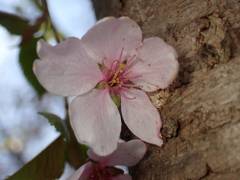
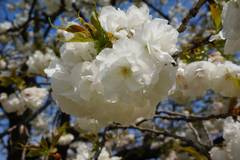
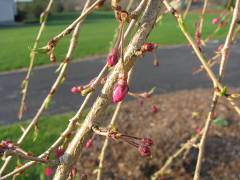
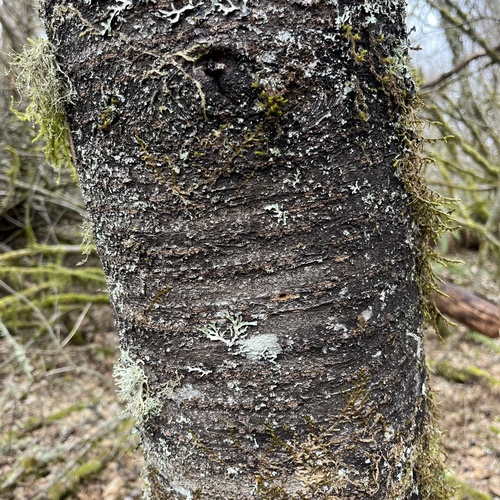
Prunus emarginata is a small to medium deciduous tree reaching 15-50 feet (4.5-15 m) tall and 10-25 feet (3-7.5 m) wide at maturity, often growing as a multi-stemmed thicket-forming shrub at higher elevations and in disturbed sites. Bark is smooth, shiny, reddish-brown to grey, marked with horizontal lenticels in transverse bands; bark on older trunks becomes scaly. Leaves are alternate, oblong to obovate, 1-3 inches (2.5-7.5 cm) long, dull green above and paler beneath, with rounded or notched (emarginate) tips that give the species its name. Flowers are white, 0.4-0.6 inches (10-15 mm) across, in flat-topped clusters of 5-12 from late April through June. Fruit is a small drupe 0.3-0.5 inches (8-13 mm) across, ripening from green through red to dark red or near-black in July and August. Fruit is bitter and astringent, inedible for human consumption, but is consumed by black bears, cedar waxwings, robins, and deer. Plants sucker from shallow roots, forming clonal patches 10-30 feet (3-9 m) across after 15-20 years. Lifespan is short for a tree, typically 25-40 years; older trunks decay rapidly once heart rot establishes through pruning wounds or dead branch stubs.
Native Range
Native to western North America from southern British Columbia south through Washington, Oregon, and California to northern Baja California, east to Montana, Idaho, Nevada, Arizona, and New Mexico. Grows from sea level to 9,000 feet (0-2,750 m) in moist mountain forests, riparian zones, post-fire shrub thickets, and clear-cuts.Suggested Uses
Planted in restoration projects on burn sites, riparian buffer zones, and wildlife habitat plantings across the western United States and Canada. Used in larger naturalistic gardens of 0.5+ acre at 15-25 feet (4.5-7.5 m) spacing for thicket-forming function. Suckering habit makes it unsuitable for small lots, formal gardens, and lawn plantings, where it spreads into adjacent beds within 5-7 years.How to Identify
Appearance
Size & Dimensions
Height15' - 50'
Width/Spread10' - 25'
Bloom Information
Late April through June across most of the range; begins early April in coastal California and extends into early July at higher elevations in the Sierra Nevada and Rockies. Individual flowers last 4-6 days; total bloom period at the plant level lasts 2-3 weeks. Bloom is followed by fruit set within 2-3 weeks, with fruit ripening from late July through August.
Detailed Descriptions
Foliage Description
Dull green above, paler beneathGrowing Conditions
Sun Requirements
Requires 4-10 hours of direct sunlight daily
• Full Sun: 6+ hours of direct sunlight
• Partial Shade: 3-6 hours of direct sunlight
• Full Shade: Less than 3 hours of direct sunlight
Care & Maintenance
Care Guide
Establish 1-3 year old plants from container stock or bare-root suckers; older transplants suffer heavy taproot loss and frequently fail. Water weekly during the first 2 growing seasons; established plants tolerate summer drought in zones 5-9 once roots reach 18-24 inches (45-60 cm) depth. Black knot fungus (Apiosporina morbosa) produces hard black galls on stems and is the most common disease in the eastern part of the range; affected branches are removed 6 inches (15 cm) below the gall. Tent caterpillars defoliate trees in May in some years; trees recover with a second flush of leaves by July without long-term damage. Sucker management is required in lawn or border settings, where the species spreads aggressively from lateral roots. Trees decline at 25-40 years and become hazard trees as heart rot progresses.Pruning
Dead or diseased wood is removed any time of year; structural pruning for form is performed in late summer after bloom and fruit drop, when silver-leaf disease (Chondrostereum purpureum) infection risk is reduced. Winter pruning in regions where silver-leaf is endemic creates infection sites because spores enter through fresh cuts in cool wet conditions. Suckers are cut at the soil line every 1-2 years if the plant is to remain a single-trunked tree.Pruning Schedule
Prune: August–September
summerfall