Prunus, Genus, angustifolia, Species,
- Genus & species
chickasaw plum
Central and southeastern United States
Overview
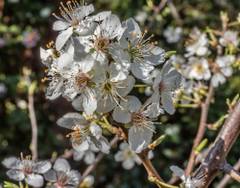
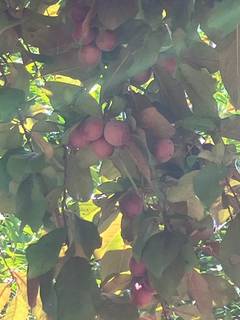
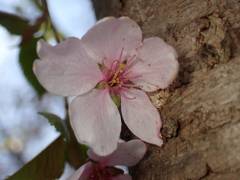
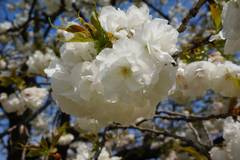
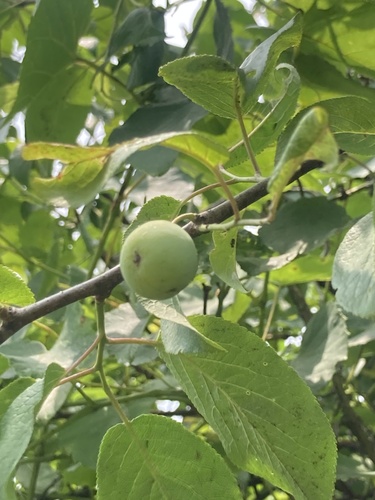
Prunus angustifolia is a thicket-forming shrub or small tree 6-25 ft (2-7.5 m) tall that spreads by root suckers into dense colonies. The slender twigs are reddish and slightly zigzag, often bearing short spur-like thorns. Leaves are narrow and lance-shaped, 1-2.5 in (2.5-6 cm) long, finely toothed, glossy, and folded along the midrib, turning yellow before they drop. In early spring, before or as the leaves expand, the branches are lined with small white five-petaled flowers about 0.4 in (1 cm) across, borne in clusters of two to four. Round plums 0.5-0.8 in (1.2-2 cm) across follow in summer, ripening red to yellow with a thin waxy bloom and tart, edible flesh around a single stone. It grows in old fields, fencerows, prairies, woodland edges, and sandy ground across the central and southeastern states. The leaves, bark, and seeds contain cyanogenic compounds that release cyanide when chewed and are toxic to people and livestock. Its strong suckering can form wide thickets that are hard to contain in small gardens.
Native Range
Native to the central and southeastern United States, from New Jersey and Florida west to Nebraska, Texas, and New Mexico, and naturalized beyond. It grows in old fields, prairies, fencerows, sandy woods, and disturbed open ground.Suggested Uses
Used in wildlife plantings, hedgerows, and windbreaks, where the thickets give cover and the fruit feeds birds and mammals. Planted for erosion control and naturalizing on sandy or disturbed ground, spaced 6-10 ft (1.8-3 m) apart.How to Identify
Appearance
Size & Dimensions
Height6' - 25'
Width/Spread10' - 20'
Bloom Information
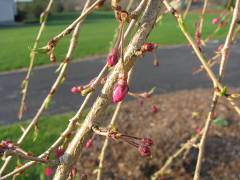
Flowers in early spring, from February to April, opening before or with the new leaves. The white blossoms cover the branches in small clusters and draw early bees and other insects. Fruit ripens from June to August.
Detailed Descriptions
Foliage Description
glossy greenGrowing Conditions
Sun Requirements
Requires 4-10 hours of direct sunlight daily
• Full Sun: 6+ hours of direct sunlight
• Partial Shade: 3-6 hours of direct sunlight
• Full Shade: Less than 3 hours of direct sunlight
Care & Maintenance
Care Guide
Grows in full sun to part shade on well-drained sandy, loamy, or rocky soil with a pH from about 5.5 to 7.5. Established plants tolerate heat and drought and resprout after fire or cutting. Hardy to USDA zone 5, roughly -20 F (-29 C). It suckers freely from the roots, so a single plant becomes a thicket unless the suckers are removed. Tent caterpillars, plum curculio, and black knot fungus can affect it, as with other plums. Wet, poorly drained soil shortens its life.Pruning
Pruning in late winter removes dead wood and thins crowded stems. Root suckers are cut or dug out to keep the plant from spreading. Black knot, seen as black swellings on twigs, is cut out below the affected area.Pruning Schedule
Prune: February–March
winterearly spring