Primula, Genus, spp., Multiple species,
- Genus
- Multiple species
Primrose
Northern Hemisphere temperate and montane regions, centered on the Himalaya and western China
Overview
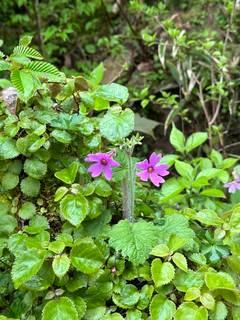
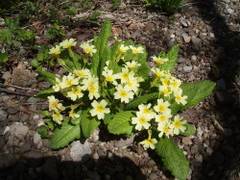
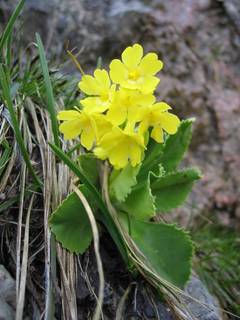
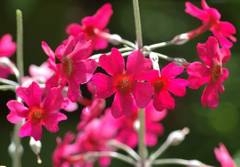
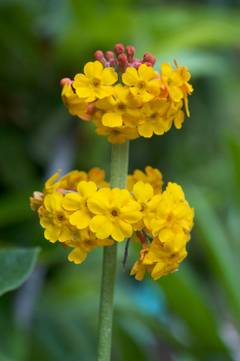
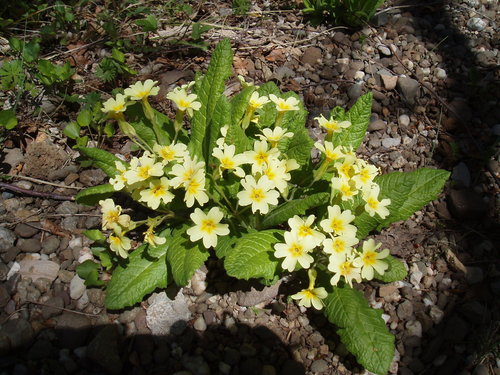
Primula is a genus of about 500 species of perennial herbs, a few biennial, in the primrose family (Primulaceae), 2–36 inches (5–90 cm) tall and 4–24 inches (10–60 cm) wide. Most species form a basal rosette of simple leaves 1–12 inches (2.5–30 cm) long, wrinkled, smooth, or coated in white powder (farina) depending on species, and evergreen in some, such as P. auricula, and deciduous in others, such as P. japonica. Flowers have a tubular corolla with five notched lobes 0.5–2 inches (1.3–5 cm) across and are borne singly, in umbels, in tiered whorls (candelabra types such as P. japonica), or in dense heads (P. denticulata); colors span white, yellow, pink, red, blue, and purple. Plants within a species produce two flower forms, pin and thrum, that differ in style and anther position. The genus is distributed across the Northern Hemisphere, with the greatest diversity in the Himalaya and western China. Most species need cool, moist conditions and decline above 80°F (27°C) in summer. Slugs and vine weevil larvae damage plants, and contact with the leaves of P. obconica causes a skin rash in sensitive people because of the compound primin.
Native Range
Primula is native across cool temperate and montane regions of the Northern Hemisphere, with about 300 species in the Himalaya and western China and others in Europe, northern Asia, and North America. A few species occur in the Southern Hemisphere, such as P. magellanica in southern South America. Habitats include alpine screes, meadows, woodland margins, and stream banks from sea level to above 15,000 feet (4,600 m).Suggested Uses
Used in woodland gardens, rock gardens, stream edges, borders, and containers, spaced 6–12 inches (15–30 cm) apart for rosette species and 12–18 inches (30–45 cm) apart for candelabra types. Plants are also grown as seasonal pot plants for indoor display from January to April.How to Identify
Appearance
Size & Dimensions
Height2" - 3'
Width/Spread4" - 2'
Bloom Information
Flowers open from February to July depending on species and elevation. P. vulgaris and P. denticulata bloom from February to May, P. veris blooms from April to May, and candelabra species such as P. japonica bloom from May to July. Individual species bloom for 4–8 weeks.
Detailed Descriptions
Flower Description
White, yellow, pink, red, blue, and purpleFoliage Description
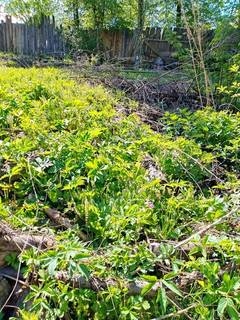
GreenGrowing Conditions
Sun Requirements
Requires 3-6 hours of direct sunlight daily
• Full Sun: 6+ hours of direct sunlight
• Partial Shade: 3-6 hours of direct sunlight
• Full Shade: Less than 3 hours of direct sunlight
Care & Maintenance
Care Guide
Most species grow in part shade in moist, humus-rich soil with a pH of 5.5–7.0, though P. auricula grows in gritty, alkaline soil with a pH of 7.0–8.0. Most species are hardy in USDA zones 3–8, and plants decline above 80°F (27°C) in summer. Water is applied at 1 inch (25 mm) per week, and soil does not dry out in spring. Clumps are divided every 3–4 years after flowering. Slugs, vine weevil larvae, and spider mites affect plants, and crown rot develops in waterlogged soil.Pruning
Pruning is limited to removing spent flower stalks and yellowed leaves at the base after flowering. Evergreen species such as P. auricula drop older leaves in winter, and dead leaves are removed to reduce crown rot. Clumps are divided immediately after flowering.Pruning Schedule
Prune: May–June
late spring
Container Growing
Suitable for container growing
Minimum container size: 1 gallons