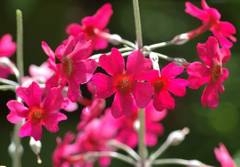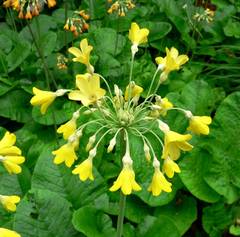
Primula, Genus, bulleyana, Species,
- Genus & species
Bulley's primrose
Southwestern China (Yunnan province); moist meadows, streamsides, and boggy areas at 8,000-11,000 feet (2,400-3,400 m); introduced to European horticulture through A.K. Bulley's sponsorship of George Forrest's plant-collecting expeditions
Overview
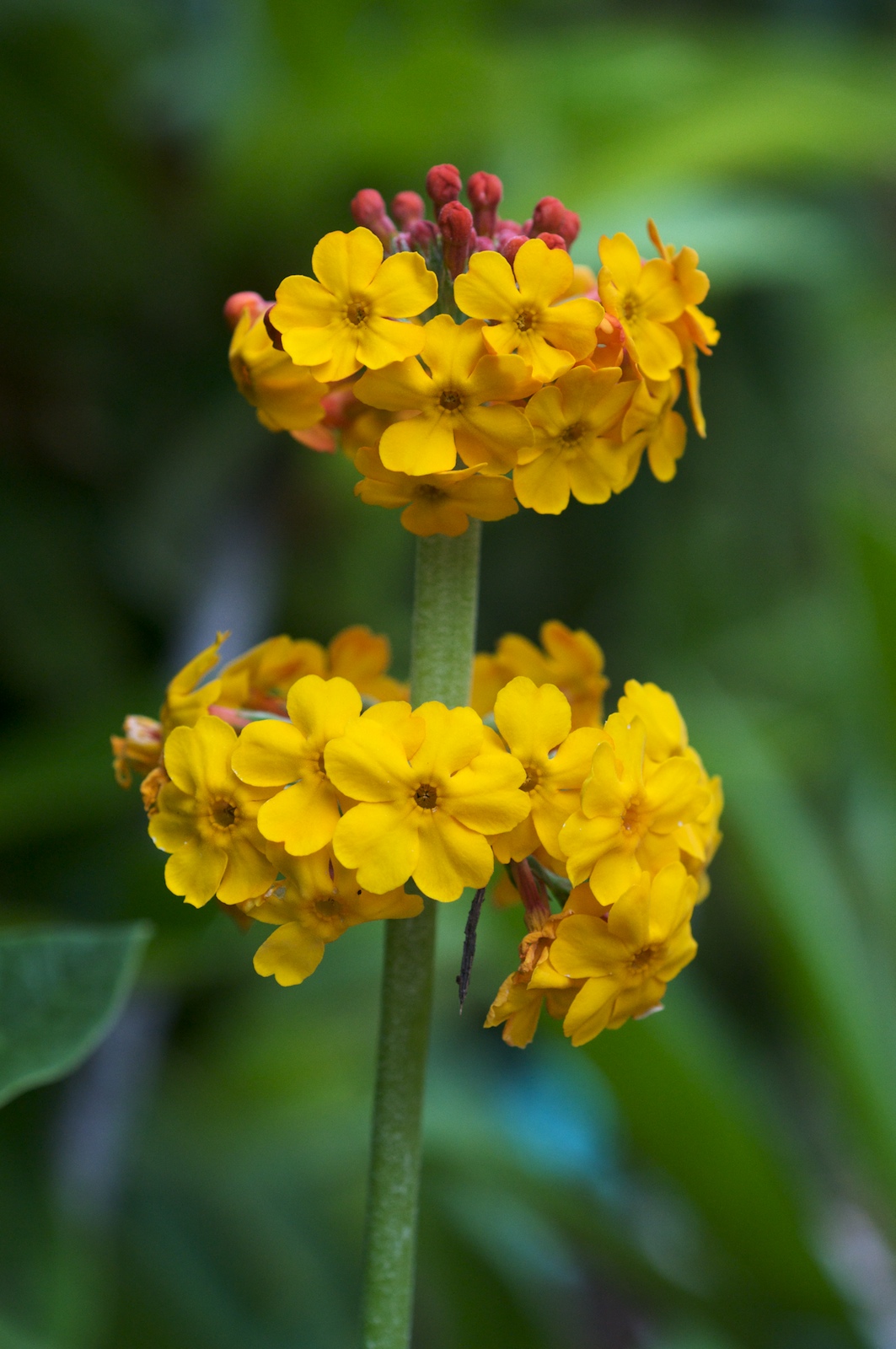
Primula bulleyana is a deciduous perennial reaching 18-24 inches (45-60 cm) tall with a spread of 12-18 inches (30-45 cm) and an upright habit rising from a basal rosette. A candelabra primrose, flowers are arranged in 5-7 tiered whorls along a stiff upright stem, opening sequentially from the lowest whorl upward. Individual flowers are 0.6-0.8 inch (15-20 mm) wide, deep orange to orange-yellow, opening from red-orange buds. The warm orange tones are rare in Primula, where blue, pink, yellow, and purple predominate among the commonly cultivated species. Blooms June-July. Oblong to oblanceolate leaves 6-10 inches (15-25 cm) long are medium green and form a broad basal rosette. Growth rate is moderate. Hardy to USDA zone 4. Toxic to pets. Consistent moisture is required — the plant thrives at stream edges, bog margins, and in rain gardens, and suffers drought stress even in short dry periods. Named for A.K. Bulley, a cotton broker and garden patron who funded George Forrest's plant-collecting expeditions to China in the early 20th century.
Native Range
Primula bulleyana is native to southwestern China — Yunnan province — in moist meadows, along streamsides, and in boggy areas at 8,000-11,000 feet (2,400-3,400 m).Suggested Uses
Used along streamsides, at pond and bog margins, and in rain gardens in zones 4-8 at 12-15 inch (30-38 cm) spacing. Tiered candelabra whorls of orange flowers carry the color strongly across a bog-garden bed or stream edge. The color is rare enough within Primula that a planting reads immediately as orange rather than as a generic primrose cluster. Traditional pairing with P. beesiana gives complementary orange and pink across a June-July window. Requires consistently moist to wet soil and fails in dry sites; not suited to well-drained borders, rock gardens, or areas without reliable moisture. Toxic to pets.How to Identify
Appearance
Size & Dimensions
Height1'6" - 2'
Width/Spread1' - 1'6"
Bloom Information
Tiered whorls (5-7 levels) of deep orange to orange-yellow flowers 0.6-0.8 inch (15-20 mm) wide, opening from red-orange buds, June-July. Bloom duration is 4-5 weeks, with individual flowers opening sequentially from the lowest whorl upward. Bloom timing runs 2-3 weeks later than P. beesiana, so pairing the two extends overlapping orange-pink color across several weeks of early summer.
Detailed Descriptions
Flower Description
Deep orange to orange-yellow opening from red-orange buds; borne in 5-7 tiered candelabra whorls 0.6-0.8 inch (15-20 mm) wide; June-JulyFoliage Description
Medium green; oblong to oblanceolate leaves 6-10 inches (15-25 cm) long forming a broad basal rosetteGrowing Conditions
Sun Requirements
Requires 3-5 hours of direct sunlight daily
• Full Sun: 6+ hours of direct sunlight
• Partial Shade: 3-6 hours of direct sunlight
• Full Shade: Less than 3 hours of direct sunlight
Care & Maintenance
Care Guide
Grows in partial shade in consistently moist to wet, humus-rich soil at pH 5.5-7.0. Hardy to USDA zone 4. Constant moisture is the baseline requirement; the species thrives at stream edges, bog margins, and in rain gardens and fails under even short drought stress. Interplanting with P. beesiana pairs the deep orange of this species with the rose-pink of P. beesiana for a complementary color pairing; hybrids between the two may appear in the self-sown progeny and carry intermediate colors. Toxic to pets.Pruning
Remove spent flower stems after bloom to tidy the planting, or leave stems in place for natural self-sowing. Allow foliage to die back naturally in autumn without premature cutting. Self-sowing seedlings extend the colony over time in favorable wet conditions; hybrids with P. beesiana may appear where the two grow together.Pruning Schedule
Prune: July–August
summer
Container Growing
Suitable for container growing
Minimum container size: 2 gallons