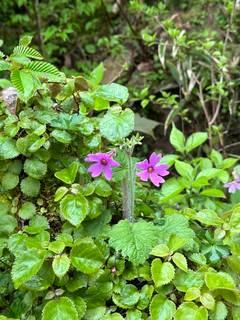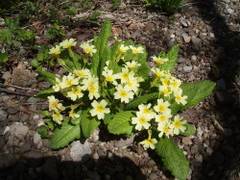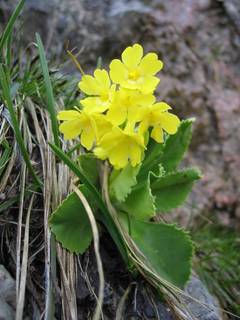
Primula, Genus, malacoides, Species,
- Genus & species
Fairy primrose
Yunnan and Sichuan provinces of southwestern China
Overview
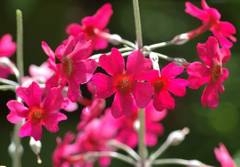
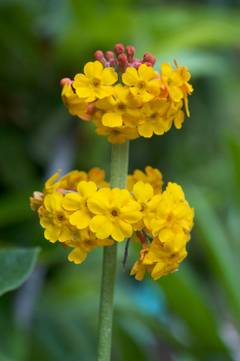
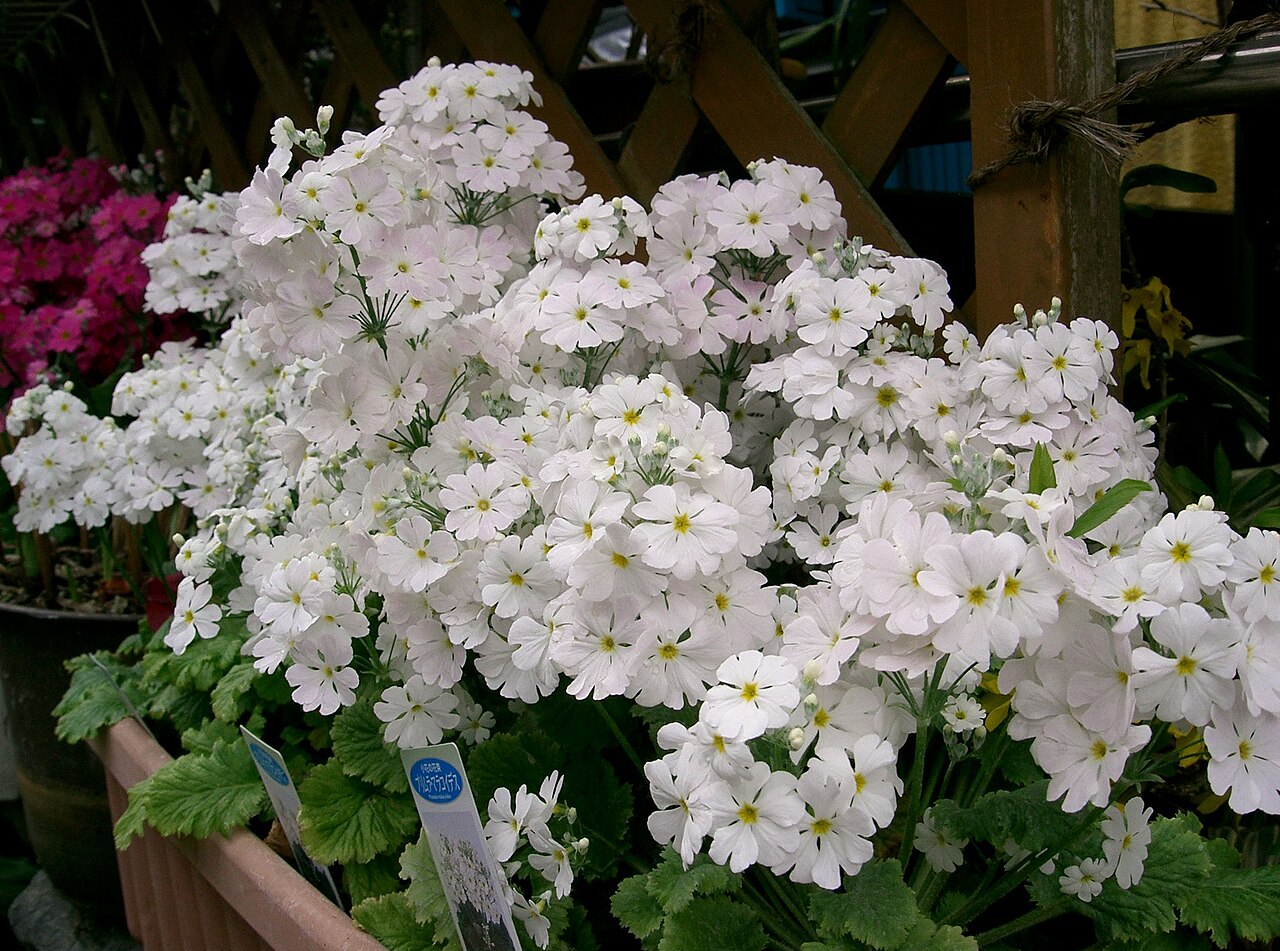
Primula malacoides is a short-lived perennial grown as a cool-season annual, forming a basal rosette 8-12 inches (20-30 cm) across with flower stems 8-18 inches (20-45 cm) tall. Leaves are ovate to oblong, 2-4 inches (5-10 cm) long, light green, soft, and covered in short hairs, with scalloped and shallowly lobed margins on long petioles. Flower stems rise well clear of the foliage and carry 2-6 tiers of blooms, each tier a whorl of 6-12 flowers separated by 1-2 inches (2.5-5 cm) of bare stem, so the whole inflorescence reads as a series of stacked rings. Individual flowers are 0.4-0.6 inch (1-1.5 cm) across with 5 notched petals in pink, lilac, magenta, or white around a yellow eye, and carry a light sweet scent. Stems and leaf undersides are often dusted with white mealy farina. Flowering runs through winter and spring, and plants collapse once daytime temperatures hold above 75F (24C), which ends the display by early summer in most climates. Contact with the foliage causes skin irritation in some people, a reaction reported across the genus and most strongly in P. obconica. Outdoors it survives winter only in USDA zones 8-11.
Native Range
Primula malacoides is native to southwestern China, chiefly Yunnan and Sichuan provinces, where it grows in damp meadows, on stream banks, and in open woodland between 5,000 and 10,000 feet (1,500-3,000 m). It was introduced to European horticulture in 1908 from collections made in Yunnan. It is now grown worldwide as a winter pot plant and cool-season bedding plant rather than as a garden perennial.Suggested Uses
Grown as a winter and spring pot plant in 4-6 inch (10-15 cm) containers indoors and in conservatories, and as cool-season bedding in USDA zones 8-11 at 8-10 inch (20-25 cm) spacing. It is combined with cyclamen, pansies, and spring bulbs in seasonal displays that are cleared before summer. Flowers are worked by early bees where plants are grown outdoors.How to Identify
Appearance
Size & Dimensions
Height8" - 1'6"
Width/Spread8" - 1'
Bloom Information
Flowering runs from December to May under glass and from February to May in gardens in USDA zones 8-11, with each plant carrying 4-10 stems in succession over 10-14 weeks. Individual whorls open from the lowest upward, and a single stem stays in flower for 3-4 weeks. Bud initiation requires night temperatures of 50-60F (10-16C), so plants held warm through autumn flower late and sparsely. Flowering stops once daytime temperatures exceed 75F (24C).
Detailed Descriptions
Flower Description
Pink, lilac, magenta, or white with a yellow eyeFoliage Description
Light greenGrowing Conditions
Sun Requirements
Requires 3-5 hours of direct sunlight daily
• Full Sun: 6+ hours of direct sunlight
• Partial Shade: 3-6 hours of direct sunlight
• Full Shade: Less than 3 hours of direct sunlight
Care & Maintenance
Care Guide
Growth is steadiest in bright indirect light or 3-5 hours of morning sun, with shade from midday onward; direct afternoon sun bleaches the flowers and wilts the leaves. Soil or potting medium should be humus-rich, evenly moist, and free-draining at a pH of 6.0-7.0, since the shallow roots dry out within a day in small pots. Watering at the soil surface rather than over the crown keeps water out of the rosette, where standing moisture causes crown rot in cool conditions. Night temperatures of 50-60F (10-16C) and days below 70F (21C) sustain flowering; central heating above that range shortens the display to a few weeks. A dilute balanced liquid feed every 2-3 weeks during flowering maintains stem production, and aphids and vine weevil are the usual pests in protected growing. Plants are commonly discarded after flowering rather than carried through summer, as they rarely recover from heat.Pruning
P. malacoides needs no structural pruning. Cutting each flower stem at its base once the top whorl fades directs energy into the next stems and keeps the rosette open. Removing yellowed outer leaves at the petiole reduces botrytis in cool humid conditions. Cutting into the crown itself kills the plant, since all growth comes from that single point.Pruning Schedule
Prune: April–May
late spring
Container Growing
Suitable for container growing
Minimum container size: 1 gallons
Toxicity Warning
Toxic to petsPlanting Guide
Planting Methods & Timing
Planting Method
transplant
Indoor Start
10 weeks before last frost
Direct Sow Timing
Sown in late summer, from July to August, for winter and spring flowering
Days to Maturity
120–150 days
Plant Spacing
9 inches