Primula, Genus, auricula, Species,
- Genus & species
auricula primrose
Mountains of central Europe (Alps, Carpathians, Apennines, Pyrenees); on limestone cliffs, rocky crevices, and alpine meadows at 3,000-8,000 feet (900-2,400 m)
Overview
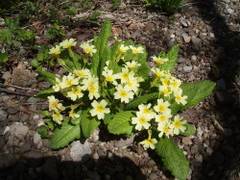
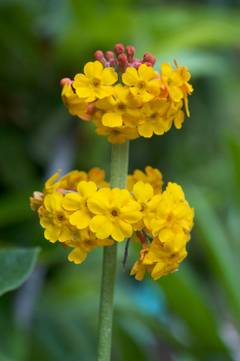
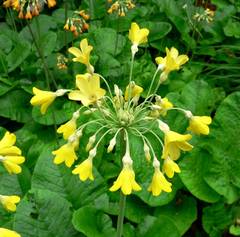
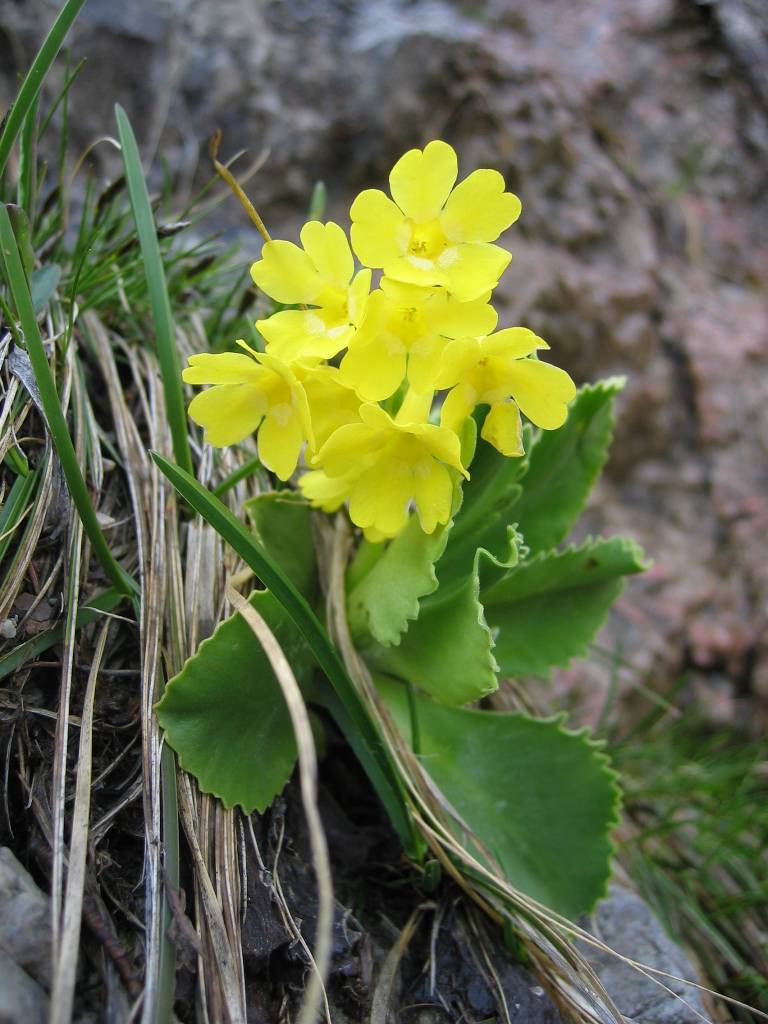
Primula auricula is a semi-evergreen perennial reaching 4-8 inches (10-20 cm) tall with a spread of 6-10 inches (15-25 cm) and a compact, rosette-forming habit. Thick, fleshy, obovate to spatulate leaves 2-4 inches (5-10 cm) long are gray-green and carry a powdery white farina (mealy coating) on the leaf surfaces and margins — a feature not shared by any other Primula species in garden cultivation. Flowers are borne in umbels of 2-15 on stiff stems above the foliage, each flower 0.5-1 inch (13-25 mm) wide and fragrant, in shades of yellow (in the wild type), often carrying a white or cream farinose central eye. Blooms April-May. Growth rate is slow. Hardy to USDA zone 3. Toxic to pets. P. auricula is the parent species of the show auriculas — a cultivated group with centuries of breeding history behind it, producing flowers in nearly every color and carrying elaborate central patterns that can include contrasting zones, farinose rings, and striped petals. The farinose coating on the leaves washes off in heavy rain and regenerates only slowly, so cultivated plants under shelter retain the coating more reliably than those in open rainfall.
Native Range
Primula auricula is native to the mountains of central Europe — the Alps, Carpathians, Apennines, and Pyrenees — on limestone cliffs, rocky crevices, and alpine meadows at 3,000-8,000 feet (900-2,400 m).Suggested Uses
Used in rock gardens, alpine troughs, raised beds, and containers in zones 3-8 at 6-8 inch (15-20 cm) spacing. The lime-tolerant alpine habit suits calcareous rock gardens where acid-loving primroses fail. Fragrant flowers and farinose gray-green rosettes carry both flower-season and year-round interest. The species also serves as the parent of the show auriculas, so inclusion in a collection grounds the display with the original wild form. Containers require 1-gallon (3.8 L) pots with a gritty mix and sharp drainage. Toxic to pets, so not suited to sites where pets browse plant material. Also not suited to wet soils, heavy clay, or hot humid climates.How to Identify
Appearance
Size & Dimensions
Height4" - 8"
Width/Spread6" - 10"
Bloom Information
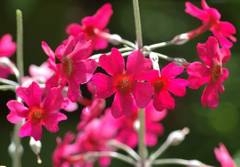
Umbels of 2-15 fragrant flowers 0.5-1 inch (13-25 mm) wide, yellow (in the wild type) often carrying a white farinose central eye, April-May. Bloom duration is 3-4 weeks. Show auricula cultivars derived from this species may open in any color, and breeding has produced flowers with contrasting center-zones, farinose rings, or striped petals.
Detailed Descriptions
Flower Description
Yellow in the wild type, often with a white to cream central farinose eye; fragrant; borne in umbels of 2-15 flowers 0.5-1 inch (13-25 mm) wide above the foliage; April-MayFoliage Description
Gray-green; thick fleshy obovate to spatulate leaves 2-4 inches (5-10 cm) long with a powdery white farina (mealy coating) on the surfaces and margins; the farinose coating washes off in heavy rain and regenerates graduallyGrowing Conditions
Sun Requirements
Requires 3-5 hours of direct sunlight daily
• Full Sun: 6+ hours of direct sunlight
• Partial Shade: 3-6 hours of direct sunlight
• Full Shade: Less than 3 hours of direct sunlight
Care & Maintenance
Care Guide
Grows in partial shade in well-drained, neutral to alkaline, gritty soil at pH 6.5-8.0. Hardy to USDA zone 3. Sharp drainage is the baseline requirement; crown rot develops in wet winter soils and is the most common cause of plant loss. Tolerates alkaline and calcareous soils, reflecting the species' limestone-cliff origin. Hot afternoon sun browns the foliage and damages the farina coating, so siting under partial shade with morning sun suits the plant. Heavy rainfall washes the farina off the leaves, and the coating regenerates gradually rather than immediately. Toxic to pets.Pruning
Remove spent flower stems after bloom. Remove dead outer leaves from the rosette as they develop. No other pruning is needed. Divide crowded clumps every 3-4 years in early autumn to refresh vigor.Pruning Schedule
Prune: May–June
late spring
Container Growing
Suitable for container growing
Minimum container size: 1 gallons