Primula, Genus, clevelandii, Species,
- Genus & species
Padre's shooting star
Overview
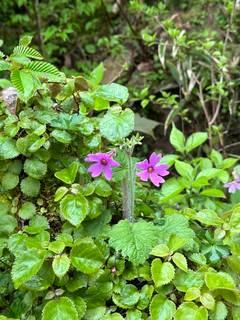
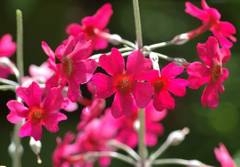
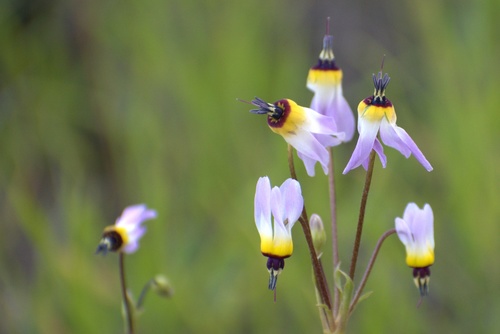
Primula clevelandii is a low perennial wildflower that grows from a small rootstock as a basal rosette of smooth, oblong leaves 1.5-6 in (4-15 cm) long. In winter and early spring a leafless flowering stalk rises 4-16 in (10-40 cm) and bears an umbel of several nodding flowers in the shooting-star form: the five petals sweep sharply backward while the dark stamens point forward in a beak. The petals are magenta to rose-pink or lavender, banded with white or yellow and a maroon ring at the base, and the fused stamen tube is dark purple to black. Flowers open from January to April depending on elevation. After seed set the plant dies back entirely and spends the dry summer and fall dormant below ground as a small rootstock. It grows in open grassland, oak woodland, and on rocky or clay slopes, often where the soil is moist in winter and bakes dry in summer. Erect capsules release small seed as they dry. Its summer dormancy means it disappears for much of the year, a limitation in beds that need continuous cover.
Native Range
Native to California, from the coast ranges and foothills of the Central Valley south into northern Baja California, Mexico. It grows in open grassland, oak woodland, and on clay or rocky slopes below about 3,300 ft (1,000 m).Suggested Uses
Grown in California native, rock garden, and seasonal meadow plantings for winter and spring bloom. Suited to areas that stay dry in summer, planted among grasses and other summer-dormant wildflowers.How to Identify
Appearance
Size & Dimensions
Height4" - 1'4"
Width/Spread4" - 8"
Bloom Information
Blooms from January to April, earlier near the coast and later inland, carrying umbels of several nodding flowers. The reflexed magenta to pink petals and dark stamen beak give the shooting-star shape. Native bees buzz-pollinate the flowers to release pollen.
Detailed Descriptions
Flower Description
magenta to pinkFoliage Description
greenGrowing Conditions
Sun Requirements
Requires 4-8 hours of direct sunlight daily
• Full Sun: 6+ hours of direct sunlight
• Partial Shade: 3-6 hours of direct sunlight
• Full Shade: Less than 3 hours of direct sunlight
Care & Maintenance
Care Guide
Grows in full sun to part shade on soil that is moist through winter and dries in summer, including clay and rocky ground, with a pH from about 6.0 to 7.5. Winter and spring growth depends on cool-season moisture, while summer watering during dormancy can rot the rootstock. Hardy to about USDA zone 7, it tolerates light frost while in leaf. The plant dies back after flowering and rests underground through the dry season. Sharp drainage in summer is the main requirement. Summer irrigation and wet, heavy soil in the dormant period cause rot.Pruning
No pruning is needed. Spent flower stalks are removed after seed drops, or left to self-sow. The withering leaves are left to die back naturally to feed the rootstock.Container Growing
Suitable for container growing
Minimum container size: 1 gallons