Image 1 of 17
1 / 17
Plant Reference
Primula, Genus,
- Genus
polyanthus
Complex hybrid of garden origin — parent species {P. vulgaris}, {P. veris}, and {P. elatior} from Europe
Overview
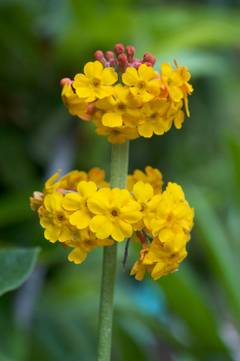
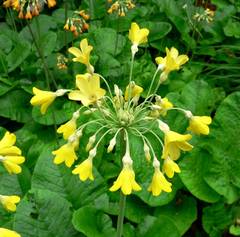
Primula × polyantha is polyanthus primrose (polyanthus), a clumping semi-evergreen perennial growing 4-10 inches (10-25 cm) tall and 6-10 inches (15-25 cm) wide. Flat 5-petaled flowers 1-1.5 inches (2.5-4 cm) in full color range (white, yellow, red, pink, purple, orange, near-black) typically with a yellow eye, in umbels of 5-15 on erect scapes 4-8 inches (10-20 cm) from February through May (10 weeks). Crinkled broadly oval strongly veined basal rosette leaves 3-6 inches (7-15 cm). In Primulaceae. Polyantha = many flowers. A complex hybrid: P. vulgaris × P. veris × P. elatior. The multi-flowered umbel distinguishes polyanthus from P. vulgaris (solitary flowers). In hot-summer climates (zones 7-8), the plants decline after 2-3 years or are treated as cool-season annuals — this heat intolerance is the primary limitation. Slugs feed on foliage and crowns. Not drought-tolerant — requires consistently moist shade. Divide every 2-3 years. Deer browse. Non-toxic. Zones 4-8. Part shade. Growth rate is moderate.
Native Range
Complex hybrid of garden origin — parent species P. vulgaris, P. veris, and P. elatior from Europe.Suggested Uses
Grown in shade borders, woodland edges, and in containers of at least 2 gallons (7.5 L), spaced 6-10 inches (15-25 cm). Full color range. Cool-season bloomer. Moist shade. Non-toxic. Zones 4-8.How to Identify
Appearance
Size & Dimensions
Height4" - 10"
Width/Spread6" - 10"
Bloom Information
Late winter to mid spring (February-May). Flat 5-petaled flowers 1-1.5 inches (2.5-4 cm) in full color range with yellow eye, in umbels of 5-15. 10 weeks. Bee-visited.
Detailed Descriptions
Flower Description
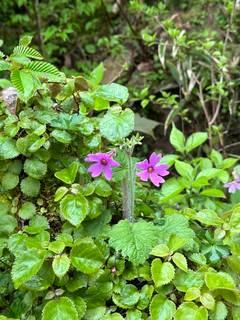
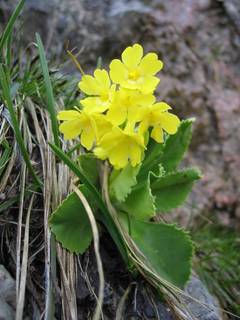
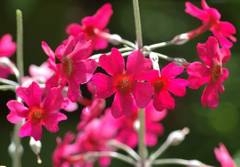
Full color range — white, yellow, red, pink, purple, orange, near-black — typically with a contrasting yellow eye; flat, 5-petaled, 1-1.5 inches (2.5-4 cm), in umbels of 5-15 flowers on erect scapes 4-8 inches (10-20 cm) above the foliageFoliage Description
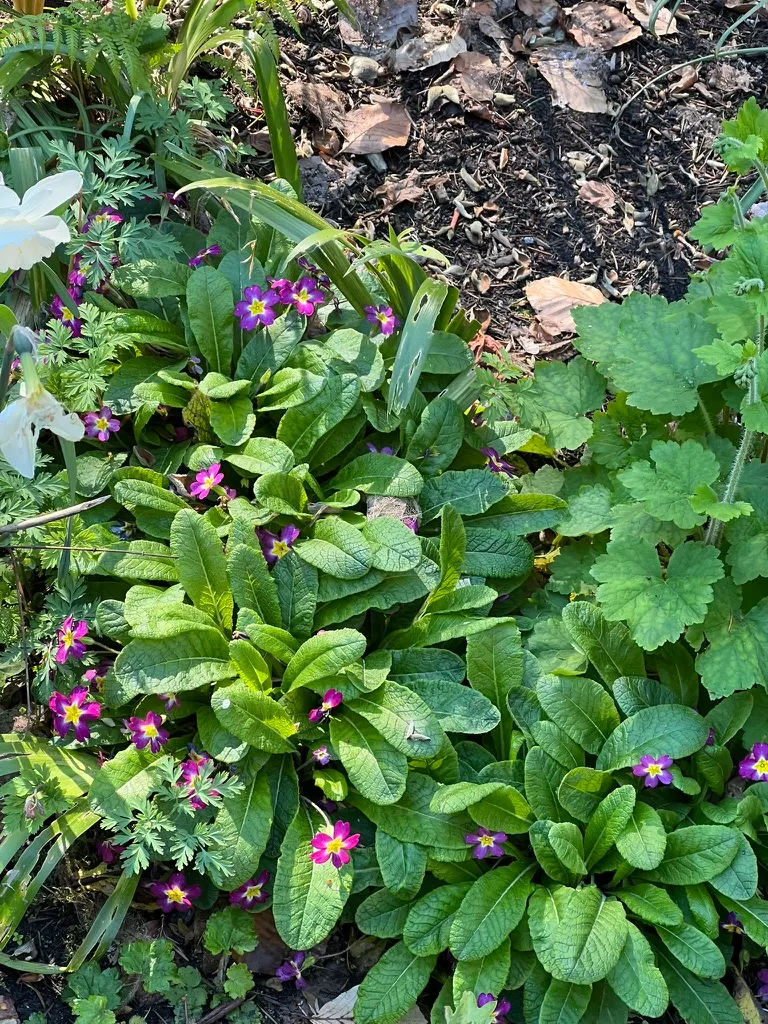
Broadly oval, crinkled, strongly veined, mid-green with wavy margins, 3-6 inches (7-15 cm); forms a basal rosette; semi-evergreen in mild climatesGrowing Conditions
Sun Requirements
Requires 2-6 hours of direct sunlight daily
• Full Sun: 6+ hours of direct sunlight
• Partial Shade: 3-6 hours of direct sunlight
• Full Shade: Less than 3 hours of direct sunlight
Care & Maintenance
Care Guide
Part shade to full sun in cool climates (2-6 hours). Moist well-drained soil pH 5.5-7.0. Not drought-tolerant. Slugs on foliage and crowns. Decline in hot-summer climates — treat as annual in zones 7-8. Divide every 2-3 years after bloom. Deadhead spent scapes. Deer browse. Non-toxic. Zones 4-8.Pruning
Remove spent flower scapes at the base. Remove tattered outer leaves. Divide crowns every 2-3 years after bloom — replant divisions in moist humus-rich soil.Pruning Schedule
Prune: May–June
late spring
Container Growing
Suitable for container growing
Minimum container size: 2 gallons