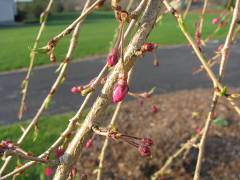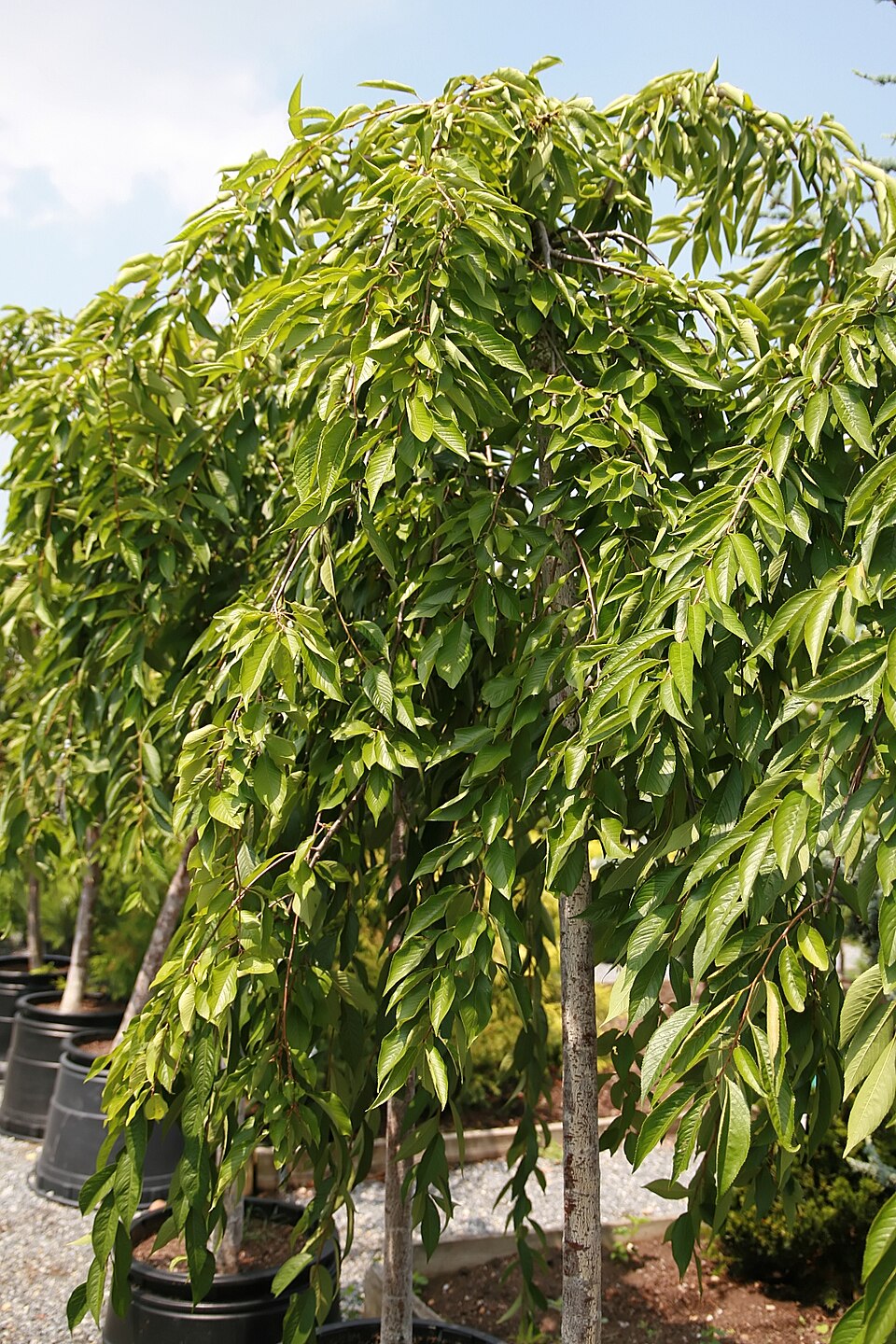
Prunus, Genus, subhirtella, Species, 'Pendula Plena Rosea', Cultivar,
- Genus & species
- Cultivar
double pink weeping cherry tree
Overview
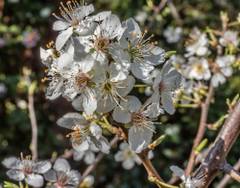
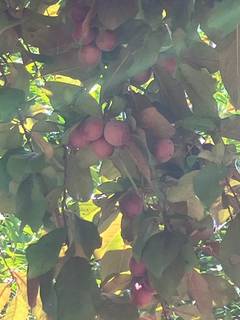
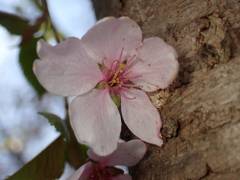
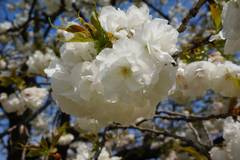
Prunus subhirtella 'Pendula Plena Rosea' is a deciduous weeping cherry in the Rosaceae family, typically sold grafted onto P. avium or P. serrulata rootstock 4-6 feet (1.2-1.8 m) above the ground. Mature size on a 5-foot graft is 15-25 feet (4.6-7.6 m) tall and 15-25 feet (4.6-7.6 m) wide, with strongly pendulous branches that arch from the graft point and trail toward the ground. Double pink flowers 0.75-1 inch (2-2.5 cm) across, with 20-30 petals each, open in mid-spring (April in Zone 6-7) along the cascading branches in clusters of 2-5, persisting 14-21 days since the doubled flowers do not set fruit. Leaves are 1.5-3 inches (4-7.5 cm) long, ovate-lanceolate with sharply serrated margins, dark green in summer turning yellow to bronze in autumn. Smooth gray-brown bark develops horizontal lenticel banding typical of Prunus. Hardy to USDA Zone 5. Susceptible to bacterial canker, brown rot, and Japanese beetle defoliation; grafted weeping cherries can develop graft-union failure after 15-25 years when heat or moisture stress damages the union. All parts of Prunus contain cyanogenic glycosides; ingestion can release hydrogen cyanide and is toxic to dogs, cats, livestock, and humans.
Native Range
The species Prunus subhirtella is native to lower elevations of central and southern Japan, where it grows in temperate broadleaf forest. The 'Pendula Plena Rosea' selection is a centuries-old Japanese cultivar with double rose-pink flowers and a strongly weeping habit, propagated by grafting onto an upright cherry rootstock.Suggested Uses
Used as a small specimen tree in residential gardens, often sited as a single accent in lawn settings or at corners of structures, spaced 15-20 feet (4.6-6 m) from buildings. Planted in Japanese-influenced gardens and mixed shrub borders where the weeping double-flowered habit is part of the composition.How to Identify
Appearance
Size & Dimensions
Height15' - 25'
Width/Spread15' - 25'
Bloom Information
Spring bloom occurs in mid-spring, typically early to mid-April in USDA Zone 6-7 and late March in Zone 8. Double flowers persist 14-21 days under cool conditions, holding longer than single-flowered cherries since they do not set fruit. Cool wet weather extends the display; warm dry spells reduce it to 10 days or less.
Detailed Descriptions
Flower Description
rose-pink aging to medium pinkFoliage Description
dark green turning yellow to bronzeGrowing Conditions
Sun Requirements
Requires 6-12 hours of direct sunlight daily
• Full Sun: 6+ hours of direct sunlight
• Partial Shade: 3-6 hours of direct sunlight
• Full Shade: Less than 3 hours of direct sunlight
Care & Maintenance
Care Guide
Full sun (6 or more hours direct light) on moist, well-drained loam with pH 6.0-7.5 supports steady growth and reliable flowering. Deep watering once weekly during the first three growing seasons supports establishment; mature trees tolerate moderate drought but flower less in extended dry periods. A balanced fertilizer applied at the dripline in early spring, or 2-3 inches (5-7.5 cm) of compost top-dressing, supports steady canopy growth. Mulch 2-3 inches (5-7.5 cm) deep is held 2 inches (5 cm) away from the trunk to reduce crown rot risk. Bacterial canker enters through pruning wounds in wet weather; cuts made during dry weather in late summer reduce decline risk.Pruning
Pruning takes place during dry weather in late summer (August in Zone 5-7), when wound healing is rapid and bacterial canker pressure is lower than in winter. Suckers arising from below the graft union are removed at the base whenever they appear, since these grow upright and can replace the weeping canopy if left in place. Crossing branches and dead wood are thinned to maintain the cascading silhouette.Pruning Schedule
Prune: August
summer