Opuntia, Genus, ×, Hybrid, vaseyi, Species,
- Genus & species
- Hybrid
Vasey's pricklypear
Overview
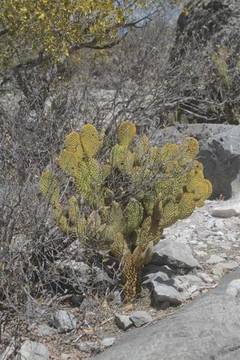
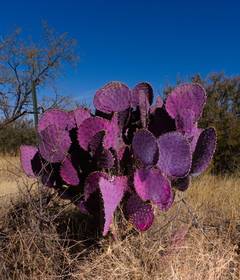
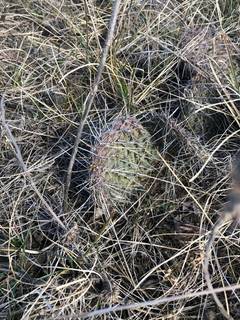
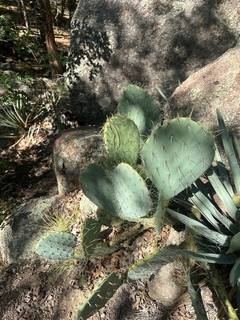
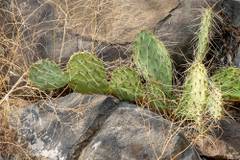
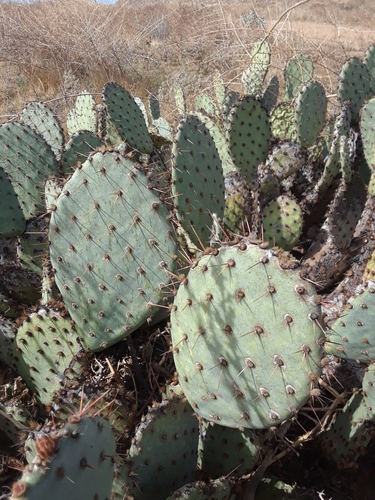
Opuntia × vaseyi, Vasey's pricklypear, is a low, spreading cactus of hybrid origin found in southern California, formed between O. littoralis and related prickly pears. It grows 1.5–3 feet (45–90 cm) tall and spreads 3–6 feet (0.9–1.8 m) wide through jointed, flattened green pads (cladodes) 4–8 inches (10–20 cm) long. The pads bear scattered areoles with one to several stout spines plus tufts of tiny, barbed glochids that detach easily. In late spring it produces cup-shaped flowers 2–3 inches (5–8 cm) across that open yellow to orange and often age to apricot or reddish tones, followed by fleshy, reddish-purple fruit. It grows in full sun on dry, rocky, fast-draining slopes and tolerates heat and extended drought. As a hybrid it is variable and intermediate between its parents, complicating identification. It is hardy to about USDA zone 8, but wet or poorly drained soil in winter causes rot. The spines and glochids make handling hazardous, and the glochids can lodge in skin.
Native Range
Opuntia × vaseyi is native to southern California, mainly the coastal and inland valleys and foothills where its parent prickly pears grow together. It occupies dry slopes, scrub, and rocky ground.Suggested Uses
Used in dry, water-conserving, and rock gardens, on hot slopes, and in native and habitat plantings in mild, dry-winter regions, spaced 3–5 feet (0.9–1.5 m) apart. The flowers draw native bees, and the fruit and pads feed wildlife. Spines and glochids make it less suited to areas with foot traffic, pets, or children.How to Identify
Appearance
Size & Dimensions
Height1'6" - 3'
Width/Spread3' - 6'
Bloom Information
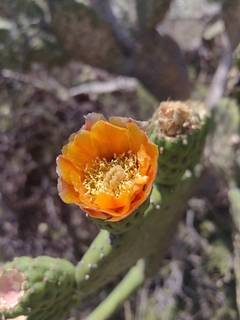
Flowers open in late spring, mainly April to June, each lasting a day or two. The blooms start yellow to orange and frequently shift to apricot or red as they age. Reddish-purple fruit follows over summer and can persist on the pads.
Detailed Descriptions
Flower Description
yellow to orange aging reddishFoliage Description
green padsGrowing Conditions
Sun Requirements
Requires 6-12 hours of direct sunlight daily
• Full Sun: 6+ hours of direct sunlight
• Partial Shade: 3-6 hours of direct sunlight
• Full Shade: Less than 3 hours of direct sunlight
Care & Maintenance
Care Guide
Growth is strongest in full sun on dry, rocky, sharply drained soil, including sandy and gravelly ground. Established plants need no supplemental water and withstand heat and long drought, while wet or poorly drained soil in winter causes root and stem rot. No fertilizer is needed. New pads root readily where they touch soil, so the clump widens over time. Hardiness reaches about USDA zone 8 in dry-winter conditions. The spines and detachable glochids are a hazard near walkways and play areas.Pruning
Pruning is rarely needed; individual pads are removed at the joint with tongs to limit spread or reshape the clump. Damaged or rotting pads are cut out at the base to stop rot from spreading. Removed pads root easily and are discarded away from open ground if regrowth is unwanted.Pruning Schedule
Prune: May
late spring
Container Growing
Suitable for container growing
Minimum container size: 5 gallons