Opuntia, Genus, basilaris, Species,
- Genus & species
Beavertail pricklypear
Southwestern United States and northern Mexico
Overview
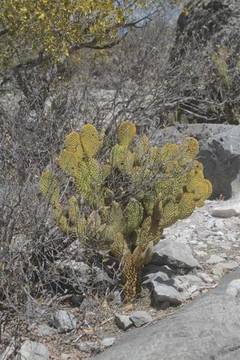
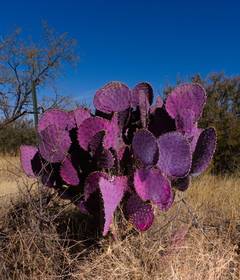
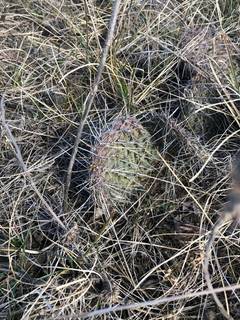
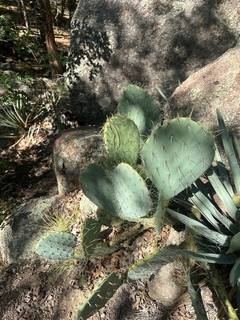
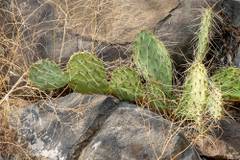
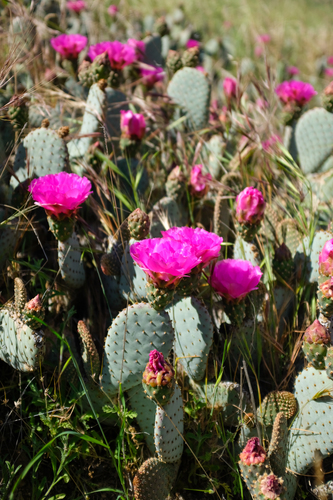
Opuntia basilaris is a low, clump-forming prickly pear cactus of the southwestern North American deserts. It grows 6-16 inches (15-40 cm) tall and spreads 2-6 feet (60-180 cm) wide through clusters of flattened, paddle-shaped stem segments called pads. The pads are blue-gray to gray-green, 4-8 inches (10-20 cm) long, and lack the long spines of most prickly pears, instead carrying dense clusters of minute, barbed glochids that detach on contact and lodge in skin. In spring, rose-pink to magenta flowers 2-3 inches (5-8 cm) across open along the upper edges of the pads, followed by dry, tan to gray fruit. The shallow, wide-spreading root system captures brief desert rains, and the pads store water and shrink visibly during long drought. It withstands intense heat, full sun, and cold desert nights, but rots in soils that stay wet, which restricts it to fast-draining sites. Growth is slow, and plants take several years to reach flowering size. Once established it needs no irrigation across most of its range. The barbed glochids make handling and placement near paths a consideration, and the low mounded form widens slowly over many years.
Native Range
Opuntia basilaris is native to the deserts of the southwestern United States, including the Mojave, Sonoran, and Colorado deserts, and northern Mexico. It grows on rocky slopes, gravelly flats, and desert washes from sea level to about 6,000 feet (1,800 m).Suggested Uses
Grown in rock gardens, desert and xeriscape plantings, and containers in hot, dry climates. Used as a low groundcover on sunny slopes and gravel beds. The barbed glochids leave it unsuited to plantings beside walkways or in spaces used by children and pets.How to Identify
Appearance
Size & Dimensions
Height6" - 1'4"
Width/Spread2' - 6'
Colors
Bloom Information
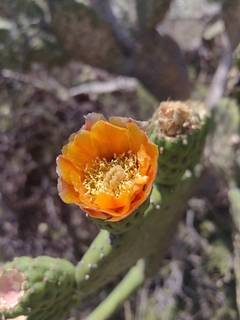
Flowers open from March through May, depending on elevation and winter rainfall. The rose-pink to magenta blooms last a few days each and draw native bees. Dry, brownish fruit follows and persists on the pads into summer.
Detailed Descriptions
Flower Description
rose-pink to magentaFoliage Description
blue-gray to gray-green padsGrowing Conditions
Sun Requirements
Requires 8-12 hours of direct sunlight daily
• Full Sun: 6+ hours of direct sunlight
• Partial Shade: 3-6 hours of direct sunlight
• Full Shade: Less than 3 hours of direct sunlight
Care & Maintenance
Care Guide
Grows in full sun in sandy, gravelly, or rocky soils with sharp drainage. Needs very little water once established and tolerates extended drought by drawing on water stored in its pads. Soil pH from 6.0 to 8.5 is suitable. Wet or poorly drained soil causes the pads and roots to rot, so it fails in heavy clay or irrigated beds. Hardy in USDA zones 7 through 11, withstanding cold desert nights but not prolonged damp cold. In containers it needs a gritty cactus mix and a pot that dries fully between waterings.Pruning
No routine pruning is needed. Individual pads can be removed at the joint with tongs to limit spread or to propagate new plants. Damaged or shriveled pads are cut away at the segment base.Container Growing
Suitable for container growing
Minimum container size: 3 gallons