Opuntia, Genus, lindheimeri, Species,
- Genus & species
Texas pricklypear
Overview
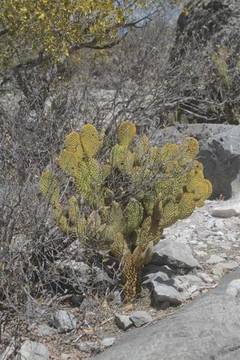
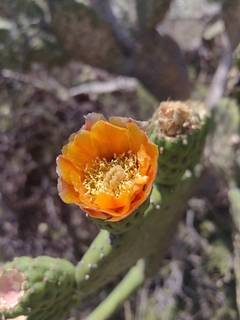
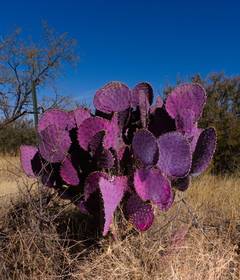
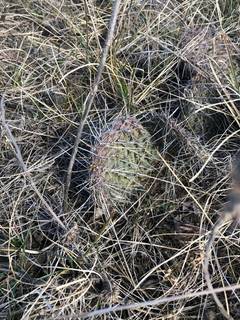
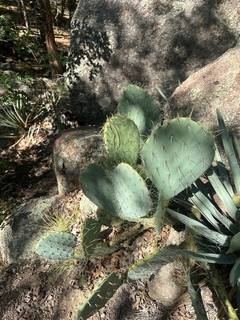
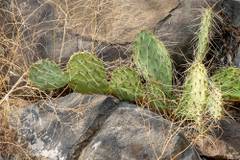
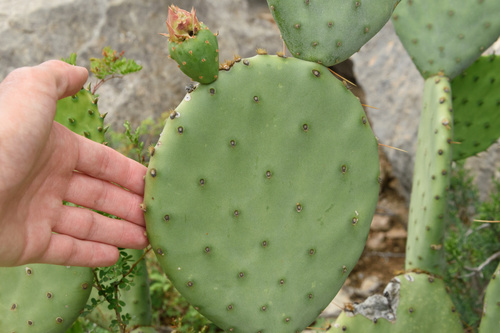
Opuntia lindheimeri is a shrubby, clump-forming prickly pear cactus in the Cactaceae, reaching 3-7 feet (0.9-2.1 m) tall and spreading as wide or wider through jointed, segmented growth. In place of leaves it has flattened, oval pads (cladodes) 6-12 inches (15-30 cm) long, blue-green to gray-green, that store water and carry out photosynthesis. The pads bear clusters of stout yellow spines up to 1.5 inches (4 cm) long and, at their bases, tufts of tiny barbed bristles called glochids that detach easily and lodge in skin. In spring it produces waxy, cup-shaped flowers 2-3 inches (5-7.5 cm) across, usually bright yellow and sometimes flushed with orange or red, opening along the pad edges. The flowers form fleshy, pear-shaped fruit (tunas) that ripen to deep red-purple and are eaten fresh or made into jelly and syrup. It is native to Texas and northeastern Mexico, growing in grassland, brush, and rocky ground, and tolerates intense heat and prolonged drought. The spines and glochids make it hazardous to handle, and dense stands can take over overgrazed rangeland.
Native Range
Native to Texas and northeastern Mexico, extending into nearby parts of the south-central United States. It grows in grasslands, thorn-scrub, brush, and rocky or sandy open ground.Suggested Uses
Opuntia lindheimeri is used in xeriscape and desert gardens, as a barrier or security planting, and on dry banks for erosion control in hot regions. Its pads and fruit are harvested as food, and the flowers and fruit feed pollinators and wildlife. The spines make it suited to areas away from foot traffic and pets.How to Identify
Appearance
Size & Dimensions
Height3' - 7'
Width/Spread4' - 10'
Colors
Bloom Information
Bright yellow, cup-shaped flowers open in spring, mainly April to June, along the edges of the pads. Each flower lasts a day or two, and a pad may bloom over several weeks. Red-purple fruit ripens through late summer and autumn.
Detailed Descriptions
Foliage Description
blue-greenGrowing Conditions
Sun Requirements
Requires 8-12 hours of direct sunlight daily
• Full Sun: 6+ hours of direct sunlight
• Partial Shade: 3-6 hours of direct sunlight
• Full Shade: Less than 3 hours of direct sunlight
Care & Maintenance
Care Guide
Opuntia lindheimeri grows in full sun on dry, sandy, rocky, or gravelly well-drained soils and tolerates extreme heat and long droughts once established. It stores water in its pads and needs little or no irrigation, suffering rot in wet or poorly drained ground. New plants root easily from detached pads laid on dry soil for a few days to callus before planting. It is hardy in mild-winter regions but can be damaged by hard freezes in colder zones. It needs no fertilizer in lean soils. Plants set back from paths and seating reduce accidental contact with the spines.Pruning
Remove individual pads at the joints with tongs at any time to control size or shape, since cuts heal as dry callus. Detached pads root readily, so cut material is cleared away to prevent unwanted spread.Container Growing
Suitable for container growing
Minimum container size: 5 gallons