Opuntia, Genus, ×, Hybrid, demissa, Species,
- Genus & species
- Hybrid
prickly pear
Overview
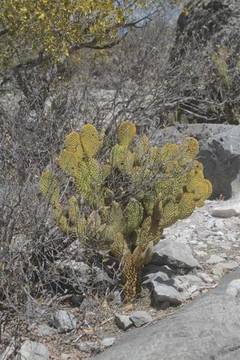
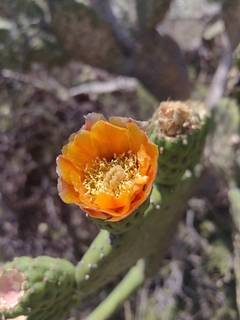
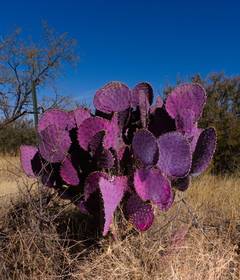
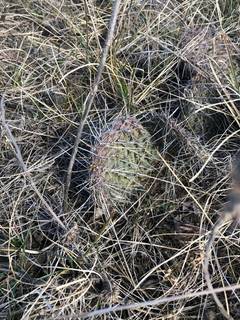
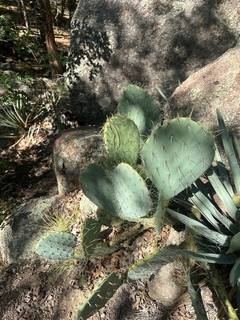
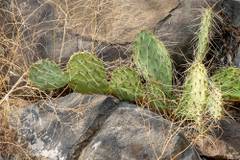
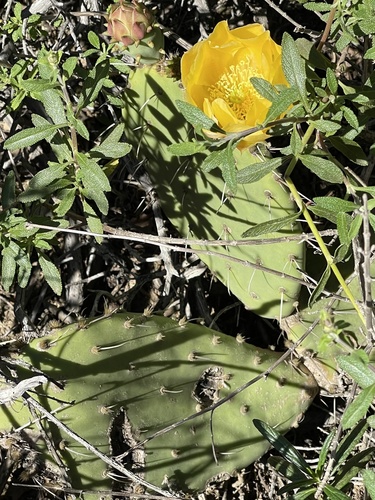
Opuntia × demissa is a hybrid prickly pear cactus that forms low, spreading clumps of flattened, fleshy green pads. The pads, or cladodes, are oval to rounded, typically 4–8 inches (10–20 cm) long, jointed end to end, and root where they touch the ground to widen the colony. Each pad bears areoles carrying short spines and tufts of tiny barbed glochids that detach into skin at the lightest contact. Yellow, cup-shaped flowers 2–3 inches (5–8 cm) across open along the pad margins in late spring and early summer, followed by fleshy fruit that ripens to reddish-purple. Like other prickly pears it stores water in its pads, withstands heat and drought, and grows on poor, sandy, sharply drained soil. It rots in wet or heavy ground and in shade, and is damaged by hard, prolonged frost. The glochids make handling hazardous, and detached pads root readily, so plants can spread beyond where they were set.
Native Range
Prickly pears of this group are native to the Americas, and this hybrid arises where its parent species overlap in the warm southeastern United States. It grows in open, sandy, well-drained habitats such as dunes and dry flats.Suggested Uses
Planted in dry gardens, gravel beds, and coastal sandy sites where heat and drought tolerance suit low-water landscapes. Also grown as a barrier planting, since the spines and glochids deter passage.How to Identify
Appearance
Size & Dimensions
Height8" - 1'6"
Width/Spread2' - 4'
Bloom Information
Detailed Descriptions
Foliage Description
Green pads; no true leavesGrowing Conditions
Sun Requirements
Requires 6-12 hours of direct sunlight daily
• Full Sun: 6+ hours of direct sunlight
• Partial Shade: 3-6 hours of direct sunlight
• Full Shade: Less than 3 hours of direct sunlight
Care & Maintenance
Care Guide
Grows in full sun on poor, sandy, sharply drained soil with a pH from 6.0 to 8.0 and needs little or no supplemental water once established. Wet, heavy, or shaded ground causes rot. The pads store water and carry the plant through extended drought and heat. Hard, prolonged frost damages the pads, though brief light frost is tolerated on well-drained sites. Plants spread as pads root where they fall, and detached pads start new clumps. Few pests trouble it apart from cochineal scale on the pads.Pruning
Whole pads are cut at the joint to limit spread or remove damage. Cut pads are discarded or replanted, as they root readily. No routine pruning is needed.Pruning Schedule
Prune: July–August
summer
Container Growing
Suitable for container growing
Minimum container size: 3 gallons