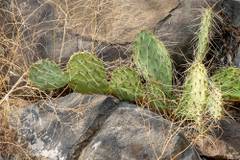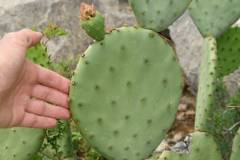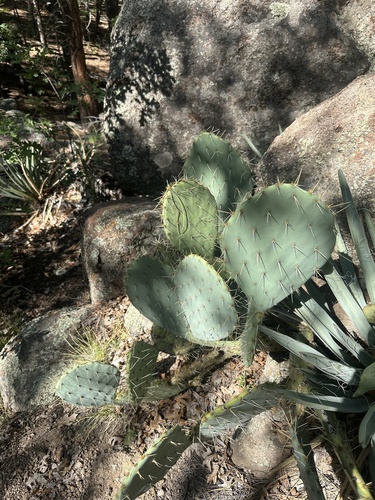
Opuntia, Genus, engelmannii, Species,
- Genus & species
Engelmann's pricklypear
Southwestern United States and northern Mexico
Overview
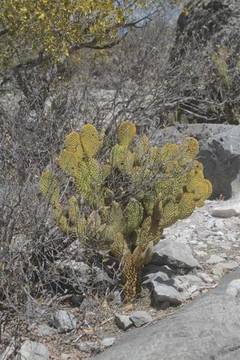
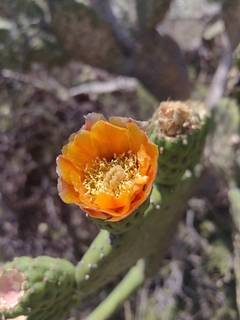
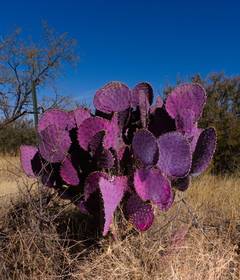
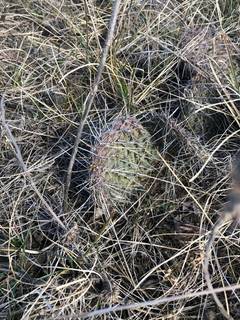
Opuntia engelmannii is a clump-forming cactus of the southwestern deserts, growing 3-5 feet (0.9-1.5 m) tall and spreading 6-15 feet (1.8-4.6 m) wide as new pads build outward over time. The flattened, blue-green pads (cladodes) are 6-12 inches (15-30 cm) long and store water in their fleshy tissue. Each pad bears clusters of stiff white to yellowish spines up to 2 inches (5 cm) long, along with tufts of tiny barbed glochids that detach at the slightest touch and lodge in skin. In spring, the pad margins carry waxy flowers 2-3 inches (5-7.5 cm) across, usually yellow and sometimes aging to orange or pink. These are followed by egg-shaped fruits, called tunas, that ripen from green to deep red-purple and are eaten by wildlife and people. The species grows on rocky slopes, desert flats, and grasslands from the southwestern United States into northern Mexico, enduring intense heat, drought, and poor soils. Limitations include the hazard posed by spines and glochids, a slow build to full size, and a need for sharp drainage; pads rot in wet, heavy soil or under frequent irrigation. Plants root easily where fallen pads contact the ground, which can lead to unwanted spread.
Native Range
Opuntia engelmannii is native to the southwestern United States, from California and Nevada east to Texas, and south into northern Mexico. It grows in deserts, rocky slopes, grasslands, and dry washes below about 5,000 feet (1,500 m).Suggested Uses
Grown in desert, rock, and xeriscape gardens and as a barrier planting where its spines deter passage. Used for erosion control on dry slopes and as a source of edible pads and fruit. Suited to large containers only while young.How to Identify
Appearance
Size & Dimensions
Height3' - 5'
Width/Spread6' - 15'
Bloom Information
Flowers open in spring, generally April through June, lasting about a day each but produced in succession over several weeks. Each waxy flower is 2-3 inches (5-7.5 cm) across, most often yellow, sometimes shading to orange or salmon. Red-purple fruits ripen through summer and can persist into winter.
Detailed Descriptions
Flower Description
Yellow, sometimes orange or pinkFoliage Description
Blue-green padsGrowing Conditions
Sun Requirements
Requires 6-12 hours of direct sunlight daily
• Full Sun: 6+ hours of direct sunlight
• Partial Shade: 3-6 hours of direct sunlight
• Full Shade: Less than 3 hours of direct sunlight
Care & Maintenance
Care Guide
Grows in full sun and sharply drained sandy, gravelly, or rocky soil at a pH of 6.0-8.5. The species is drought tolerant once established and needs little or no irrigation in arid climates; pads shrivel slightly in extended drought and refill after rain. Hardy in USDA zones 7-11, it tolerates brief cold to near 0F (-18C) but suffers in prolonged wet cold. Heavy, poorly drained, or frequently watered soil causes pad and root rot. No fertilizer is needed in native desert soils. Plants propagate readily from detached pads laid on dry soil.Pruning
Remove damaged, diseased, or overcrowded pads at the joint using long tongs and thick hand protection against the spines. Pad removal in spring or fall limits stress on the plant. Cut pads can be left to callus before replanting or discarded.Pruning Schedule
Prune: March–April
early springfall