Opuntia, Genus, santa-rita, Species,
- Genus & species
santa rita prickly pear
Sonoran and Chihuahuan deserts of the southwestern United States and northern Mexico
Overview
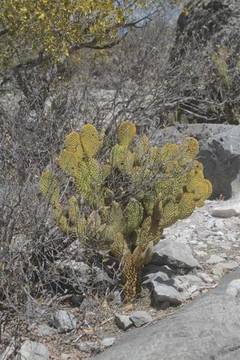
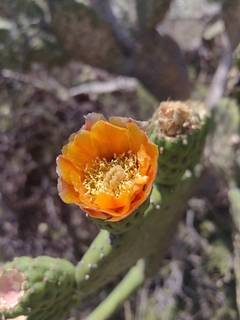
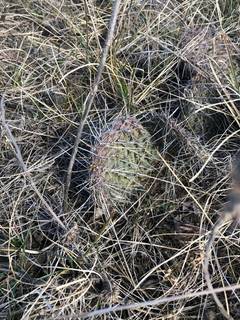
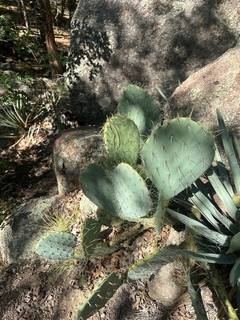
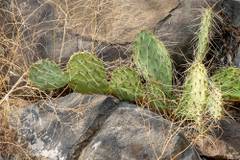
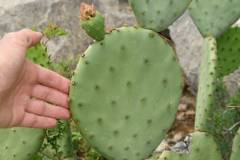
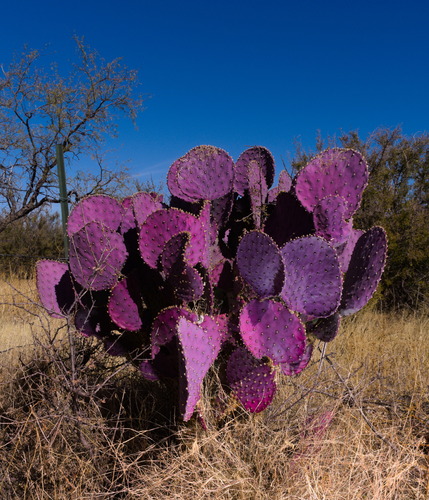
Opuntia santa-rita is a clumping, branching cactus 3-6 feet (0.9-1.8 m) tall and 4-8 feet (1.2-2.4 m) wide. Pads (cladodes) are obovate to circular, 4-8 inches (10-20 cm) across, and 0.5-0.75 inch (1.3-2 cm) thick. Pad color shifts from blue-gray-green in summer to purple or violet from late fall through early spring; coloration intensifies under cold conditions of 35-45°F (2-7°C) or under drought. Pads bear sparse spines 0.5-1 inch (1.3-2.5 cm) long and dense clusters of glochids 1-3 mm long that detach into skin on contact. Yellow flowers 2-3 inches (5-7.5 cm) across appear at pad margins from April through May, opening for 1-2 days each. Red-purple fruit 1-2 inches (2.5-5 cm) long ripens from July through September. Plants are damaged below 15°F (-9°C) and pads collapse in waterlogged soils within 2-4 weeks. Cochineal scale (Dactylopius coccus) forms white cottony patches on pad surfaces in summer in zones 8-10.
Native Range
Opuntia santa-rita is native to the Sonoran and Chihuahuan deserts of the southwestern United States and northern Mexico, including Arizona, New Mexico, southwestern Texas, and the Mexican states of Sonora and Chihuahua. It grows on rocky slopes and desert grasslands at 1,500-5,000 feet (450-1,500 m) elevation in well-drained, calcareous soils.Suggested Uses
Used in xeriscape gardens, rock gardens, and desert landscape plantings at 4-8 foot (1.2-2.4 m) spacing in zones 8-10. Grown in containers of at least 7 gallons (26 L) with cactus mix and gravel mulch; container plants can be overwintered indoors at 40-50°F (4-10°C). Used as a barrier planting along property edges in arid regions; glochids deter foot traffic.How to Identify
Appearance
Size & Dimensions
Height3' - 6'
Width/Spread4' - 8'
Colors
Bloom Information
Yellow flowers 2-3 inches (5-7.5 cm) across appear from late April through May in zones 8-9 and from March through April in zone 10. Each flower opens for 1-2 days. A mature pad produces 2-5 flowers per season along its upper margin. Full-sun siting yields higher flower counts; shaded plants produce few or no flowers. Red-purple fruit follows and matures from July through September.
Detailed Descriptions
Foliage Description
Blue-gray-green pads turning purple to violet in cool or dry conditionsGrowing Conditions
Sun Requirements
Requires 6-12 hours of direct sunlight daily
• Full Sun: 6+ hours of direct sunlight
• Partial Shade: 3-6 hours of direct sunlight
• Full Shade: Less than 3 hours of direct sunlight
Care & Maintenance
Care Guide
Water deeply once monthly during the first year after transplanting; established plants require no supplemental water in zones 8-10 except during prolonged drought. Overwatering or poor drainage causes pad collapse and root rot within 2-4 weeks. Plants tolerate temperatures from 15°F to 110°F (-9°C to 43°C); pad discoloration occurs below 15°F (-9°C). Cochineal scale (Dactylopius coccus) appears as white cottony patches on pads in summer; a forceful jet of water dislodges the insects. Root mealybugs occur in container plantings with stale soil. Pads cut for propagation are allowed to callus for 7-10 days before insertion into dry sand.Pruning
Remove damaged, diseased, or unwanted pads at the joint between cladodes during dry weather to prevent infection. Glochids detach on contact and embed in skin, causing irritation for 1-3 days; tape removes embedded glochids from skin. Cut surfaces callus over within 7-10 days. Excessive pruning triggers new shoot growth from areoles below the cut.Pruning Schedule
Prune: May–July
summer
Container Growing
Suitable for container growing
Minimum container size: 7 gallons