Opuntia, Genus, polyacantha, Species,
- Genus & species
plains pricklypear
Western and central North America (Great Plains to the Rocky Mountains)
Overview
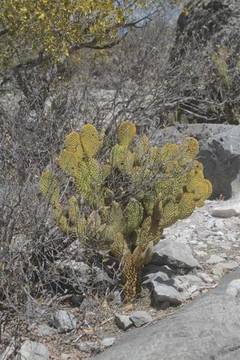
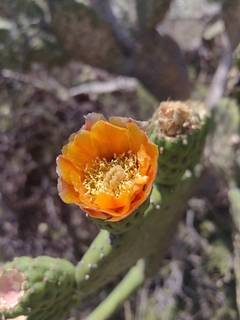
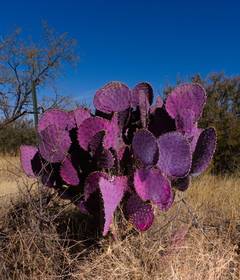
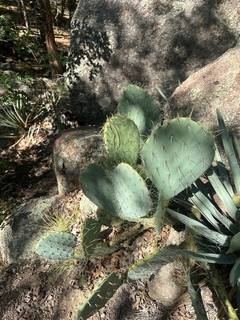
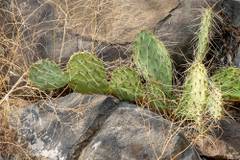
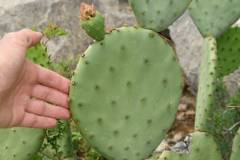
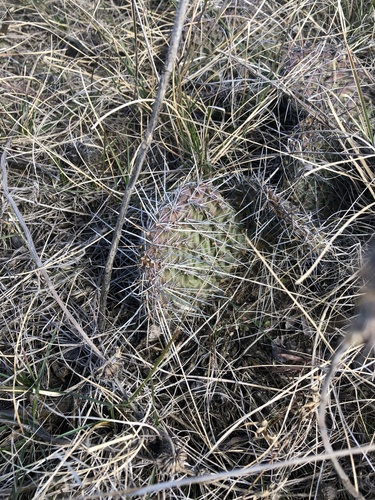
Opuntia polyacantha is a low, mat-forming cactus in the family Cactaceae, growing 4-12 inches (10-30 cm) tall and spreading by jointed pads into clumps 3-6 feet (0.9-1.8 m) or more across. The blue-green to grey-green stem segments, or pads, are flattened, rounded to oval, 2-5 inches (5-13 cm) long, and armed with clusters of 5-12 slender spines up to 3 inches (7.5 cm) long, along with tufts of tiny barbed glochids that detach at a touch. Cup-shaped flowers 2-3 inches (5-7.5 cm) wide open at the pad margins in late spring to early summer, usually pale yellow and sometimes flushed pink, magenta, or bronze. The fruit is a dry, spiny, tan burr 0.75-1.25 inches (2-3 cm) long, unlike the fleshy fruit of many other pricklypears. Opuntia polyacantha withstands extreme cold and drought, surviving below -30F (-34C) by shedding water from its pads in winter. Limitations include sharp spines and glochids that make handling hazardous and a spreading habit that can overtake small plantings.
Native Range
Opuntia polyacantha is native to western and central North America, ranging from the prairie provinces of Canada south through the Great Plains and Rocky Mountains to Texas, Arizona, and northern Mexico. It grows on dry plains, sandy and gravelly slopes, and rocky outcrops in grassland and shrub-steppe.Suggested Uses
Opuntia polyacantha is grown in rock gardens, xeriscapes, and dryland and water-wise plantings, and for erosion control on dry slopes. It is spaced 2-3 feet (60-90 cm) apart as a low, spreading groundcover in hot, sunny sites.How to Identify
Appearance
Size & Dimensions
Height4" - 1'
Width/Spread3' - 6'
Colors
Bloom Information
Opuntia polyacantha blooms in late spring to early summer, generally May to June, with each flower lasting one to two days. Pale yellow to bronze or magenta flowers open at the upper edges of the pads and attract bees. Flowering lasts about two to three weeks, after which dry, spiny fruits form and persist into winter.
Detailed Descriptions
Flower Description
Pale yellow to magentaFoliage Description
Blue-green pads (leafless)Growing Conditions
Sun Requirements
Requires 6-12 hours of direct sunlight daily
• Full Sun: 6+ hours of direct sunlight
• Partial Shade: 3-6 hours of direct sunlight
• Full Shade: Less than 3 hours of direct sunlight
Care & Maintenance
Care Guide
Opuntia polyacantha grows in full sun on sharp-draining sandy, gravelly, or rocky soil with a pH of 6.0-8.0 and needs very little water once established. Wet, poorly drained soil causes pad and root rot, the main cause of failure in cultivation. It withstands intense heat, drying wind, and winter cold to USDA zone 3 without protection. No fertiliser is required, and lean soil keeps growth compact. Pads root readily where they touch the ground, so colonies expand on their own. Cochineal scale and occasional rot are the only common problems.Pruning
Opuntia polyacantha needs no routine pruning. Individual pads can be removed with tongs to limit spread or to propagate new plants, and damaged or rotting segments are cut away at the joint. Detached pads root easily in dry soil after the cut surface calluses.Container Growing
Suitable for container growing
Minimum container size: 3 gallons