Opuntia, Genus, phaeacantha, Species,
- Genus & species
brown-spined pricklypear
Southwestern United States and northern Mexico
Overview
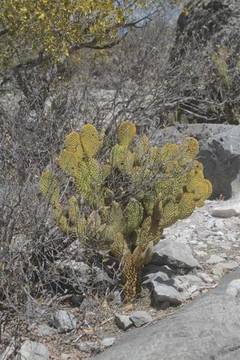
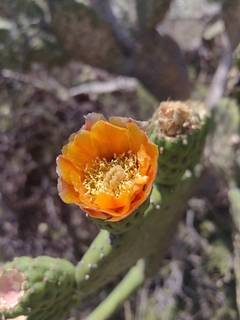
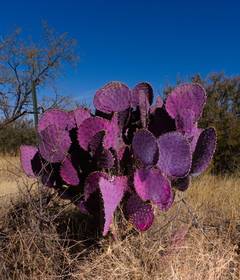
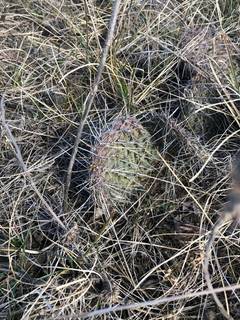
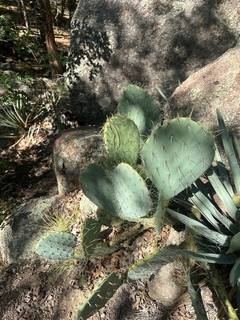
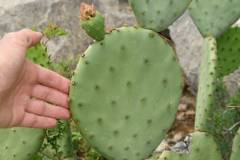
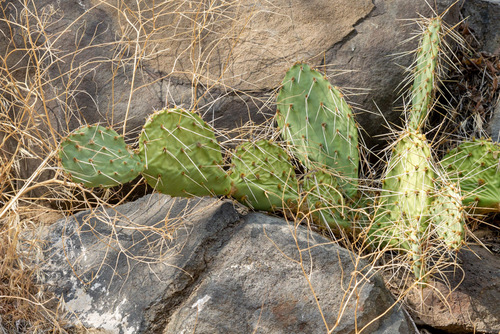
Opuntia phaeacantha, the brown-spined pricklypear, is a spreading, clump-forming cactus in the Cactaceae, usually 1-3 feet (30-90 cm) tall and spreading 3-10 feet (0.9-3 m) wide as it sprawls and roots where pads touch the ground. The stems are flattened blue-green pads (cladodes) 4-8 inches (10-20 cm) long, bearing scattered areoles with one to several brown to grey spines and tufts of tiny barbed glochids. The glochids detach easily and lodge in skin, the main hazard in handling the plant. Waxy flowers 2-3 inches (5-8 cm) across open in late spring to early summer, bright yellow and sometimes flushed red at the centre, followed by fleshy red to purple fruit known as tunas. It grows on dry slopes, desert grassland, plains, and rocky ground across a wide elevation range and withstands winter cold to about -20 F (-29 C). In wet, poorly drained soil the pads rot, the chief limitation in cultivation.
Native Range
Native to the southwestern United States and northern Mexico, from California east to Texas and north into the Great Plains and Colorado Plateau. It grows in deserts, semi-arid grasslands, plains, and on rocky slopes from low deserts to mid elevations.Suggested Uses
Used in desert and rock gardens, xeriscapes, dry banks, and erosion control on sunny slopes, spaced 3-5 feet (0.9-1.5 m) apart to allow for spread. It suits hot, dry, low-water plantings and containers in colder regions. The spreading habit and barbed glochids make it poorly suited to high-traffic areas, narrow paths, and play areas.How to Identify
Appearance
Size & Dimensions
Height1' - 3'
Width/Spread3' - 10'
Bloom Information
Flowers open in late spring to early summer, mainly May and June, each lasting a day or two, with a plant blooming over three to four weeks. Blooms are yellow, sometimes red-centred, and are followed by fruit that ripens red to purple in late summer and autumn. Cool spring weather delays the start of bloom.
Detailed Descriptions
Flower Description
yellow, sometimes red-centredFoliage Description
blue-green padsGrowing Conditions
Sun Requirements
Requires 6-12 hours of direct sunlight daily
• Full Sun: 6+ hours of direct sunlight
• Partial Shade: 3-6 hours of direct sunlight
• Full Shade: Less than 3 hours of direct sunlight
Care & Maintenance
Care Guide
Grows in full sun in fast-draining sandy, gravelly, or rocky soil across a wide pH range of about 6.0-8.0. Water needs are very low; established plants rely on rainfall and need watering only during extended drought. Excess water and poorly drained soil cause pad and root rot, the most frequent cause of failure. It is propagated easily by detaching a pad, letting the cut surface callus for several days, then setting it in dry mineral soil. Hardy in USDA zones 5-10, it withstands hard frost once established.Pruning
Pruned by removing whole pads at the joint rather than cutting across a pad. Overgrown, damaged, or crowded pads are detached in warm, dry weather so the wounds callus quickly. Removed pads root readily and are treated as cuttings or discarded.Pruning Schedule
Prune: June–August
summer
Container Growing
Suitable for container growing
Minimum container size: 3 gallons