Opuntia, Genus, spp., Multiple species,
- Genus
- Multiple species
prickly pears
The Americas, from Canada to Argentina
Overview
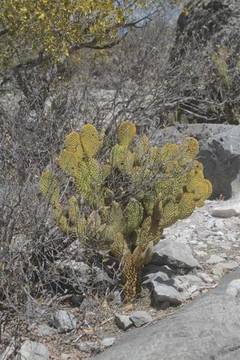
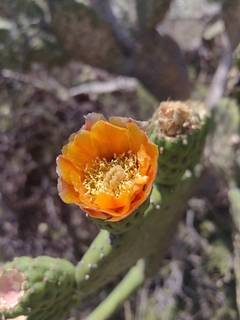
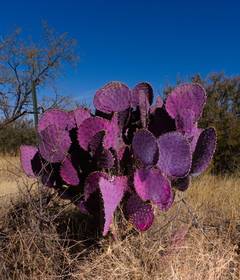
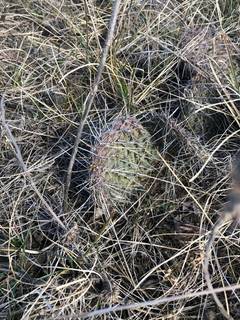
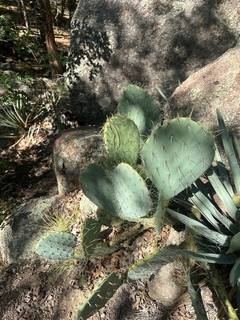
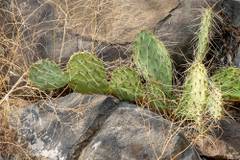
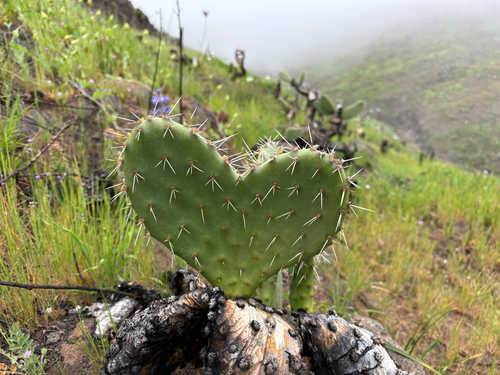
Opuntia, the prickly pears, is a genus of about 150-200 species of cacti native to the Americas. Plants are made up of flattened, segmented stems called pads or cladodes, which carry out photosynthesis in place of leaves; true leaves are reduced to tiny, short-lived scales. Across the genus, plants range from low, ground-hugging mats under 1 foot (30 cm) tall to shrubby or tree-like forms reaching 15 feet (4.5 m). The pads bear clusters of long spines together with glochids — tufts of tiny, barbed bristles that detach easily into skin. Cup-shaped flowers 2-4 inches (5-10 cm) across open in late spring and summer in yellow, orange, red, or pink, followed by fleshy fruits called tunas that ripen red, purple, or yellow and are eaten by people and wildlife. Plants store water in the pads and tolerate extreme heat and drought. Across the genus, cold hardiness varies widely, from tender desert species to others that survive hard winters by shriveling and lying flat. New plants root readily from fallen pads, and some species spread to form broad colonies.
Native Range
The genus is native to the Americas, from western and southern Canada through the United States, Mexico, the Caribbean, and Central America into South America as far as Argentina. Prickly pears grow in deserts, grasslands, scrub, rocky slopes, and dry coastal areas, mostly in hot, dry, sunny sites. Several species have naturalized on other continents and become invasive in parts of Australia, Africa, and the Mediterranean.Suggested Uses
Prickly pears are grown in desert and gravel gardens, rock gardens, and dry slopes, spaced by mature size from about 2 to 8 feet (0.6 to 2.4 m) apart. Low, hardy species are used as groundcover in cold-winter dry climates, while larger species form barrier plantings. The pads and fruit of several species are grown for food.How to Identify
Appearance
Size & Dimensions
Height1' - 15'
Width/Spread2' - 10'
Bloom Information
Across the genus, flowering runs mainly from late spring into summer, roughly May through July, with desert species often blooming after rains. Individual flowers last only 1-2 days, but a plant opens new flowers over several weeks. Bloom is heaviest in full sun and after a cool, moist winter.
Detailed Descriptions
Flower Description
yellow, orange, red, or pinkFoliage Description
blue-greenGrowing Conditions
Sun Requirements
Requires 6-10 hours of direct sunlight daily
• Full Sun: 6+ hours of direct sunlight
• Partial Shade: 3-6 hours of direct sunlight
• Full Shade: Less than 3 hours of direct sunlight
Water & Climate
Water Needs
Drought Tolerance
Drought tolerant when established
Care & Maintenance
Care Guide
Most prickly pears grow in full sun in sandy, gravelly, or rocky, sharply drained soil and rot in wet or heavy ground. Across the genus they need little or no watering once established, drawing on water stored in the pads through long droughts. Cold-hardy species tolerate winters into USDA zone 4 if kept dry, while desert species need frost protection. Few pests trouble them, though cochineal scale and a soft rot from cactus bugs and overwatering affect some species. Pads are handled with thick protection because the glochids lodge in skin and are hard to remove. Plants are easily started by laying a cut pad on dry soil until it roots.Pruning
Remove damaged, diseased, or overcrowded pads by cutting cleanly at the narrow joint between segments. Across the genus, pads are taken off to limit spread or to control size, and the cuttings root into new plants. Spent fruit and flower remnants can be cleared once they dry.Pruning Schedule
spring
Container Growing
Suitable for container growing
Minimum container size: 3 gallons