Opuntia, Genus, ×, Hybrid, columbiana, Species,
- Genus & species
- Hybrid
columbia pricklypear
Overview
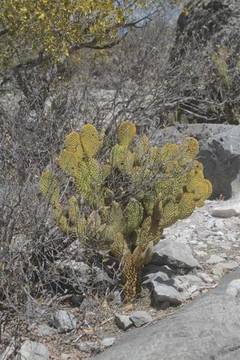
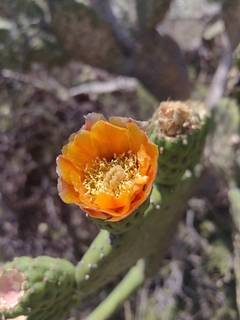
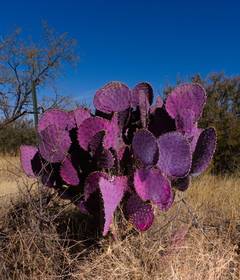
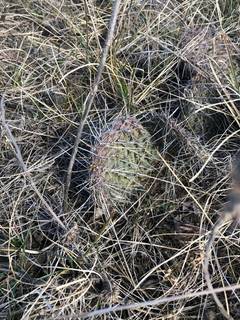
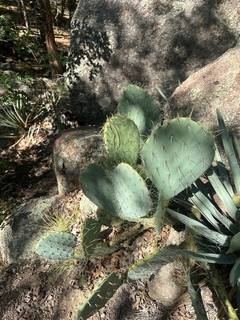
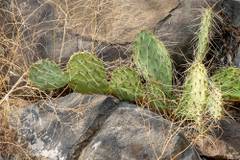
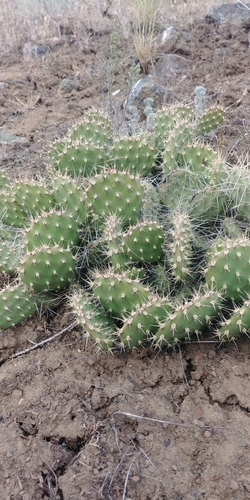
Opuntia × columbiana, Columbia pricklypear, is a low, cold-hardy cactus of hybrid origin between brittle prickly pear O. fragilis and plains prickly pear O. polyacantha, native to the interior Pacific Northwest. It forms a low, sprawling mat 4–12 inches (10–30 cm) tall and 1–3 feet (30–90 cm) wide of jointed, flattened to slightly rounded green pads 2–4 inches (5–10 cm) long. The pads carry areoles with several stiff spines and tufts of small barbed glochids. In early summer it bears cup-shaped yellow flowers 2–3 inches (5–8 cm) across, sometimes with reddish centers, followed by dry, spiny fruit. It grows in full sun on dry, rocky, fast-draining soils of sagebrush steppe, bluffs, and grassland, and withstands cold winters and prolonged drought. As a hybrid it is variable and intermediate between its parents, so identification rests on pad shape and spine detail. Wet or poorly drained ground, especially in winter, causes rot. The detachable pads and barbed glochids cling to skin, fur, and clothing.
Native Range
Opuntia × columbiana is native to the interior Pacific Northwest, including the Columbia Plateau of Washington, Oregon, Idaho, and into British Columbia, where its parent species overlap. It grows in dry sagebrush steppe, grassland, and on rocky bluffs.Suggested Uses
Used in cold-hardy rock gardens, dry and gravel gardens, green roofs, and native steppe plantings, spaced 18–36 inches (45–90 cm) apart. The flowers draw native bees in early summer. Spines and glochids make it less suited to areas with foot traffic, pets, or children.How to Identify
Appearance
Size & Dimensions
Height4" - 1'
Width/Spread1' - 3'
Bloom Information
Detailed Descriptions
Flower Description
yellow, sometimes red-centeredFoliage Description
green padsGrowing Conditions
Sun Requirements
Requires 6-12 hours of direct sunlight daily
• Full Sun: 6+ hours of direct sunlight
• Partial Shade: 3-6 hours of direct sunlight
• Full Shade: Less than 3 hours of direct sunlight
Care & Maintenance
Care Guide
Growth is strongest in full sun on dry, rocky, sharply drained soils, including sand and gravel. Established plants need no irrigation and tolerate hard freezes and long drought, which suits cold, dry-winter regions. Wet or poorly drained soil, especially over winter, is the main cause of rot. No fertilizer is needed. Pads root where they fall, so the mat slowly widens. It is hardy well into cold-winter zones, roughly USDA zones 4 to 8. The barbed glochids and detachable pads are a hazard near walkways and play areas.Pruning
Pruning is seldom needed; individual pads are removed at the joint with tongs to shape the mat or limit spread. Rotting or damaged pads are cut out at the base to stop rot from spreading. Removed pads root readily and are kept off open ground if regrowth is unwanted.Pruning Schedule
Prune: June
summer
Container Growing
Suitable for container growing
Minimum container size: 2 gallons