Opuntia, Genus, cespitosa, Species,
- Genus & species
eastern pricklypear
Overview
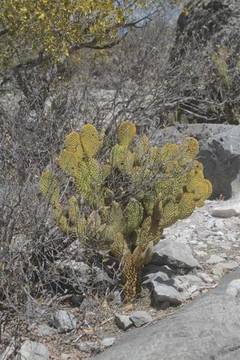
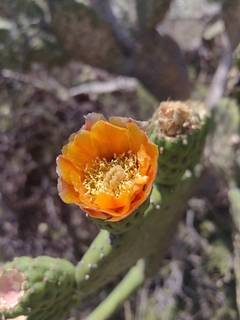
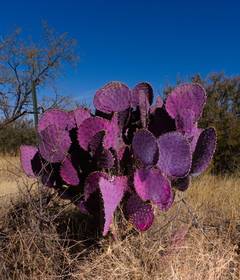
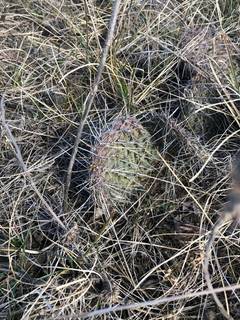
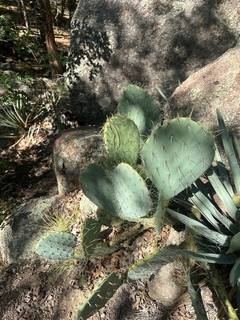
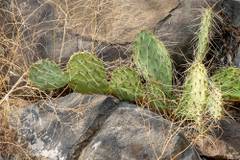
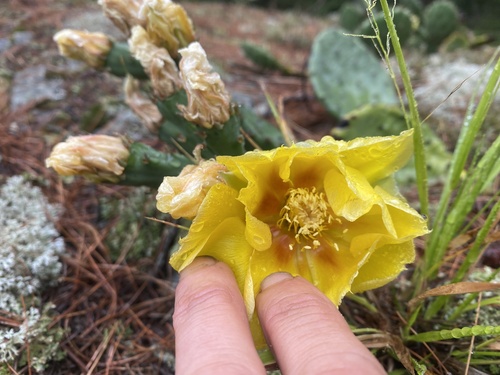
Opuntia cespitosa is a low, spreading cactus that grows 6-14 inches (15-35 cm) tall and forms clumps 1-3 feet (30-90 cm) wide of flattened, jointed green pads. The pads are oval to round, 2-5 inches (5-13 cm) long, and store water, with a surface that wrinkles when dry. They carry tufts of tiny barbed glochids and, on many plants, one or more stout spines per areole. Yellow flowers 2-3 inches (5-8 cm) across, often with a red to orange center, open in early summer and last a day or two each. Red to purple fleshy fruit 1-1.5 inches (2.5-4 cm) long follow and ripen in fall, holding flat seeds. The pads shrivel and lie flat against the ground in winter cold, then plump up and stand again in spring. It withstands hard frost and drought but rots in wet, poorly drained ground. The glochids detach easily and lodge in skin.
Native Range
Native to eastern and central North America, from Ontario and the Great Lakes south to the southeastern United States, on dry, sunny sites. Grows on rock outcrops, sand prairies, dunes, and open glades on sharp-draining soils.Suggested Uses
Planted in rock gardens, gravel gardens, dry slopes, and green roofs in cold-winter regions, spaced 18-24 inches (45-60 cm) apart. The flowers draw native bees, and the fruit feeds birds and mammals. Its glochids and spines make it less suited to plantings beside paths, play areas, or pet runs.How to Identify
Appearance
Size & Dimensions
Height6" - 1'2"
Width/Spread1' - 3'
Bloom Information
Detailed Descriptions
Flower Description
yellow with red centerFoliage Description
greenGrowing Conditions
Sun Requirements
Requires 6-12 hours of direct sunlight daily
• Full Sun: 6+ hours of direct sunlight
• Partial Shade: 3-6 hours of direct sunlight
• Full Shade: Less than 3 hours of direct sunlight
Care & Maintenance
Care Guide
Grows in full sun on sharp-draining sandy, gravelly, or rocky soil and tolerates heat, drought, and winter cold well below freezing. It needs little or no irrigation, and wet or heavy soil in winter causes rot. Pads root where they touch soil, so clumps widen and detached pads start new plants. The barbed glochids lodge in skin and are slow to remove, which complicates handling near paths. The species has few pests, though cochineal scale and a soft rot can appear. Plants are long-lived and need almost no care once placed in suitable ground.Pruning
Remove individual pads at the joint with tongs to control size or shape the clump. Cut out shriveled, rotting, or frost-damaged pads at the base. Detached pads can be left to callus and replanted to make new plants.Container Growing
Suitable for container growing
Minimum container size: 2 gallons