Opuntia, Genus, humifusa, Species,
- Genus & species
low pricklypear
Overview
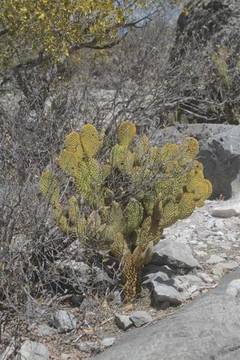
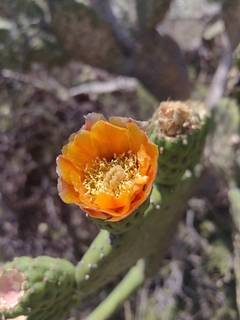
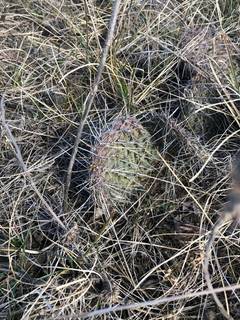
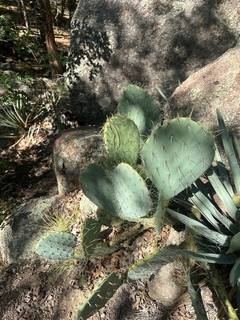
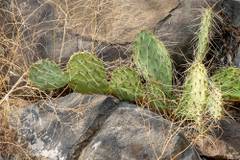
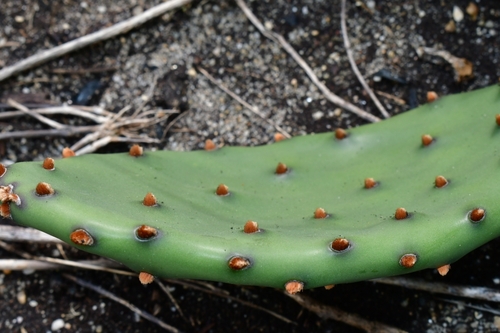
Opuntia humifusa is a low, sprawling prickly pear cactus forming clumps 6-18 in (15-45 cm) tall and spreading 1-4 ft (0.3-1.2 m) wide. The flattened, rounded to oval pads, or cladodes, are 2-5 in (5-13 cm) long, blue-green, and bear tufts of barbed glochids with few or no long spines on many plants. Yellow flowers 2-3 in (5-7.5 cm) across, sometimes with a red center, open in early summer, followed by fleshy reddish-purple fruits 1-2 in (2.5-5 cm) long. The species is native to eastern and central North America, from the eastern United States into southern Ontario, growing in dry, sandy or rocky open ground, prairies, and rock outcrops. It is hardy in USDA zones 4 to 9 and shrivels and lies flat through winter, then plumps up in spring. It grows in dry, sunny sites and rots in soils that stay wet. The glochids detach easily and embed in skin even where long spines are absent.
Native Range
Opuntia humifusa is native to eastern and central North America, ranging from the eastern United States west to the Great Plains and north into southern Ontario. It grows in dry, sandy or rocky open ground, prairies, sand dunes, and rock outcrops.Suggested Uses
Used in rock gardens, xeriscapes, green roofs, and dry slopes as a low groundcover, spaced 18-24 in (45-60 cm) apart. The flowers attract native bees, and the fruit feeds birds and mammals.How to Identify
Appearance
Size & Dimensions
Height6" - 1'6"
Width/Spread1' - 4'
Colors
Bloom Information
Detailed Descriptions
Flower Description
yellow, sometimes red-centeredFoliage Description
blue-green (pads)Growing Conditions
Sun Requirements
Requires 6-12 hours of direct sunlight daily
• Full Sun: 6+ hours of direct sunlight
• Partial Shade: 3-6 hours of direct sunlight
• Full Shade: Less than 3 hours of direct sunlight
Care & Maintenance
Care Guide
Opuntia humifusa grows in full sun and sharp-draining sandy, gravelly, or rocky soils with pH from 6.0 to 7.5. It is hardy in USDA zones 4 through 9 and survives winter cold by losing water from the pads, which shrivel and lie flat, then refill in spring. Water needs are very low, and soils that stay wet, especially in winter, cause rot. It tolerates heat and prolonged drought once established. The barbed glochids detach on contact and embed in skin even on nearly spineless plants.Pruning
Individual pads can be removed with tongs to limit spread or shape the clump, cutting cleanly at the joint between segments. Detached pads root readily where they land. Damaged or rotting pads can be cut away at the base.Container Growing
Suitable for container growing
Minimum container size: 2 gallons