Magnolia, Genus, wilsonii, Species,
- Genus & species
Wilson's magnolia
Western China (Sichuan, Guizhou, Yunnan provinces); montane forests and thickets at 5,000-10,000 ft (1,500-3,000 m); introduced to Western cultivation by E.H. Wilson in 1908
Overview
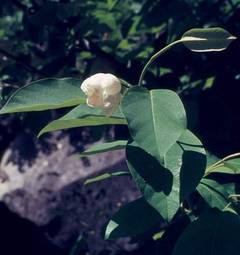
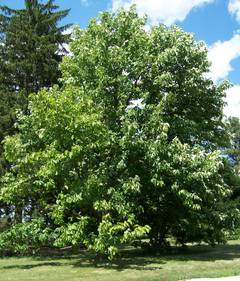
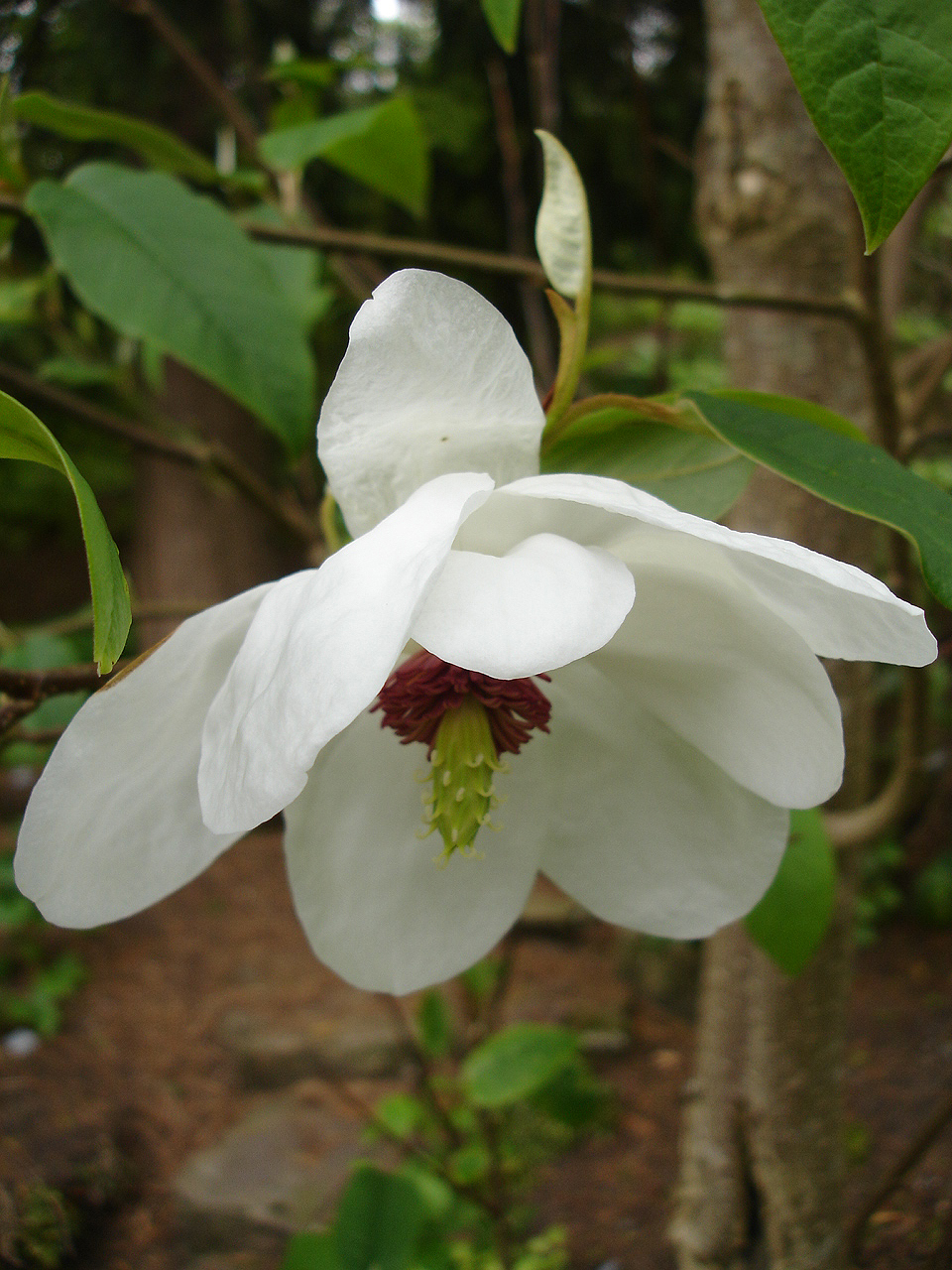
Magnolia wilsonii is a small to medium deciduous tree or large shrub reaching 15-25 feet (4.5-7.5 m) tall with a spread of 15-20 feet (4.5-6 m) and a broadly spreading, open crown. The species is a pendant-flowered magnolia: white cup-shaped flowers 3-4 inches (8-10 cm) across with 9-12 tepals hang downward from the branches, and the interior of each flower carries a prominent central boss of crimson to maroon stamens. The stamen boss is visible only when the viewer looks up at the flower from below, which makes the siting of the tree decisive for the ornamental display. Flowers open in May-June after the leaves have fully expanded and carry a sweet fragrance. Bloom duration is 3-4 weeks. Alternate elliptic to obovate leaves are 3-6 inches (8-15 cm) long, dark green above with a silvery-gray felted underside (indumentum). Rose-pink cone-like aggregate fruits 2-3 inches (5-8 cm) long ripen in autumn. Growth rate is slow to moderate. Hardy to USDA zone 6. Non-toxic. The species was introduced to Western cultivation by E.H. Wilson in 1908 from western China.
Native Range
Magnolia wilsonii is native to western China — Sichuan, Guizhou, and Yunnan provinces — in montane forests and thickets at 5,000-10,000 feet (1,500-3,000 m). It was introduced to Western cultivation by E.H. Wilson in 1908.Suggested Uses
Used as a specimen in woodland gardens, sheltered borders, and partly shaded sites in zones 6-9 at 15-18 foot (4.5-5.5 m) spacing, with siting on slopes, raised beds, or terraces placing the pendant flowers overhead of the viewer. Placement at eye-level or on flat ground hides the crimson stamen boss inside the downward-facing flowers and reduces visual impact. The silvery-gray leaf undersides add season-long texture independent of bloom. Not suited to alkaline soils, dry sites, exposed hot positions, or flat ground-level placements where the pendant flower interior cannot be seen.How to Identify
Appearance
Size & Dimensions
Height15' - 25'
Width/Spread15' - 20'
Bloom Information
Pendant white cup-shaped flowers 3-4 inches (8-10 cm) across with 9-12 tepals, opening in May and June after leaves have expanded. Each flower carries a prominent central boss of crimson to maroon stamens, visible when the flower is viewed from below. Sweet fragrance. Bloom duration is 3-4 weeks. Rose-pink cone-like aggregate fruits 2-3 inches (5-8 cm) ripen in autumn.
Detailed Descriptions
Flower Description
White; pendant cup-shaped 3-4 inches (8-10 cm) across with 9-12 tepals; prominent central boss of crimson to maroon stamens visible when viewing the flower from belowFoliage Description
Dark green above; silvery-gray felted underside (indumentum); alternate elliptic to obovate 3-6 inches (8-15 cm) longGrowing Conditions
Sun Requirements
Requires 3-8 hours of direct sunlight daily
• Full Sun: 6+ hours of direct sunlight
• Partial Shade: 3-6 hours of direct sunlight
• Full Shade: Less than 3 hours of direct sunlight
Care & Maintenance
Care Guide
Grows in partial shade to full sun in moist, rich, well-drained, acidic soil at pH 5.0-6.5. Hardy to USDA zone 6. Tolerates more shade than most deciduous magnolias, reflecting its native montane forest understory. Mulch the root zone 2-3 inches (5-8 cm) deep. Hot afternoon sun in warm climates (zones 8-9) can scorch the foliage; dappled shade during the hottest hours reduces damage. Growth rate is slow to moderate. No significant pest or disease problems.Pruning
Minimal pruning required. The naturally open, broadly spreading crown develops without training. Remove dead, crossing, or damaged branches in late spring after flowering. Heavy cuts into older wood heal slowly on magnolias and are better avoided.Pruning Schedule
Prune: June
summer