Magnolia, Genus, maudiae, Species,
- Genus & species
Maud's magnolia
Southeastern China (Guangdong, Guangxi, Guizhou, Hunan, Jiangxi provinces)
Overview
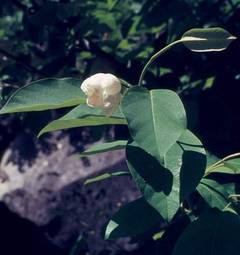
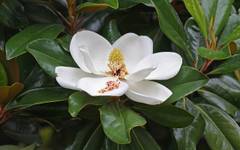
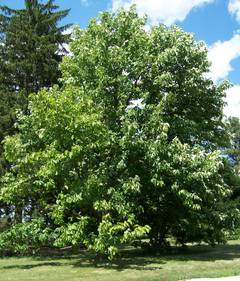
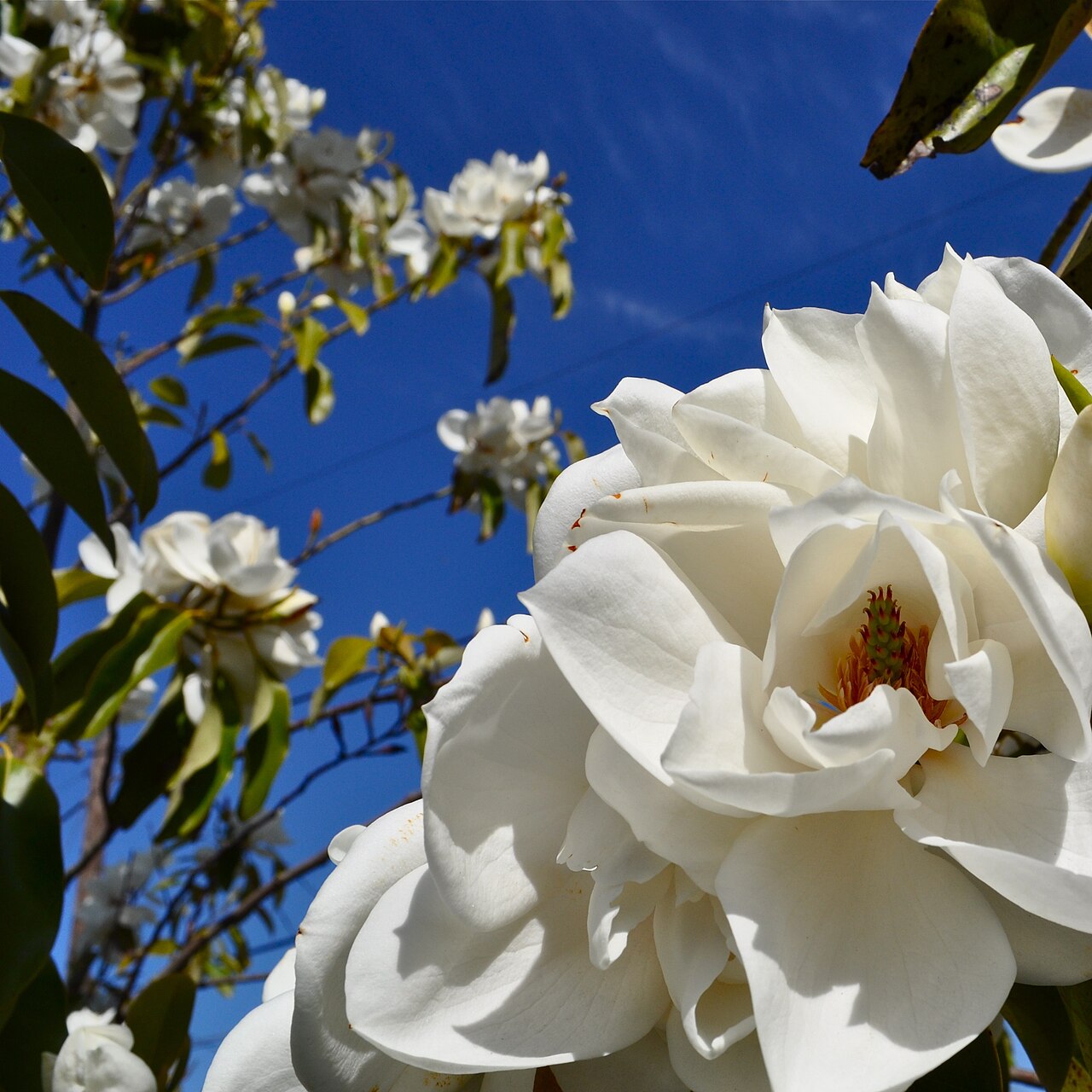
Magnolia maudiae (synonym Michelia maudiae) is a medium evergreen tree reaching 20–35 feet (6–10.5 m) tall and 15–25 feet (4.5–7.5 m) wide, with a dense broadly pyramidal to oval crown. The species was formerly classified in the genus Michelia, and its flowers are borne from leaf axils on previous-season wood rather than at branch tips — a structural feature that contrasts with the terminal flowering typical of most Magnolia species and produces bloom distributed along the branches rather than at the ends. Flowers are white, cup-shaped, 3–4 inches (8–10 cm) across with 6–9 thick fleshy tepals, carrying a strong sweet fragrance detectable 10–20 feet (3–6 m) from the plant. Bloom runs from February through April over a 4–6 week window, placing peak flowering in the late winter to early spring gap when few other evergreen magnolias are in flower. Leaves are alternate, elliptic to obovate, 3–6 inches (8–15 cm) long, glossy dark green on the upper surface with a glaucous underside; new growth emerges bronze-tinted and holds the coloration for 2–3 weeks before greening. Bark is smooth and gray-green. Growth rate is moderate at 12–18 inches (30–45 cm) per year, reaching mature size in 15 years. Hardy to USDA zone 8. Not known to be toxic to pets or humans.
Native Range
Magnolia maudiae is native to southeastern China, occurring in Guangdong, Guangxi, Guizhou, Hunan, and Jiangxi provinces in evergreen broadleaf forests at 1,000–5,000 feet (300–1,500 m) elevation.Suggested Uses
Used as a specimen tree or evergreen screen in sheltered zone 8–10 gardens at 15–20 foot (4.5–6 m) spacing. The 20–35 foot (6–10.5 m) mature size places it between the smaller M. laevifolia at 8–15 feet (2.4–4.5 m) and the larger M. grandiflora at 30–60 feet (9–18 m), filling the medium-evergreen-tree category in mild-winter landscapes. The February–April bloom fills a late-winter flowering gap when few other evergreen magnolias are open. The species is restricted to sheltered positions in zone 8 or warmer; late-winter flowers are susceptible to frost below 28°F (–2°C). The tree does not grow well in cold climates, exposed windy sites, alkaline soils, or drought-prone positions.How to Identify
Appearance
Size & Dimensions
Height20' - 35'
Width/Spread15' - 25'
Bloom Information
White, cup-shaped flowers 3–4 inches (8–10 cm) across with 6–9 thick fleshy tepals, borne from leaf axils on previous-season wood, from February through April over a 4–6 week window. Fragrance is strong and sweet, detectable 10–20 feet (3–6 m) on still days. Bloom period places peak flowering in the late winter to early spring gap when few other evergreen magnolias are in flower.
Detailed Descriptions
Flower Description
White cup-shaped flowers 3-4 inches across with 6-9 thick fleshy tepals; borne from leaf axils on previous-season wood; strongly fragrant; February-AprilFoliage Description
Glossy dark green above, glaucous underside; alternate, elliptic to obovate, 3-6 inches long; bronze-tinted new growth holding 2-3 weeksGrowing Conditions
Sun Requirements
Requires 3-8 hours of direct sunlight daily
• Full Sun: 6+ hours of direct sunlight
• Partial Shade: 3-6 hours of direct sunlight
• Full Shade: Less than 3 hours of direct sunlight
Care & Maintenance
Care Guide
Grow in partial shade to full sun with 3–8 hours of direct light in moist, rich, well-drained loam or silt at pH 5.0–6.5. Siting in a sheltered position on the east or south side of larger evergreens reduces cold-wind damage to foliage and flowers; the late-winter bloom is susceptible to frost damage when temperatures drop below 28°F (–2°C). Water deeply once per week during the first three growing seasons, then maintain moisture through summer. Apply 2–3 inches (5–8 cm) of organic mulch over the root zone in spring. Transplant container-grown specimens in spring. No significant pest or disease problems have been reported. Hardy to USDA zone 8.Pruning
Prune lightly after flowering in April–May when needed. The naturally dense pyramidal to oval form develops well without shaping. Remove dead, damaged, or crossing branches. The species responds slowly to heavy pruning cuts.Pruning Schedule
Prune: April–May
early springlate spring