Magnolia, Genus, 'Jane', Cultivar,
- Genus
- Cultivar
jane magnolia
Garden hybrid developed at the U.S. National Arboretum, Washington, D.C.; parent species from Japan ({M. stellata}) and China ({M. liliiflora})
Overview
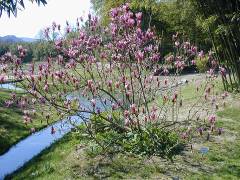
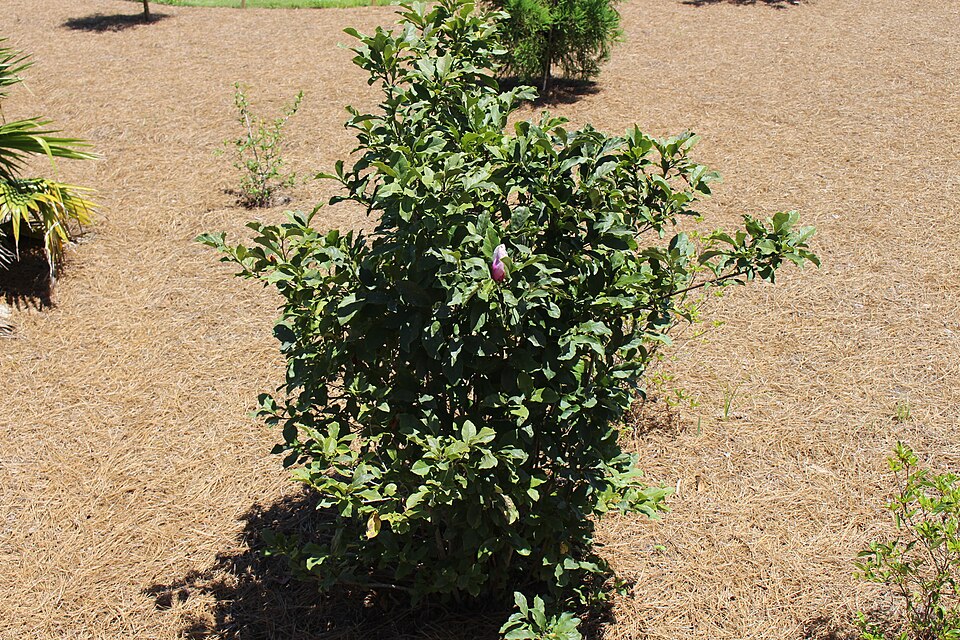
Magnolia 'Jane' is a compact, deciduous, multi-stemmed shrub or small tree reaching 10–15 feet (3–4.5 m) tall and 8–12 feet (2.4–3.6 m) wide, with an upright vase-shaped to rounded habit. The cultivar is part of the Little Girl series of eight hybrid magnolias developed at the U.S. National Arboretum in Washington, D.C., by Francis DeVos and William Kosar from crosses of M. liliiflora 'Nigra' × M. stellata 'Rosea' and released in 1968. Flowers are 3–5 inches (8–13 cm) across with 8–10 tepals, reddish-purple on the exterior and white to pale pink within. Tepals are broader and more cupped than the narrow strap-shaped tepals of Magnolia 'Ann', giving a more open cup form rather than a closed tulip form at peak bloom. Bloom runs from mid-April through mid-May, 2–4 weeks after M. stellata, which shifts the open-flower window past the late-frost risk period in USDA zones 4–6. Sporadic rebloom occurs in June–August on vigorous plants, typically producing 5–15 additional flowers across the summer. Leaves are alternate, obovate, 4–6 inches (10–15 cm) long, medium green, emerging after or concurrent with the flowers. Growth rate is slow at 6–12 inches (15–30 cm) per year, reaching mature size in 10 years. Hardy to USDA zone 4. Not known to be toxic to pets or humans.
Native Range
Magnolia 'Jane' is a garden hybrid (M. liliiflora 'Nigra' × M. stellata 'Rosea') developed at the U.S. National Arboretum in Washington, D.C., by Francis DeVos and William Kosar, and released to cultivation in 1968 as part of the Little Girl series of eight hybrid magnolias.Suggested Uses
Used as a specimen, foundation plant, or mixed-border component in residential gardens and containers 15 gallons (57 L) or larger at 8–12 foot (2.4–3.6 m) spacing. The 10–15 foot (3–4.5 m) mature size fits residential lots where saucer magnolia M. × soulangeana at 20–30 feet (6–9 m) exceeds available space. Within the Little Girl series, the cup-shaped flower form and 8–10 broader tepals contrast with the narrower strap-tepaled silhouette of 'Ann', and 'Jane' is planted more frequently than other members of the series in North American landscape use. Sporadic summer rebloom is inconsistent and should not be treated as a reliable second display. The deciduous habit leaves the plant bare from November through March; the tree does not grow well in alkaline soils, exposed wind sites, or positions where year-round screening is needed.How to Identify
Appearance
Size & Dimensions
Height10' - 15'
Width/Spread8' - 12'
Bloom Information
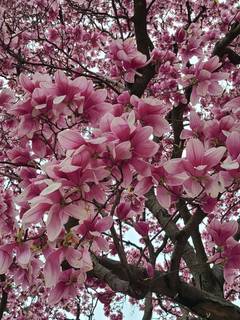
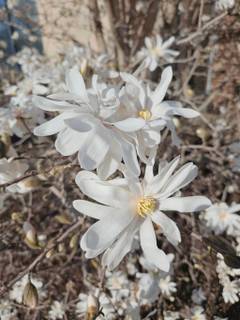
Cup-shaped flowers 3–5 inches (8–13 cm) across with 8–10 tepals, reddish-purple exterior and white to pale pink interior, appear mid-April through mid-May over a 2–3 week primary window, 2–4 weeks later than M. stellata. Fragrance is light. Sporadic summer rebloom in June–August produces an additional 5–15 flowers on vigorous plants. The later primary bloom timing reduces but does not eliminate frost-damage risk.
Detailed Descriptions
Flower Description
Reddish-purple exterior, white to pale pink interior; cup-shaped 3-5 inches across with 8-10 broader tepals; lightly fragrantFoliage Description
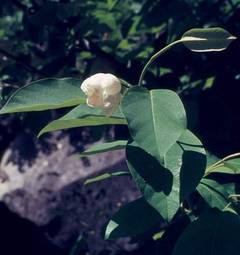
Medium green; alternate, obovate, 4-6 inches long; emerging after or with flowersGrowing Conditions
Sun Requirements
Requires 4-8 hours of direct sunlight daily
• Full Sun: 6+ hours of direct sunlight
• Partial Shade: 3-6 hours of direct sunlight
• Full Shade: Less than 3 hours of direct sunlight
Care & Maintenance
Care Guide
Grow in full sun to partial shade with 4–8 hours of direct light in moist, rich, well-drained loam or silt at pH 5.0–6.5. A site sheltered from northwest wind and outside obvious frost pockets reduces flower damage from late-spring cold snaps; the April–May bloom timing already moves the open-flower window past the highest-risk frost period. Water deeply once per week during the first three growing seasons, then maintain soil moisture through summer. Apply 2–3 inches (5–8 cm) of organic mulch over the root zone in spring, kept back from the stems. Alkaline soils cause chlorosis and progressive decline. Transplant balled-and-burlapped or container-grown specimens in spring. Growth rate is slow at 6–12 inches (15–30 cm) per year. No significant pest or disease problems have been reported. Hardy to USDA zone 4.Pruning
Prune immediately after spring flowering when needed. The naturally compact multi-stemmed form requires minimal shaping beyond removal of dead, crossing, or damaged branches. Autumn and winter pruning removes developing flower buds and eliminates the following spring bloom. Heavy pruning regrows slowly on magnolias.Pruning Schedule
Prune: May–June
late spring
Container Growing
Suitable for container growing
Minimum container size: 15 gallons