Overview
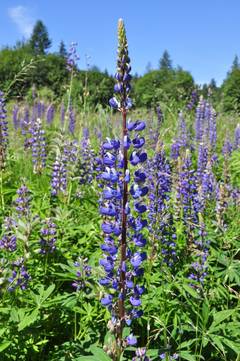
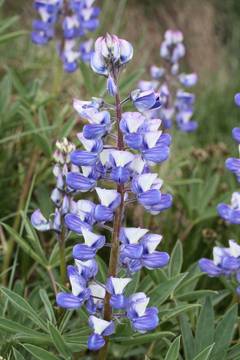
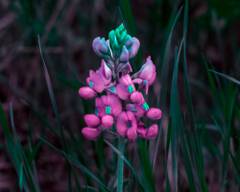
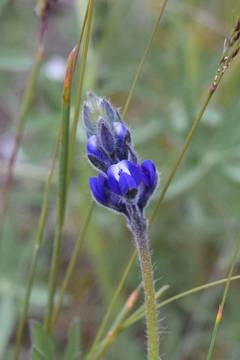
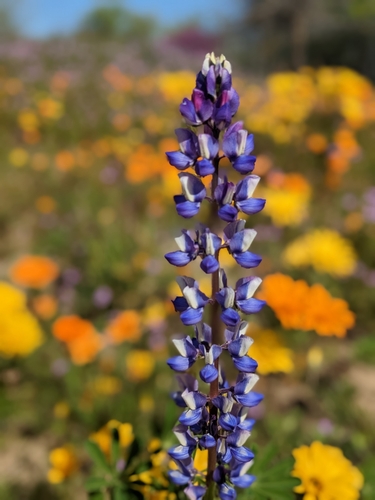
Lupinus succulentus is a stout annual wildflower growing 1-3 feet (30-90 cm) tall on thick, hollow, somewhat succulent stems. The palmate leaves are divided into seven to nine fleshy, wedge-shaped leaflets 1-2 inches (2.5-5 cm) long, often holding beads of water at the leaf center. From late winter into spring it produces upright spikes of pea-like flowers in deep blue-purple, each with a white to magenta spot on the upper petal that turns reddish after pollination. The flowers are followed by hairy pods that split and twist to fling out the seed. As a legume it fixes nitrogen and grows quickly on disturbed ground. It is native to California and Baja California, where it covers open fields, roadsides, and slopes after winter rains, often in showy stands. The plant germinates with cool-season moisture, blooms in spring, sets seed, and dies by summer. It self-seeds freely but completes its whole life in one season, so it must reestablish from seed each year. The seeds and foliage contain alkaloids that are toxic to people and animals if eaten.
Native Range
Native to California and Baja California, Mexico, mainly in the coastal ranges, valleys, and foothills. It grows in open fields, grasslands, roadsides, and disturbed slopes below about 2,500 feet (760 m).Suggested Uses
Used in wildflower meadows, native seed mixes, and spring displays in Mediterranean climates. It combines with California poppy, other lupines, and annual grasses for mass color. The toxic seeds and short annual life make it suited to naturalized plantings rather than beds where children or pets graze.How to Identify
Appearance
Size & Dimensions
Height1' - 3'
Width/Spread1' - 2'
Bloom Information
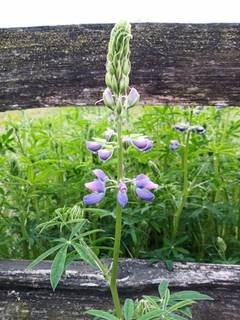
Blooms from late winter into spring, generally February to May, with timing set by winter rainfall. Upright spikes of blue-purple flowers open from the bottom up over several weeks. Twisting seed pods follow and fling seed as they dry, after which the annual plant declines.
Detailed Descriptions
Flower Description
deep blue-purple with a white to magenta banner spotFoliage Description
greenGrowing Conditions
Sun Requirements
Requires 6-12 hours of direct sunlight daily
• Full Sun: 6+ hours of direct sunlight
• Partial Shade: 3-6 hours of direct sunlight
• Full Shade: Less than 3 hours of direct sunlight
Water & Climate
Water Needs
Drought Tolerance
Drought tolerant when established
Care & Maintenance
Care Guide
Grows in full sun on well-drained loamy, clay, or sandy soils with a pH of about 6.0-7.5, germinating with cool fall and winter rains. As a nitrogen-fixing annual it needs no fertilizer and grows quickly on lean or disturbed ground. Established seedlings tolerate dry spells, and little or no irrigation is needed once they are up. It is grown from seed sown in fall where plants are to grow, since the taproot makes transplanting difficult. Soaking or scarifying the hard seed coat improves germination. Wet summer soils and heavy shade do not suit it.Pruning
No pruning is needed for this annual. Spent flower spikes can be removed to tidy the plant, though leaving some pods lets it self-seed for the following year. Plants are cleared after they dry and set seed.Toxicity Warning
Toxic to pets and humansPlanting Guide
Planting Methods & Timing
Planting Method
direct sow
Direct Sow Timing
fall, with cool-season rains
Days to Maturity
90–150 days
Plant Spacing
12 inches
Companion Planting
Good Companions