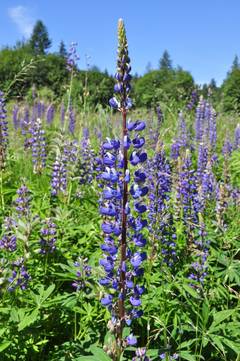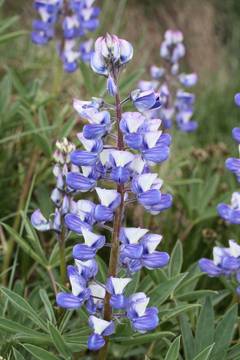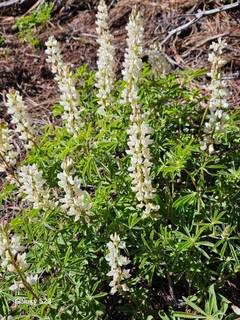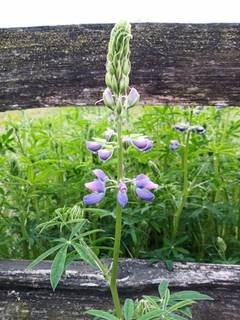
Lupinus, Genus, arboreus, Species,
- Genus & species
coastal bush lupine
Overview
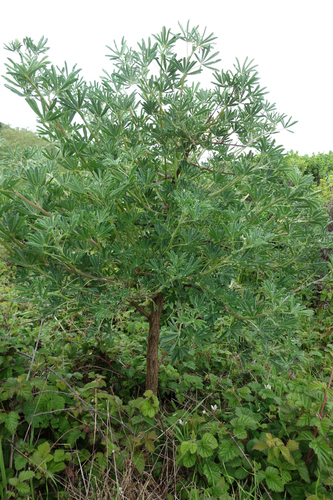
Lupinus arboreus is a fast-growing, soft-wooded shrub reaching 3-7 feet (0.9-2.1 m) tall and about as wide, with a rounded, densely branched form. Leaves are palmate, divided into 5-12 narrow leaflets each 0.8-2.4 inches (2-6 cm) long, grey-green, and covered with silky hairs on the underside. Upright flower spikes 4-12 inches (10-30 cm) long carry many pea-shaped flowers, most often yellow but sometimes lilac to blue, from spring into summer, and the flowers are sweetly scented. Seed pods are hairy, 1.5-3 inches (4-8 cm) long, and split open to scatter seed. Growth is rapid, with plants reaching full size in 2-3 years, but they are short-lived, often declining after 5-7 years. The shrub fixes nitrogen through root nodules and grows on poor, sandy soils. It self-seeds freely and has naturalized beyond its native range, where it is treated as an invasive plant on some coastlines.
Native Range
Native to the coast of California, where it grows on dunes, coastal bluffs, and sandy scrub. Naturalized on the Pacific coast north of its native range, and in coastal areas of Europe, New Zealand, Australia, and South America, where it colonizes dunes and disturbed sandy ground. Lupinus arboreus is regulated as an invasive plant in parts of the United States, New Zealand, and Australia.Suggested Uses
Planted on coastal banks, dunes, and dry sandy slopes for quick cover and nitrogen fixation, spaced 3-5 feet (0.9-1.5 m) apart. Used in seaside and gravel gardens where soils are poor and sharply drained. Its free self-seeding makes it difficult to contain near natural dune and grassland habitats.How to Identify
Appearance
Size & Dimensions
Height3' - 7'
Width/Spread3' - 7'
Bloom Information
Flowers mainly from April to July, with scattered bloom continuing into late summer in mild coastal climates. The scented flowers are pollinated by bees. Seed pods ripen through summer and split open to scatter seed, and plants often flower in their first or second year from seed.
Detailed Descriptions
Flower Description
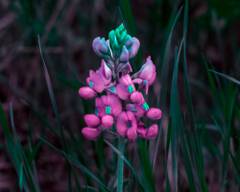
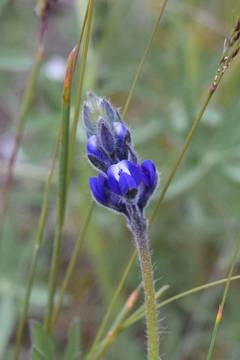
yellow, sometimes lilac to blueFoliage Description
grey-greenGrowing Conditions
Sun Requirements
Requires 6-12 hours of direct sunlight daily
• Full Sun: 6+ hours of direct sunlight
• Partial Shade: 3-6 hours of direct sunlight
• Full Shade: Less than 3 hours of direct sunlight
Care & Maintenance
Care Guide
Grows in full sun on sharp-draining, sandy or gravelly soils of low fertility, and tolerates salt spray and wind on the coast. Establishes quickly from seed and reaches flowering size within 1-2 years, fixing its own nitrogen so added fertilizer is not needed. Tolerates drought once established but is shortened in life by rich soils, heavy pruning, and wet, poorly drained ground, where root rot develops. Plants are typically short-lived at 5-7 years and are often replaced by self-sown seedlings. Aphids and powdery mildew occur in sheltered, humid conditions. Seeds and foliage contain quinolizidine alkaloids that are toxic if eaten.Pruning
Light trimming after flowering keeps the shrub compact and removes spent spikes, though hard cutting into old wood often kills branches. Removing seed pods before they split reduces self-seeding. Plants left untrimmed become open and woody and decline sooner.Pruning Schedule
Prune: June–August
summer