Overview
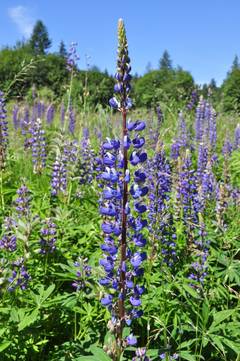
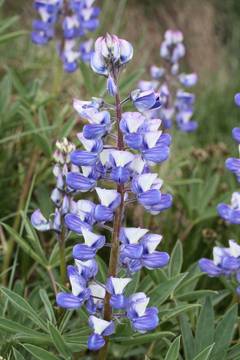
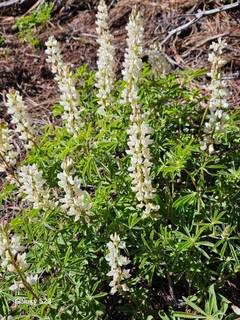
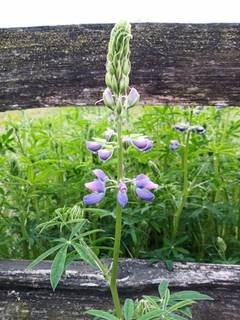
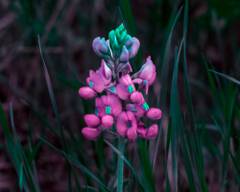
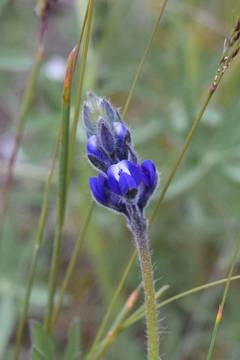
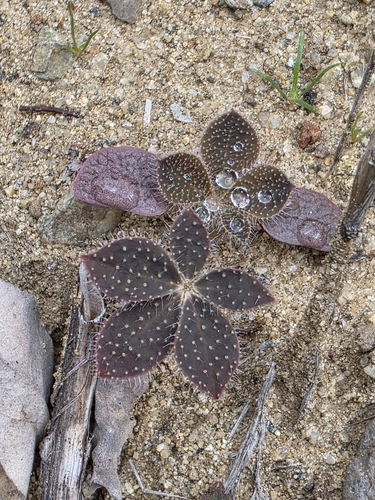
Lupinus hirsutissimus is an erect annual herb 12-36 in (30-90 cm) tall, the whole plant clothed in stiff, yellowish bristly hairs that pierce skin and cause stinging irritation on contact. The leaves are palmately compound with five to eight wedge-shaped leaflets 0.8-2 in (2-5 cm) long, radiating from the tip of a long stalk, and also bristly. From March to May the stems carry open racemes of pea-shaped flowers, each 0.5-0.7 in (12-18 mm) long, magenta to reddish-purple with a paler patch on the banner petal. Hairy pods 1-1.5 in (2.5-4 cm) long follow, splitting and coiling to fling the seed. It germinates with winter rain, flowers as the hills dry, and dies by early summer, often appearing in quantity on burned or disturbed slopes. It grows in chaparral, coastal scrub, and open dry ground below about 4,000 ft (1,200 m). The seeds and foliage contain quinolizidine alkaloids that are toxic if eaten, and the bristly hairs irritate skin. As a one-season annual, it leaves no growth over summer and returns only from seed.
Native Range
Native to the California Floristic Province, from central California south through the coast and Transverse Ranges to Baja California, with scattered populations in Arizona. It grows in chaparral, coastal scrub, and disturbed dry slopes, often after fire.Suggested Uses
Grown in California native, wildflower, and habitat plantings for spring color on dry sites. Direct-sown on banks and disturbed ground for erosion cover and pollinator forage.How to Identify
Appearance
Size & Dimensions
Height1' - 3'
Width/Spread8" - 1'4"
Bloom Information
Flowers from March to May, bearing loose racemes of magenta to reddish-purple pea flowers with a pale banner spot. Native bees, including bumblebees, work the blooms. Coiling hairy pods ripen and shed seed by early summer.
Detailed Descriptions
Flower Description
magenta to reddish-purpleFoliage Description
greenGrowing Conditions
Sun Requirements
Requires 6-12 hours of direct sunlight daily
• Full Sun: 6+ hours of direct sunlight
• Partial Shade: 3-6 hours of direct sunlight
• Full Shade: Less than 3 hours of direct sunlight
Water & Climate
Water Needs
Drought Tolerance
Drought tolerant when established
Care & Maintenance
Care Guide
Grows in full sun on dry, well-drained sandy, rocky, or gravelly soil with a pH near 6.0 to 7.5. As a winter annual it germinates on fall and winter rain and needs no summer irrigation. Lean, disturbed ground suits it, and it often colonizes burned slopes. It fixes nitrogen through root nodules, so added fertilizer is unnecessary. The plant completes its cycle before summer drought and dies, leaving seed in the soil. Overwatering in summer and rich soil reduce flowering.Pruning
No pruning is needed for this annual. Plants are removed at season's end once seed has set, if spread is unwanted. The bristly stems cause skin irritation when handled bare-armed.Toxicity Warning
Toxic to pets and humansPlanting Guide
Planting Methods & Timing
Planting Method
direct sow
Direct Sow Timing
fall
Days to Maturity
90–150 days
Plant Spacing
12 inches