Lupinus, Genus, perennis, Species,
- Genus & species
sundial lupine
Overview
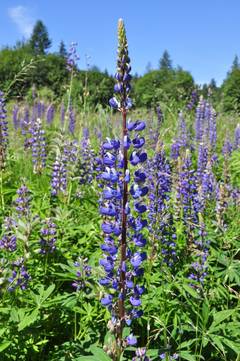
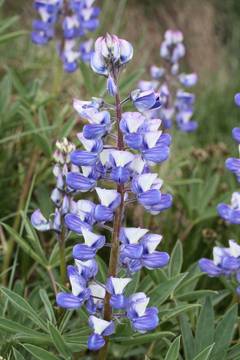
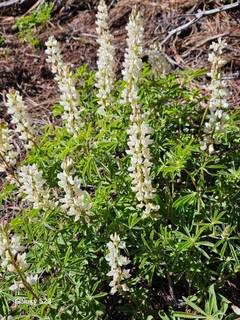
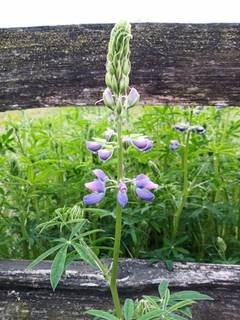
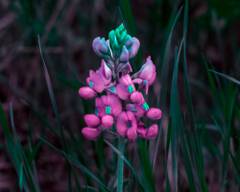
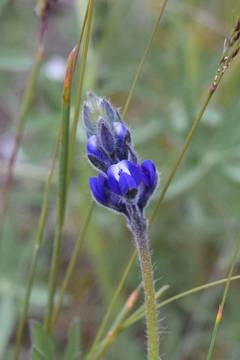
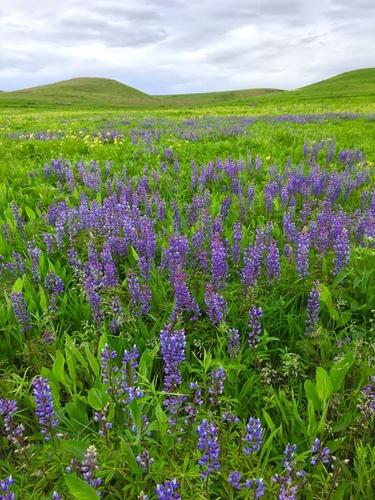
Lupinus perennis is an upright herbaceous perennial in the pea family, growing 1-2 feet (30-60 cm) tall from a deep taproot. Its leaves are palmately compound, each divided into 7-11 narrow leaflets radiating from a central point. From April to July it carries erect racemes 4-10 inches (10-25 cm) long of pea-shaped flowers, usually blue to violet, occasionally pink or white. Flowering is followed by hairy pods that split and eject their seeds. The seeds and foliage contain quinolizidine alkaloids and are toxic to people and livestock if eaten. Like other legumes it fixes nitrogen through root bacteria and can grow in lean soils. The species is native to eastern North America, where it grows in dry, sandy, acidic ground in open woodland, savanna, and roadsides. It is the larval host plant for the Karner blue butterfly. The deep taproot makes established plants hard to move, and the species is short-lived in heavy or wet soils.
Native Range
Lupinus perennis is native to eastern North America, from Maine and Ontario south to Florida and west to Minnesota and Louisiana. It is most frequent on sandy soils of the Atlantic coastal plain, the Great Lakes region, and the eastern prairies.Suggested Uses
Grown in sandy native plant gardens, prairie and savanna restorations, and butterfly habitat plantings. It serves as a larval host for the Karner blue butterfly. It naturalizes on dry, open, acidic sites where richer soils are absent.How to Identify
Appearance
Size & Dimensions
Height1' - 2'
Width/Spread1' - 1'6"
Bloom Information
Detailed Descriptions
Flower Description
blue to violetFoliage Description
greenGrowing Conditions
Sun Requirements
Requires 6-10 hours of direct sunlight daily
• Full Sun: 6+ hours of direct sunlight
• Partial Shade: 3-6 hours of direct sunlight
• Full Shade: Less than 3 hours of direct sunlight