Lupinus, Genus, nanus, Species,
- Genus & species
sky lupine
Overview
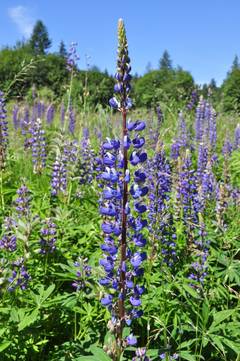
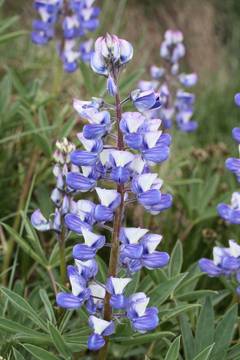
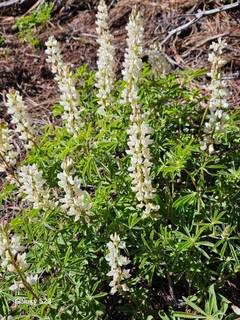
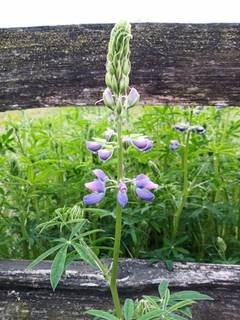
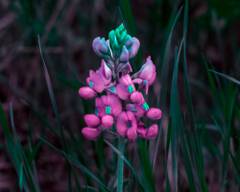
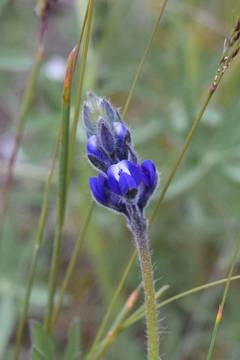
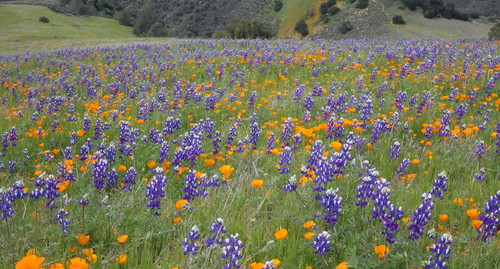
Lupinus nanus is an annual in the legume family growing 6-24 inches (15-60 cm) tall, with slender, branching, softly hairy stems. The palmately compound leaves are divided into 5-7 narrow leaflets, each 0.5-1.5 inches (1.5-4 cm) long, radiating from a central point. From March to May it bears upright spikes 2-8 inches (5-20 cm) long packed with pea-like flowers, typically blue to violet with a white to yellowish patch on the banner petal that turns purple after pollination. The flowers carry a mild sweet scent. Flat hairy pods follow, 0.75-1.5 inches (2-4 cm) long, splitting to fling out the seeds. L. nanus grows on open grassy slopes, valleys, and roadsides of California and the Pacific states, often forming sheets of blue alongside California poppies in spring. As an annual it completes its life in one season and depends on seed to return. It fixes nitrogen and grows in poor soils but needs cool, moist spring conditions. Bees pollinate the flowers. Like other lupines, the seeds and foliage contain alkaloids toxic if eaten.
Native Range
Native to the Pacific states of North America, centered in California and extending into Oregon, growing on open grassy slopes, valleys, and roadsides.Suggested Uses
Used in wildflower meadows, native seed mixes, and spring displays, often combined with California poppy. It suits open, sunny slopes and naturalized banks. Its brief annual cycle makes it a seasonal rather than permanent planting.How to Identify
Appearance
Size & Dimensions
Height6" - 2'
Width/Spread6" - 1'
Bloom Information
Blue to violet flower spikes open from March to May, peaking in April. The banner patch shifts from white or yellow to purple once a flower is pollinated. Bloom lasts several weeks where spring moisture holds.
Detailed Descriptions
Flower Description
blue to violetFoliage Description
greenGrowing Conditions
Sun Requirements
Requires 6-12 hours of direct sunlight daily
• Full Sun: 6+ hours of direct sunlight
• Partial Shade: 3-6 hours of direct sunlight
• Full Shade: Less than 3 hours of direct sunlight
Water & Climate
Water Needs
Care & Maintenance
Care Guide
Lupinus nanus grows in full sun and sandy to loamy, well-drained soil with a pH from about 5.5 to 7.5. As a cool-season annual it grows from fall or winter germination and flowers in spring, dying as summer heat and drought set in. It fixes nitrogen and needs no fertilizer. Seed is sown in fall, and scarifying or soaking the hard coat improves germination. The plant needs moist spring soil but rots in waterlogged ground. It reseeds where the soil is left open and undisturbed.Pruning
No pruning is needed for this annual. Plants can be left to set seed for the following year before they are cleared. Spent plants are pulled once they brown and die in early summer.Container Growing
Suitable for container growing
Minimum container size: 1 gallons
Toxicity Warning
Toxic to pets and humansPlanting Guide
Planting Methods & Timing
Planting Method
direct sow