Lupinus, Genus, rivularis, Species,
- Genus & species
riverbank lupine
Pacific Coast (British Columbia to northern California)
Overview
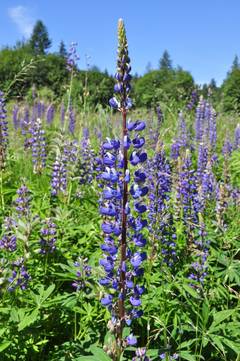
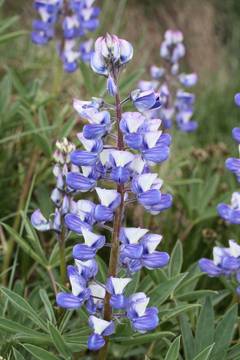
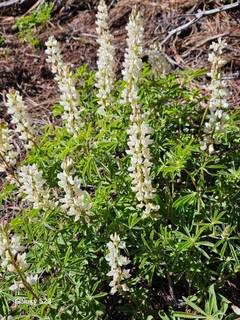
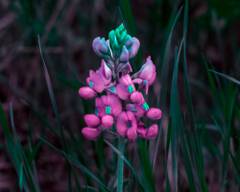
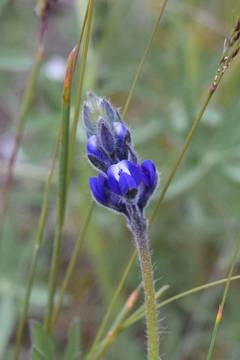
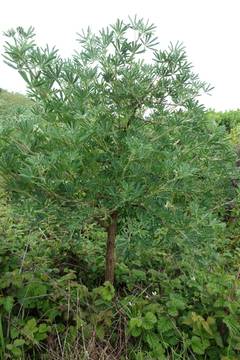
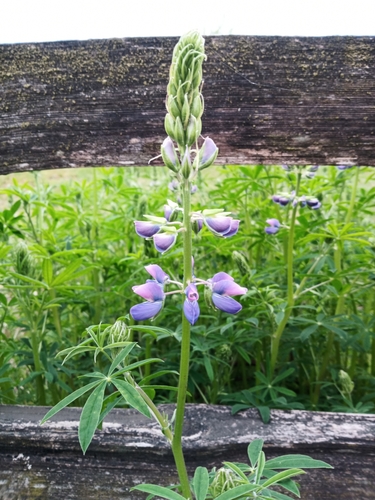
An upright herbaceous to semi-woody perennial reaching 2-4 feet (60-120 cm) tall, with several stout stems arising from a woody base. Leaves palmately compound with 5-9 oblanceolate leaflets, 1-2.5 inches (2.5-6.5 cm) long, green and nearly glabrous above, paler and short-pubescent below. Inflorescences erect terminal racemes 6-16 inches (15-40 cm) long with 30-100 pea-like flowers per spike. Flowers 0.4-0.6 inch (10-15 mm) long, blue to violet-blue, occasionally with pink or white forms; the banner petal often shades to white at the base. Pods densely hairy, 1-2 inches (2.5-5 cm) long, containing 5-9 seeds; pods open explosively when dry. Roots fix nitrogen through symbiotic Rhizobium nodules. Plants persist 4-8 years; older clumps may be replaced by self-sown seedlings. Stems die back partially in cold winters; new shoots emerge from the woody base in spring. Leaves and seeds contain quinolizidine alkaloids and are toxic to livestock if grazed in quantity.
Native Range
Native to the Pacific coast of North America from southern British Columbia south through western Washington, western Oregon, and into northwestern California. Found along rivers, streams, gravelly floodplains, and disturbed riparian sites at sea level to 2,500 feet (760 m) elevation.Suggested Uses
Commonly planted in riparian restoration projects, native pollinator gardens, and dryland meadow plantings at 24-36 inch (60-90 cm) spacing. Self-seeding habit suits naturalistic plantings but may require thinning in formal settings. All parts contain quinolizidine alkaloids; livestock losses have been documented from heavy grazing in pasture settings.How to Identify
Appearance
Size & Dimensions
Height2' - 4'
Width/Spread1'6" - 3'
Bloom Information
Late April through July depending on elevation and latitude; coastal lowland populations begin in late April-May, montane populations through July. Each raceme produces flowers for 2-4 weeks; the full bloom period in a stand extends 5-7 weeks. Cool wet springs extend bloom; hot dry conditions compress it to 2-3 weeks.
Detailed Descriptions
Flower Description
blue to violet-blueFoliage Description
green above, paler belowGrowing Conditions
Sun Requirements
Requires 6-12 hours of direct sunlight daily
• Full Sun: 6+ hours of direct sunlight
• Partial Shade: 3-6 hours of direct sunlight
• Full Shade: Less than 3 hours of direct sunlight
Care & Maintenance
Care Guide
Plant container-grown specimens in autumn or direct-sow scarified seed in early spring. Established plants tolerate periods of 3-4 weeks without rain; summer irrigation in clay soils causes root rot. Soils with active Rhizobium populations support nitrogen fixation; commercial pea/bean inoculant can be applied at planting in new gardens. Aphids and lupine weevil (Sitona species) appear on flower stems in warm weather. Powdery mildew develops in humid sites with restricted airflow but rarely kills plants. Plants flower in year 2 or 3 from seed and decline after 4-8 years; self-sown seedlings replace mature plants in established stands.Pruning
Cut spent racemes to the topmost set of leaves after flowering to encourage a second flush of bloom in late summer. Cut entire plant to 6 inches (15 cm) above the soil in late autumn after seed has dispersed; new growth emerges from the woody base the following spring. Damaged or aphid-infested foliage can be removed at any time during the growing season.Pruning Schedule
Prune: July & October–November
summerfall
Container Growing
Minimum container size: 5 gallons