Lupinus, Genus, albicaulis, Species,
- Genus & species
sicklekeel lupine
Pacific Northwest and northern California
Overview
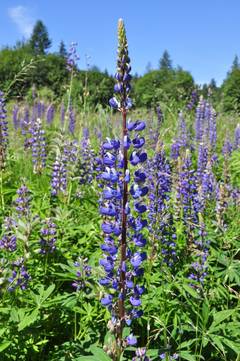
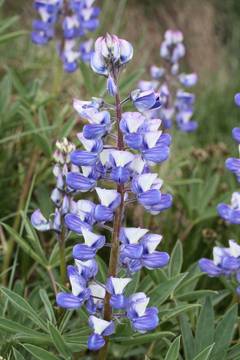
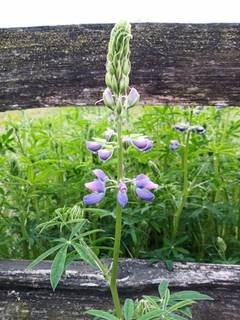
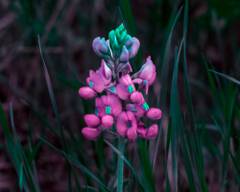
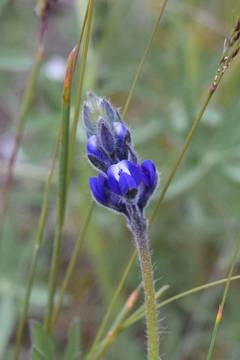
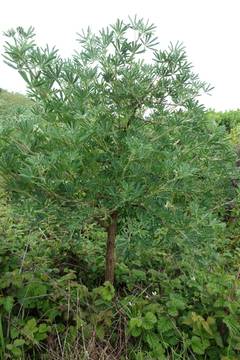
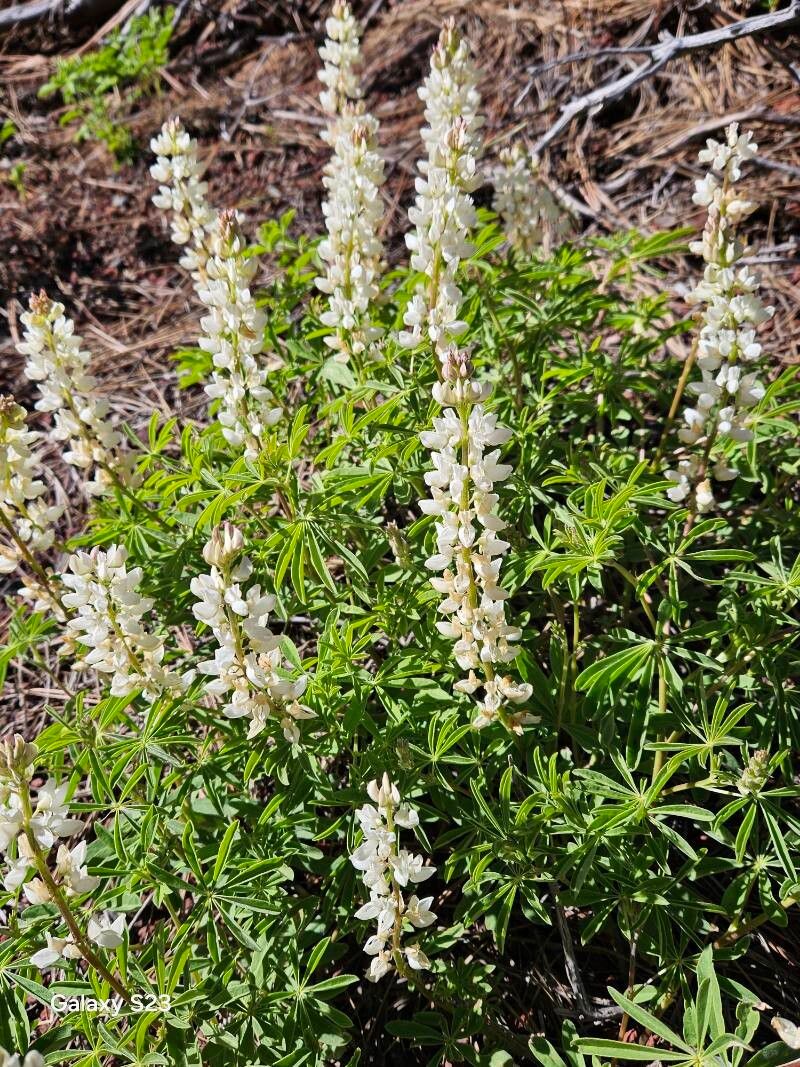
An erect herbaceous perennial reaching 1-4 feet (30-120 cm) tall from a woody crown and deep taproot. Leaves palmately compound with 7-9 linear-oblanceolate leaflets, 1-2.5 inches (2.5-6.5 cm) long, green above and silver-pubescent below. Stems clothed in dense appressed white hairs, the source of the species epithet albicaulis ('white-stemmed'). Inflorescences erect terminal racemes 4-12 inches (10-30 cm) long bearing 30-80 pea-like flowers. Flowers 0.5-0.6 inch (12-15 mm) long, pale violet to lavender or occasionally cream, with the keel petal sickle-shaped and pointing strongly upward, separating this species from related lupines. Fruits hairy pods 1-1.5 inches (2.5-4 cm) long containing 4-6 seeds; pods open explosively when dry, scattering seeds 3-6 feet (90-180 cm). Roots extend 4-5 feet (1.2-1.5 m) deep and fix nitrogen through Rhizobium nodules. Plants are short-lived perennials persisting 3-6 years. Leaves and seeds contain quinolizidine alkaloids; livestock losses have been documented from heavy grazing.
Native Range
Native to the western United States from southern British Columbia through Washington, Oregon, and northern California, east to Idaho. Found on dry open slopes, coniferous forest understory, and disturbed roadsides at 500 to 7,000 feet (150-2,100 m) elevation. Most abundant in second-growth forests and post-fire sites.Suggested Uses
Commonly planted in dryland meadow plantings, native restoration projects, and pollinator-supporting gardens at 18-24 inch (45-60 cm) spacing. Self-seeding habit suits naturalistic plantings but may require thinning in formal settings. All parts contain quinolizidine alkaloids; livestock losses have been documented from heavy grazing in rangeland settings.How to Identify
Appearance
Size & Dimensions
Height1' - 4'
Width/Spread1' - 2'
Bloom Information
Detailed Descriptions
Flower Description
pale violet to lavender, occasionally creamFoliage Description
green above, silver-pubescent belowGrowing Conditions
Sun Requirements
Requires 6-12 hours of direct sunlight daily
• Full Sun: 6+ hours of direct sunlight
• Partial Shade: 3-6 hours of direct sunlight
• Full Shade: Less than 3 hours of direct sunlight
Care & Maintenance
Care Guide
Plant container-grown specimens in autumn or direct-sow scarified seed in early spring. Established plants need water only during prolonged drought of more than 4 weeks; summer irrigation in warm climates causes root rot. Soils with active Rhizobium populations support nitrogen fixation; in new gardens, commercial pea/bean inoculant can be applied at planting. Aphid colonies appear on inflorescences in warm springs and disappear with summer heat. Powdery mildew develops in humid sites with restricted airflow but does not kill plants. Plants flower for the first time in year 2 or 3 from seed and decline after 4-6 years; self-sown seedlings replace mature plants in established stands.Pruning
Cut spent racemes to the topmost set of leaves after flowering to encourage a second flush of bloom in late summer. Cut entire plant to 4 inches (10 cm) above the soil in late autumn after seed has dispersed; new growth emerges from the woody crown the following spring. Remove dead stems and litter at the base in winter to reduce overwintering aphid eggs.Pruning Schedule
Prune: July & October–November
summerfall
Container Growing
Minimum container size: 3 gallons