Lupinus, Genus, sparsiflorus, Species,
- Genus & species
Coulter's lupine
Southwestern United States and Mexico
SunFull Sun
Overview
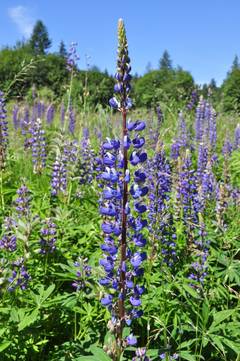
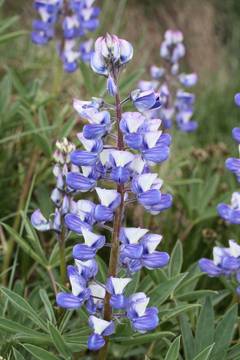
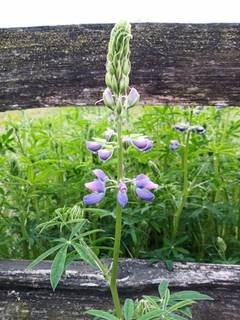
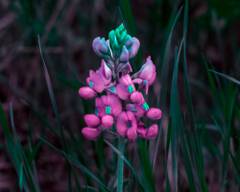
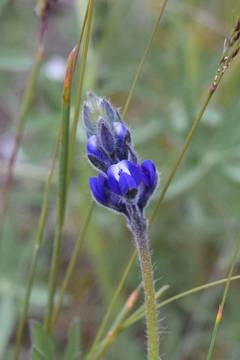
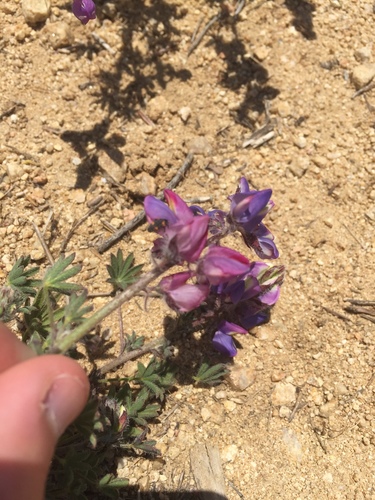
Lupinus sparsiflorus is a slender desert annual in the pea family, native to the deserts and dry slopes of the southwestern United States and northwestern Mexico. It grows 8-16 inches (20-40 cm) tall on thin, branching stems, with palmately compound leaves divided into seven to ten narrow leaflets that are lightly hairy. After winter and early spring rains it sends up open spikes of small pea flowers in blue to lavender-purple, each with a white to pale yellow spot on the upper banner petal that turns reddish with age. Flowering comes in spring, sometimes forming sheets of color across desert flats in wet years. The flowers are loosely spaced along the spike rather than densely packed, which gives the species its name. Small hairy pods follow and twist open to fling out the seeds. Like other lupines, the seeds and foliage contain alkaloids that are toxic if eaten. As a desert annual it depends entirely on cool-season rain; in dry years few plants appear, and all die back by early summer.
Native Range
Native to the southwestern United States and northwestern Mexico, including the Sonoran and Mojave deserts of Arizona, southern California, Nevada, and Baja California, on sandy and gravelly desert flats, washes, and slopes.Suggested Uses
Used in desert wildflower displays, native annual seed mixes, and restoration of disturbed desert ground. The flowers draw native bees and other pollinators in spring. As a nitrogen fixer it also helps build poor, sandy soils.How to Identify
Appearance
Size & Dimensions
Height8" - 1'4"
Width/Spread4" - 10"
Bloom Information
Flowering runs through spring, from February to April, following winter rains. The blue-purple flowers open from the base of the loose spike upward, with banner spots fading from white-yellow to red. Hairy pods follow and twist open to scatter the seeds.
Detailed Descriptions
Flower Description
blue to lavender-purple with banner spotFoliage Description
greenGrowing Conditions
Sun Requirements
Requires 6-10 hours of direct sunlight daily
• Full Sun: 6+ hours of direct sunlight
• Partial Shade: 3-6 hours of direct sunlight
• Full Shade: Less than 3 hours of direct sunlight
Water & Climate
Water Needs
Drought Tolerance
Drought tolerant when established
Care & Maintenance
Care Guide
Grows in full sun on dry, fast-draining sandy or gravelly soils of low fertility. It is drought tolerant as a cool-season annual and needs no summer water, dying back by early summer. A soil pH from 6.5 to 8.0 suits it, and the nitrogen-fixing roots mean no fertilizer is needed. Propagation is by seed sown in fall, ideally scarified to speed germination. The seeds and foliage are toxic if eaten, a caution where stock or children are present. Pests and diseases are seldom a problem on open desert ground.Pruning
No pruning is needed on this small annual. Plants are left to flower and set seed, then clear away as they dry in early summer. Letting the pods ripen in place keeps the stand returning after wet winters.Toxicity Warning
Toxic to pets and humansPlanting Guide
Planting Methods & Timing
Planting Method
direct sow
Direct Sow Timing
fall
Days to Maturity
80–110 days
Plant Spacing
6 inches