Overview
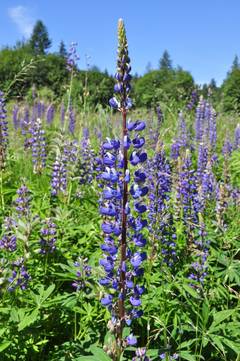
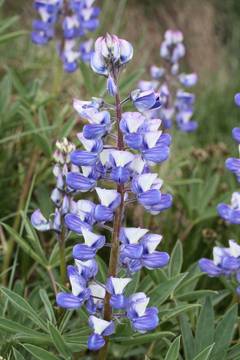
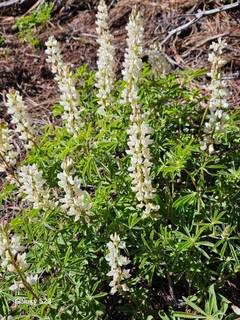
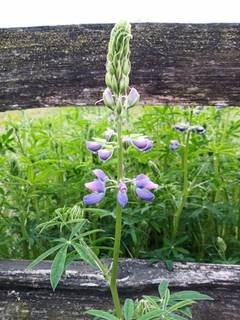
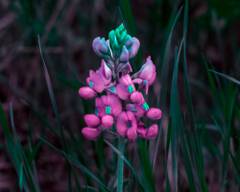
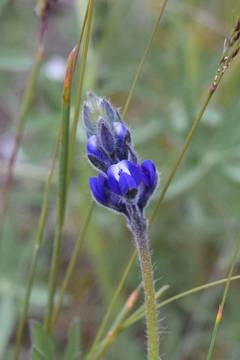
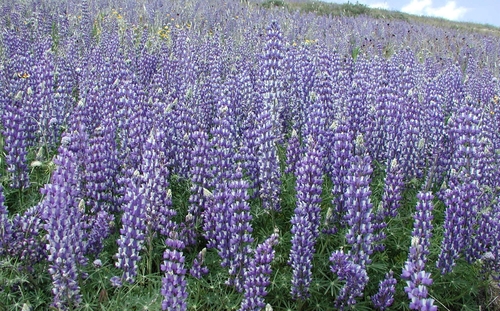
Lupinus microcarpus is an annual lupine in the pea family, native to grasslands, open slopes, and disturbed ground across western North America and into temperate South America. It grows 8-24 inches (20-60 cm) tall on upright, hollow stems clothed in palmately compound leaves, each with five to eleven narrow leaflets that fold up in dry heat. The pea-like flowers are carried in distinct whorls spaced along the stem tip, in colors that range with the variety from purple and pink to yellow or white, often with a contrasting banner spot. Flowering occurs in spring. The seed pods are short, inflated, and densely covered in long hairs, splitting to throw out a few hard seeds. Like other lupines it fixes nitrogen through root nodules and grows on poor soils. The seeds and foliage contain alkaloids that are toxic to livestock and people if eaten. As a winter annual it finishes its life cycle by early summer and dies back, leaving gaps, so it depends on reseeding to return each year.
Native Range
Native to western North America, from Washington south through California to Baja California and east to Arizona, with disjunct populations in Chile; found in grasslands, oak woodland openings, vernal pool margins, and roadsides.Suggested Uses
Used in wildflower meadows, native seed mixes, and restoration plantings on poor or disturbed soil. The whorled flowers draw bumblebees and other native bees in spring. As a nitrogen fixer it also helps build soil on bare, eroded ground.How to Identify
Appearance
Size & Dimensions
Height8" - 2'
Width/Spread6" - 1'
Bloom Information
Flowering runs through spring, from March to May, with the whorled flowers opening from the bottom of each spike upward. Bloom color shifts among purple, pink, yellow, and white across the species range. Inflated, hairy pods follow and dry to release the seeds.
Detailed Descriptions
Flower Description
purple, pink, yellow, or whiteFoliage Description
greenGrowing Conditions
Sun Requirements
Requires 6-10 hours of direct sunlight daily
• Full Sun: 6+ hours of direct sunlight
• Partial Shade: 3-6 hours of direct sunlight
• Full Shade: Less than 3 hours of direct sunlight
Water & Climate
Water Needs
Drought Tolerance
Drought tolerant when established
Care & Maintenance
Care Guide
Grows in full sun on well-drained sandy, loamy, or clay soils of low to moderate fertility. It is drought tolerant as a spring annual and needs no summer water, since it dies back by early summer. A soil pH of 6.0 to 7.5 suits it, and the nitrogen-fixing roots mean no fertilizer is needed. Propagation is by seed sown in fall, ideally scarified to speed germination. The seeds and foliage are toxic if eaten, which matters where grazing stock or children are present. Aphids are the main pest but rarely cause lasting harm.Pruning
No pruning is needed on this annual. Plants are left in place to flower and set seed, then pulled once they brown and die back. Leaving ripe pods in place lets the stand reseed itself.Toxicity Warning
Toxic to pets and humansPlanting Guide
Planting Methods & Timing
Planting Method
direct sow
Direct Sow Timing
fall
Days to Maturity
90–120 days
Plant Spacing
6 inches