Overview
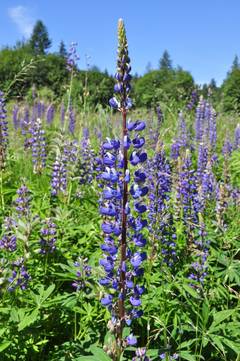
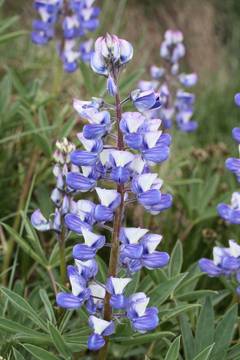
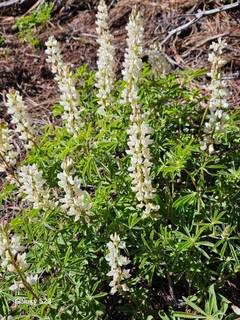
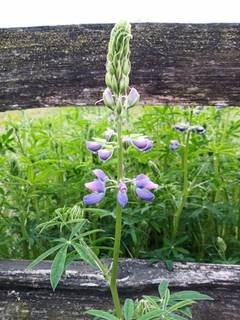
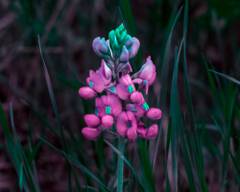
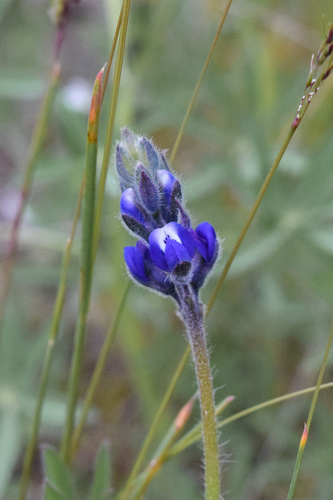
Lupinus bicolor is a small annual lupine native to western North America, common in grasslands and open ground from California north into the Pacific Northwest. It grows 4-16 inches (10-40 cm) tall on slender, branching stems, forming an open, upright plant rather than a dense clump. The leaves are palmately divided into five to seven narrow leaflets 0.5-1.5 inches (1.3-4 cm) long, each fringed with soft hairs. From spring into early summer the stems carry short spikes of pea-like flowers, blue to violet with a white patch on the upper banner petal that ages to magenta after pollination, the two-color pattern behind its name. As a legume it fixes nitrogen through root bacteria, which lets it grow on poor, disturbed soils and adds fertility to the ground. The flowers are worked by native bees and form small hairy pods that split and scatter seed. It completes its life cycle in a single season, dying back after seeding in late spring or summer. It grows in full sun on well-drained soil and tolerates drought, but fades quickly in shade or rich, wet ground. The seeds contain alkaloids that are toxic if eaten in quantity.
Native Range
Native to western North America, from Baja California and Arizona north through California, Oregon, and Washington into British Columbia. It grows in grasslands, open woodland, road banks, and disturbed ground, often in large seasonal stands.Suggested Uses
Used in wildflower meadows, native plant gardens, pollinator plantings, and erosion control on banks. It suits seasonal color in dry, sunny areas and mixes into California native seed blends.How to Identify
Appearance
Size & Dimensions
Height4" - 1'4"
Width/Spread4" - 8"
Bloom Information
Flowers open from March to June, earlier in the south and after winter rains. The short spikes hold blue to violet flowers about 0.25-0.5 inch (6-12 mm) long with a white-to-magenta banner spot. Hairy pods follow and split explosively to fling seed a short distance.
Detailed Descriptions
Flower Description
Blue-violet with whiteFoliage Description
GreenGrowing Conditions
Sun Requirements
Requires 6-12 hours of direct sunlight daily
• Full Sun: 6+ hours of direct sunlight
• Partial Shade: 3-6 hours of direct sunlight
• Full Shade: Less than 3 hours of direct sunlight
Water & Climate
Water Needs
Drought Tolerance
Drought tolerant when established
Care & Maintenance
Care Guide
Grows in full sun and light, well-drained soil and needs little water once the seedlings are up. It is grown as an annual from seed sown in autumn or early spring, often after scratching or soaking the hard coat to aid germination. As a nitrogen-fixing legume it thrives on lean soil and needs no fertilizer. Plants tolerate drought and set seed before summer heat, then die. Overhead water and rich soil shorten their life and encourage rot. Letting some pods ripen and drop maintains stands from year to year.Pruning
No pruning is needed for this annual. Spent plants can be pulled or cut once they have set and dropped seed. Leaving the dried stems in place a little longer lets the pods finish scattering.Container Growing
Suitable for container growing
Minimum container size: 1 gallons
Toxicity Warning
Toxic to pets and humansPlanting Guide
Planting Methods & Timing
Planting Method
direct sow
Days to Maturity
60–90 days
Plant Spacing
6 inches