Lonicera, Genus, periclymenum, Species,
- Genus & species
woodbine
Europe (Scandinavia south to the Mediterranean), western Asia (Turkey), and North Africa (Morocco); hedgerows, woodland margins, scrub, and forest clearings from sea level to 5,000 ft (1,500 m)
Overview
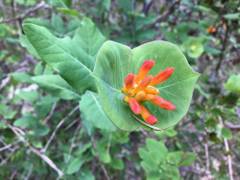
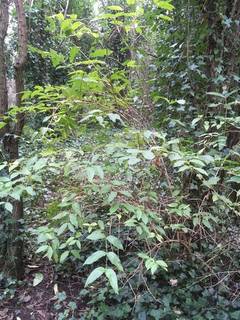
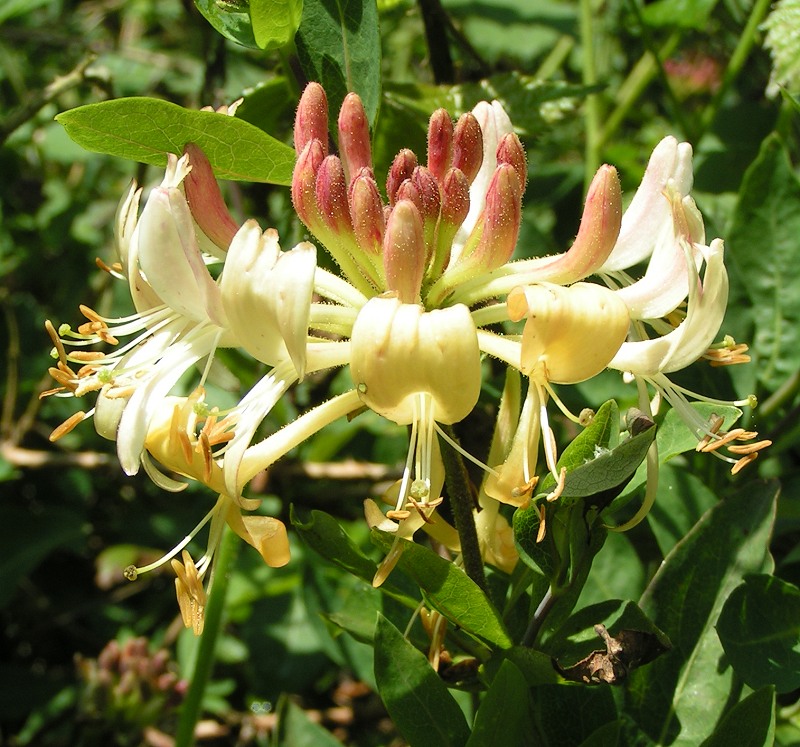
Lonicera periclymenum is a deciduous to semi-evergreen twining vine reaching 12-20 feet (3.6-6 m) tall with a spread of 6-10 feet (1.8-3 m). The opposite ovate to elliptic leaves are 1.5-3 inches (4-8 cm) long, dark green above and blue-green beneath, and hold through autumn in colder zones or persist semi-evergreen in mild maritime climates. Tubular two-lipped flowers 1.5-2 inches (4-5 cm) long open cream-white to yellow on the interior, often flushed pink to purplish-red on the exterior, in terminal whorled clusters (rather than the paired axillary arrangement of L. japonica). Bloom runs from June through September for 10-14 weeks. Fragrance is sweet and pervasive, strongest at dusk and into the night, which draws hawk moths as pollinators. Glossy red berries 6-8 mm across ripen in tight clusters from August through September. The vine twines clockwise (dextrorse). Growth rate is moderate to fast, 3-6 feet (0.9-1.8 m) per year once established. Powdery mildew and aphid colonies are recurring problems in warm dry conditions. The species is the traditional woodbine of European hedgerows and is recorded in botanical and literary sources from the 16th century onward. Hardy to USDA zone 4. All plant parts are toxic to pets and humans if ingested.
Native Range
Lonicera periclymenum is native to Europe, from Scandinavia south to the Mediterranean, with its range extending east into western Asia (Turkey) and south to North Africa (Morocco). It grows in hedgerows, woodland margins, scrub, and forest clearings from sea level to approximately 5,000 feet (1,500 m).Suggested Uses
Used on trellises, arbors, pergolas, fences, and through shrubs and hedgerows in zones 4-9 at 6-8 foot (1.8-2.4 m) spacing. The evening fragrance carries to seating areas, open windows, and garden paths, and red berry clusters extend interest into autumn. Unlike the naturalized and regulated L. japonica, the species is not invasive in North America and does not self-sow aggressively. Powdery mildew and aphids persist in warm dry conditions. Foliage is toxic to pets and humans if ingested. Not suited to hot dry exposed walls, deep shade, or positions without support for the twining stems.How to Identify
Appearance
Size & Dimensions
Height12' - 20'
Width/Spread6' - 10'
Bloom Information
Tubular two-lipped flowers 1.5-2 inches (4-5 cm) long in terminal whorled clusters, cream-white to yellow interior and pink to purplish-red exterior, from June through September. Fragrance is sweet and pervasive and strongest at dusk, which draws hawk moths. Glossy red berries in tight clusters ripen from August through September. Bloom duration is 10-14 weeks.
Detailed Descriptions
Flower Description
Cream-white to yellow interior, pink to purplish-red exterior; tubular two-lipped 1.5-2 inches (4-5 cm) long; in terminal whorled clusters; fragrance strongest in the eveningFoliage Description
Dark green above, blue-green beneath; ovate to elliptic, 1.5-3 inches (4-8 cm) long; opposite; deciduous to semi-evergreen in mild climatesGrowing Conditions
Sun Requirements
Requires 4-7 hours of direct sunlight daily
• Full Sun: 6+ hours of direct sunlight
• Partial Shade: 3-6 hours of direct sunlight
• Full Shade: Less than 3 hours of direct sunlight
Care & Maintenance
Care Guide
Grows in partial shade to full sun in moist, humus-rich, well-drained soil at pH 5.5-7.5. Hardy to USDA zone 4. Performs in the traditional hedgerow position with roots in shade and shoots reaching into sun. Tolerates chalk and alkaline soils. Powdery mildew is a recurring issue in warm, dry, still-air positions and can defoliate the plant by late summer. Aphid colonies accumulate on young shoots and can attract sooty mold.Pruning
Prune after flowering in late summer or during the dormant season: thin out older congested stems at the base and shorten side shoots to 2-3 buds from the main framework. Overgrown vines tolerate renovation cuts back to 24 inches (60 cm) above ground. Spring pruning removes developing flower buds and is therefore not recommended. Flowers form on current-season growth from last year's wood.Pruning Schedule
Prune: August–September
summer