Image 1 of 15
1 / 15
Plant Reference
Lonicera, Genus, ligustrina, Species, var., Variety, yunnanensis, Variety,
- Genus & species
- Variety
box honeysuckle
Southwestern China — primarily Yunnan and Sichuan provinces; mountain forests and scrubland at 3,000-8,000 feet (900-2,400 m) elevation
Overview
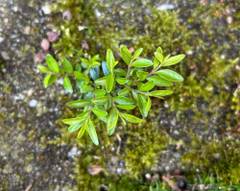
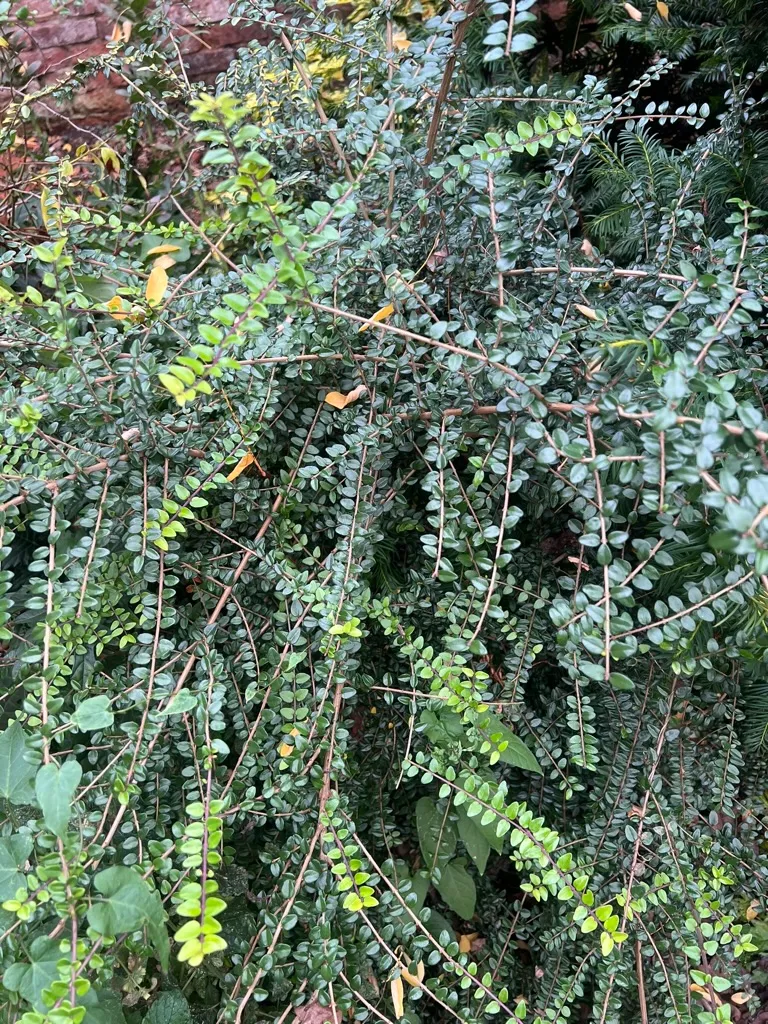
Lonicera ligustrina var. yunnanensis is a mounding broadleaf evergreen shrub in the family Caprifoliaceae growing 4–6 feet (1.2–1.8 m) tall and 4–6 feet (1.2–1.8 m) wide from a multi-stemmed base that produces a dense rounded canopy of small twiggy branches densely clothed in small glossy leaves. The specific epithet ligustrina is from Ligustrum (privet) plus the suffix -ina meaning resembling, and the epithet refers to the small dense glossy foliage that resembles the foliage of common privet (Ligustrum vulgare) more than the larger leaves of typical climbing or shrubby honeysuckles. The variety yunnanensis refers to the Yunnan province of southwestern China where the variety was originally collected, and the variety differs from the type variety by its more compact growth, smaller leaves, and the translucent amethyst-purple berry color that gives the variety its primary ornamental distinction. Leaves are glossy dark green, small, oval, 0.5–1 inch (1.3–2.5 cm) long, and densely arranged on small-leaved twiggy branches — the small glossy foliage texture is the basis for the common name box honeysuckle and supports the variety's use as a substitute for boxwood (Buxus sempervirens) in formal hedging applications across regions where boxwood blight (Calonectria pseudonaviculata) has compromised the use of true boxwood in the landscape (the variety is not susceptible to boxwood blight because the pathogen is host-specific to Buxus species). Creamy-white tiny tubular flowers 0.3 inch (8 mm) long open in pairs at the leaf axils along the twigs in May and June across a 3-week bloom period and carry a light sweet honey-scented fragrance that is detectable at close range. Translucent amethyst-purple berries 0.2 inch (5 mm) across develop from the spent flowers in late summer — the translucent purple color is atypical among the cultivated honeysuckles (most Lonicera species carry red, orange, or black opaque berries) and is a reliable identifying character of this variety. Mature stems develop a tan shredding bark that adds a winter ornamental feature on older specimens. Limitation: the variety calls for regular shearing 2–3 times per growing season to maintain a tight formal hedge surface, and this active maintenance requirement is the primary cultural consideration for formal applications. Native to southwestern China — primarily Yunnan and Sichuan provinces — growing in mountain forests and scrubland at 3,000–8,000 feet (900–2,400 m) elevation, and the high-elevation native range is the basis for the variety's cold hardiness through USDA zone 6. Drought-tolerant once established. Non-toxic. Deer browse the foliage in regions with active deer populations.
Native Range
Native to southwestern China — primarily Yunnan and Sichuan provinces — growing in mountain forests and scrubland at 3,000–8,000 feet (900–2,400 m) elevation. The high-elevation native range is the basis for the variety's cold hardiness in cultivation through USDA zone 6, and the variety was introduced to western horticulture in the late 19th and early 20th century during the era of E.H. Wilson, George Forrest, and other plant collectors who explored the Sino-Himalayan flora and introduced many Yunnan and Sichuan species to British and North American horticulture.Suggested Uses
Used as a clipped formal hedge, boxwood alternative for regions affected by boxwood blight, topiary specimen, low to medium foundation planting, and container specimen in containers of at least 5 gallons (19 L) at 18–48 inch (45–120 cm) spacing depending on the designed hedge or topiary scale in USDA zones 6 through 9. The boxwood-like small-leaved glossy evergreen foliage, the tolerance of repeated shearing, the lightly fragrant spring bloom, the atypical translucent amethyst-purple late-summer berries, and the tan shredding winter bark combine to make the variety a substitute for Buxus sempervirens in regions where boxwood blight (Calonectria pseudonaviculata) has compromised the use of true boxwood — the variety is not susceptible to boxwood blight because the pathogen is host-specific to Buxus. Active deer-pressure landscapes are unsuitable without browse protection because deer browse the foliage. Formal hedging applications call for the active 2–3 shearing per season maintenance schedule.How to Identify
Appearance
Size & Dimensions
Height4' - 6'
Width/Spread4' - 6'
Bloom Information
Creamy-white tiny tubular flowers 0.3 inch (8 mm) long open in pairs at the leaf axils along the twigs in May and June across a 3-week bloom period and carry a light sweet honey-scented fragrance that is detectable at close range. Honeybees and other pollinators work the flowers for nectar across the spring bloom. Translucent amethyst-purple berries 0.2 inch (5 mm) across develop from the spent flowers in late summer — the translucent purple color is atypical among the cultivated honeysuckles and is a reliable identifying character of this variety.
Detailed Descriptions
Flower Description
creamy-white tiny tubular flowers 0.3 inch (8 mm) long carried in pairs at the leaf axils along the twigs in May and June; lightly fragrant with a sweet honey scent; followed by translucent amethyst-purple berries 0.2 inch (5 mm) across in late summer — the translucent purple berry color is an atypical feature among the cultivated honeysuckles (most Lonicera species carry red, orange, or black opaque berries) and is a reliable identifying character of this varietyFoliage Description
glossy dark green small oval leaves 0.5-1 inch (1.3-2.5 cm) long densely arranged on small-leaved twiggy branches; the small glossy leaves create a boxwood-like foliage texture that is the basis for the common name box honeysuckle and that supports the species' use as a substitute for boxwood in formal hedging applications; evergreen year-roundGrowing Conditions
Sun Requirements
Requires 4-8 hours of direct sunlight daily
• Full Sun: 6+ hours of direct sunlight
• Partial Shade: 3-6 hours of direct sunlight
• Full Shade: Less than 3 hours of direct sunlight
Care & Maintenance
Care Guide
Site in full sun to partial shade with 4–8 hours of direct sun per day in well-drained loam, clay, or sand soil with a pH of 5.5–7.5. Drought tolerance develops once the root system is established. The variety tolerates repeated shearing for formal hedging applications, and 2–3 light shearings per growing season (typically May, June, and July) maintain a tight formal hedge surface — this active maintenance requirement is the primary cultural consideration for formal applications. Non-toxic. Deer browse the foliage in regions with active deer populations, so the variety is unsuitable for unprotected planting positions in deer-pressure landscapes. Hardy in USDA zones 6–9.Pruning
Light shearing 2–3 times per growing season (typically May, June, and July) maintains a tight formal hedge surface and supports dense branching from the cut points. The variety tolerates hard renovation pruning back to the woody framework when an overgrown plant calls for restart, and regrowth from latent buds is reliable within 1–2 growing seasons because the moderate underlying growth rate supports rapid canopy refill. Older stems are thinned at the base every 2–3 years on informal plantings to renew the multi-stemmed framework and to maintain vigorous young growth at the canopy.Pruning Schedule
Prune: May–July
late springsummer
Container Growing
Suitable for container growing
Minimum container size: 5 gallons