Image 1 of 14
1 / 14
Plant Reference
Lonicera, Genus, involucrata, Species,
- Genus & species
twinberry honeysuckle
Alaska south through British Columbia, Washington, and Oregon to California; east to the Rocky Mountains and Great Lakes; moist stream banks, wetland edges, and forest edges
Overview
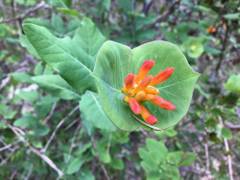
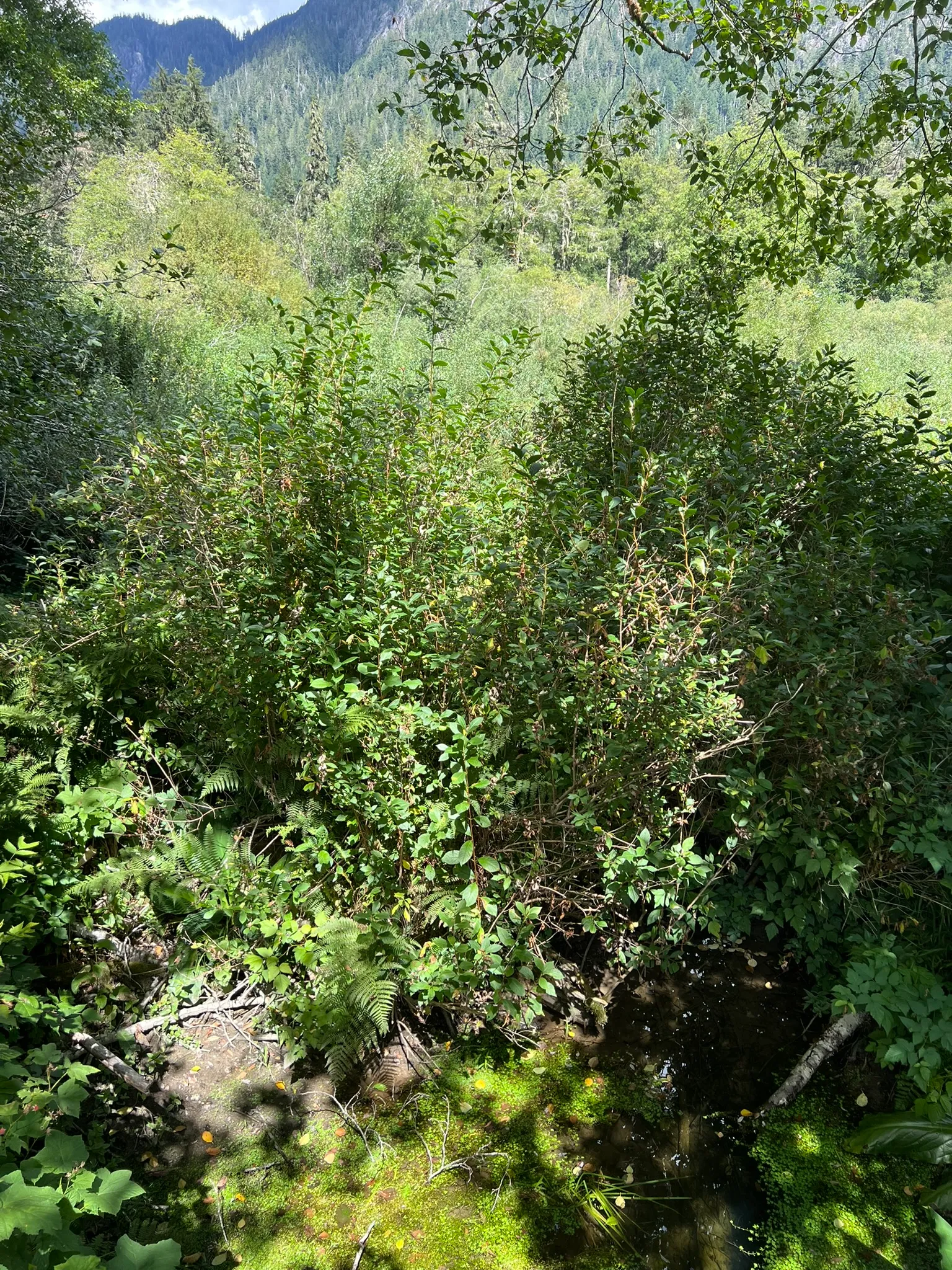
Lonicera involucrata is an upright multi-stemmed deciduous shrub in the family Caprifoliaceae, native to moist stream banks, wetland edges, forest edges, and cool moist thickets from Alaska south through British Columbia, Washington, and Oregon to California, and east to the Rocky Mountains and Great Lakes. The species epithet 'involucrata' means 'with involucre' and refers to the two pairs of bracts that subtend the paired flowers and ultimately frame the paired fruits. Plants grow 4-10 feet (1.2-3 m) tall with opposite broadly oval to ovate bright green leaves 2-5 inches (5-13 cm) long. From May through August, pairs of tubular pale to golden-yellow flowers 0.5-0.8 inch (12-20 mm) long emerge from each leaf axil, each subtended by two pairs of oval bracts that enlarge and deepen to red-purple as the twin glossy black berries develop. The bracted paired black berries in late summer are the single most reliable identifying character in the field. Flowers are visited by hummingbirds, native bumblebees, and butterflies in the native range. Berries are consumed by waxwings, thrushes, grouse, robins, and bears. Berries are mildly toxic to humans if eaten in quantity; non-toxic to the wildlife species listed. Hardy in USDA zones 3-9.
Native Range
Lonicera involucrata is native to moist stream banks, wetland edges, forest edges, and cool moist thickets from Alaska south through British Columbia, Washington, and Oregon to California, and east to the Rocky Mountains and Great Lakes.Suggested Uses
Planted as a wildlife-habitat shrub, rain-garden feature, and stream-bank planting at 4-6 foot (1.2-1.8 m) spacing. The combination of hummingbird visitation at the flowers and bird and mammal consumption of the berries gives the species a strong wildlife role in moist plantings. Combines with Cornus sericea, Salix species, and Carex obnupta in native moist-site designs. Dry sites and compacted urban soils fall outside the use range.How to Identify
Appearance
Size & Dimensions
Height4' - 10'
Width/Spread4' - 8'
Bloom Information
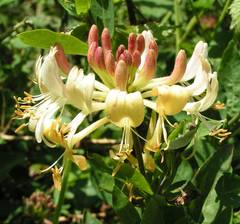
Paired tubular pale to golden-yellow flowers 0.5-0.8 inch (12-20 mm) long at each leaf axil, borne May through August in zones 3-9 over 6-10 weeks. Hummingbirds, native bumblebees, and butterflies visit the flowers through the bloom window. By late summer the bracts deepen to red-purple and frame twin glossy black berries that are consumed by waxwings, thrushes, grouse, robins, and bears.
Detailed Descriptions
Flower Description
Pale to golden yellow; tubular pairs 0.5-0.8 inch (12-20 mm) at each leaf axil; May-August; subtending bracts enlarge and deepen to red-purple as twin glossy black berries developFoliage Description
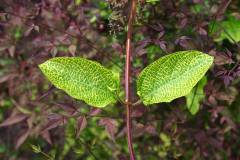
Bright green; opposite broadly oval to ovate with pointed tips 2-5 inches (5-13 cm); deciduousGrowing Conditions
Sun Requirements
Requires 3-8 hours of direct sunlight daily
• Full Sun: 6+ hours of direct sunlight
• Partial Shade: 3-6 hours of direct sunlight
• Full Shade: Less than 3 hours of direct sunlight
Care & Maintenance
Care Guide
Grows in full sun to partial shade in moist to wet acidic to neutral soil at pH 5.0-7.5. Hardy to USDA zone 3. Seasonally saturated soils are tolerated, which suits the species to rain gardens, pond margins, and moist woodland borders. No fertilizer is applied.Pruning
Dead or crossing stems are removed to the base in late winter. Thinning of oldest canes every few years maintains vigor. A hard cutback in late winter rejuvenates the shrub when renewal is needed.Pruning Schedule
Prune: February–March
early spring